
Look, I have a problem with this book. Not a criticism—a problem. As in, I finished it three days ago and I'm still turning it over in my head like a psychology case study I can't crack. Which, frankly, is exactly what it is.
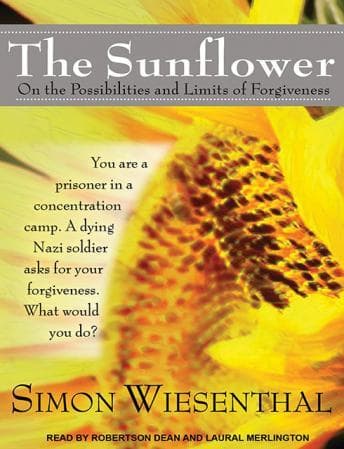
Simon Wiesenthal presents us with a scenario that would make any ethics professor weep with joy: A dying SS soldier asks a Jewish concentration camp prisoner for forgiveness. Wiesenthal stays silent. Leaves. And then spends decades asking everyone he meets—what would you have done?
The Question That Won't Let You Sleep
Here's what got me. The soldier, Karl, doesn't just want absolution. He wants it from a Jew. Any Jew. Not from God, not from his victims specifically (most of whom are dead by his own hand), but from a representative of the people he helped murder. And Wiesenthal—starving, dehumanized, watching his friends die daily—is supposed to what, exactly? Offer comfort to this man's conscience?
The research actually shows that forgiveness serves the forgiver more than the forgiven. It's a psychological release valve. But Wiesenthal flips that on its head. Who benefits if he forgives? Karl gets to die in peace. Wiesenthal gets... what? The satisfaction of being the bigger person while standing in a literal death camp?
I listened to this during my morning jogs through Cambridge, and I had to stop running multiple times. Not from exhaustion—from the sheer weight of the moral calculus happening in my earbuds. That kind of mental intensity during physical activity is something Mindful Athlete: Secrets to Pure Performance explores brilliantly—how the mind processes impossible questions even when the body's in motion.
Fifty-Three Minds, Zero Easy Answers
The genius of this book—and honestly, the part that makes it essential listening rather than just reading—is the symposium section. Fifty-three thinkers respond to Wiesenthal's question. The Dalai Lama. Primo Levi. Desmond Tutu. Cynthia Ozick. They disagree. Vehemently. And hearing their voices (okay, actors performing their voices) one after another creates this almost dizzying effect.
Robertson Dean handles Wiesenthal's narrative with this measured, almost clinical delivery that works beautifully. You're not being manipulated into feeling a certain way—you're just presented with the facts of horror. Laural Merlington takes on the respondents, and the way she shifts between perspectives keeps you from getting whiplash. It's a smart production choice. The different narrators aren't just reading different sections; they're embodying different worldviews.
What makes Wiesenthal compelling as a character in his own story—my dissertation committee can fight me on that framing—is that he never resolves his own question. He's not writing to convince you he was right. He genuinely doesn't know. That kind of intellectual humility is rare. And psychologically, it's fascinating. Most people construct post-hoc justifications for their actions. Wiesenthal refuses.
The Psychology of Impossible Choices
I kept asking myself: why does Karl really want forgiveness from a Jew? Is it genuine remorse or a final act of using Jewish people for his own purposes? Wiesenthal exhibits classic trauma response patterns throughout the encounter. He's dissociating, going through motions, unable to process in real-time what's being asked of him.
And here's where it gets uncomfortable. Some respondents argue Wiesenthal should have forgiven. Others say he had no right to forgive on behalf of the dead. But almost no one asks the question that kept nagging at me: What about the psychological violence of even being asked?
Karl put a dying man's spiritual needs above a living prisoner's psychological safety. Even in death, he centered himself. The power dynamics here—who gets to demand what from whom—reminded me of the strategic manipulation dissected in 50th Law, though obviously in the most horrifying context imaginable. My therapist would have thoughts about this.
(Don't tell my students I spent an entire week's worth of jogs essentially doing a case analysis on a Nazi. But the human mind has patterns. Learn them or lose me.)
Who This Is (and Isn't) For
If you're looking for light listening, obviously not. If you're sensitive to Holocaust content, proceed with care—it's not gratuitously graphic, but it doesn't flinch either. Skip this one if you need your moral philosophy wrapped up neatly.
But if you're the kind of person who lies awake wondering whether morality is universal or contextual, whether forgiveness is a gift or a transaction, whether silence can be an answer—this book won't give you resolution. It'll give you better questions.
Case Closed (It Isn't)
Probably won't listen again cover to cover—nine hours is a lot when you're already prone to existential spiraling. But I've already gone back to specific respondent sections. The disagreements between religious and secular thinkers alone could fuel a semester of seminar discussions.
The production is clean, the pacing deliberate. And honestly? Better questions are the more valuable thing anyway.