
"The mind is everything. What you think, you become."
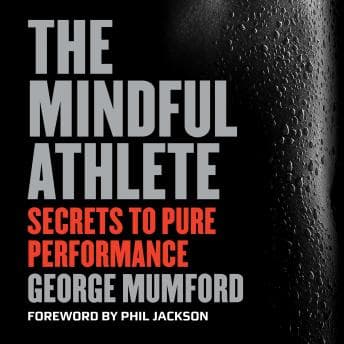
That line hit me somewhere around the two-hour mark, and I actually paused my jog to let it sink in. Look, I've read a lot of self-help books that promise to unlock your potential or whatever. Most of them are recycled pop psychology dressed up in athletic metaphors. But George Mumford? This guy actually knows what he's talking about - and more importantly, he's lived it.
The Psychology That Actually Tracks
Here's what grabbed me from a research perspective: Mumford isn't just throwing around buzzwords. He's got a master's in counseling psychology, he trained with Jon Kabat-Zinn (the godfather of secular mindfulness), and he's been in the trenches with athletes who operate under pressure most of us can't imagine. The man helped Michael Jordan become a better leader. He worked with Kobe Bryant. These aren't small claims.
But what makes this book work psychologically is that Mumford starts with his own brokenness. His addiction story isn't a footnote - it's the foundation. He was a basketball player at UMass (roomed with Julius Erving, which is wild), got injured, got addicted to painkillers, eventually moved to heroin. And he's honest about it. Not in that performative "look how far I've come" way, but in a way that shows he understands the mechanisms of escape, of numbing, of losing yourself.
This is a fascinating case study in how trauma can become a teacher. The research actually shows that people who've overcome significant adversity often develop what psychologists call "post-traumatic growth" - and Mumford embodies this. He doesn't preach from some enlightened mountaintop. He's been in the pit.
J.D. Jackson Nails the Delivery
Okay, so I couldn't find a ton of background on J.D. Jackson specifically, but based on this performance? The guy gets it. His voice has this warmth that matches Mumford's non-dogmatic approach. There's no theatrical over-emphasis, no dramatic pauses that feel manufactured. He reads it like he believes it - which, honestly, is harder than it sounds.
The pacing is spot-on for this kind of content. At just under five hours, it's digestible. I listened over three morning runs, and each session felt complete without being exhausting. Jackson's articulation is clean enough that I caught every concept, even when I was breathing hard on the hills. (Don't judge my cardio, I'm a researcher, not an athlete.)
What I appreciated most is that he doesn't try to make Mumford sound like a guru. The delivery stays grounded, accessible. This is mindfulness for people who roll their eyes at incense and chanting - and Jackson's tone reflects that.
Who Should Listen (And Who Should Skip)
Let's be real for a second. If you're expecting a sports memoir full of behind-the-scenes Bulls drama, you'll be disappointed. This isn't a tell-all about Jordan's competitive psychosis or Kobe's 4 AM workouts. The celebrity names are there, but they're supporting characters in a larger argument about attention, presence, and getting out of your own way.
The protagonist here - if we're thinking in narrative terms - is the mind itself. And Mumford shows classic teaching patterns: personal story, universal principle, practical application. It's structured, but not rigid. He blends ancient Buddhist concepts with modern sports psychology in a way that doesn't feel forced.
My therapist would have thoughts about this book. Good ones, I think. Mumford's approach to performance anxiety, to the inner critic, to being present under pressure - it's solid. Not groundbreaking if you've read a lot of mindfulness literature, but the sports context makes it sticky. Relatable. Even for those of us whose only athletic achievement is not falling during a morning jog.
Skip this if: You want juicy NBA stories or you're already deep into mindfulness practice. Listen if: You're skeptical of meditation but curious, or you perform under pressure and keep getting in your own head.
Would I Listen Again?
Probably not cover to cover, but I've already gone back to a few sections. The stuff about "flow state" and getting out of your head? Super applicable to writing, to research, to basically any creative work where overthinking is the enemy. (I had a similar realization reading Power of Concentration, though that one felt more dated in its approach.)
If you're an athlete, coach, or anyone who performs under pressure (so, everyone), this is worth your time. If you're skeptical of mindfulness but curious, Mumford's credibility might win you over. He's not asking you to believe in anything mystical - just to pay attention to what's actually happening in your mind.
The book won't change your life. (Nothing will, really, except the slow accumulation of small choices. But that's less marketable.) What it might do is give you some tools to stop sabotaging yourself. And honestly? That's enough.