
How many business books have you listened to that actually understand what it means to build something from nothing when the deck is stacked against you?
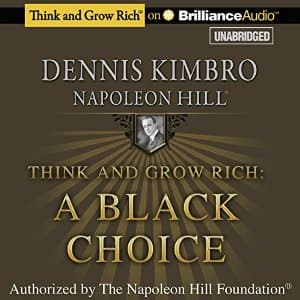
I've been through hundreds. Literally hundreds. And most of them are written by people who started on third base and wrote a book about hitting triples. Outliers digs into this same myth—the idea that success is self-made when it's really about hidden advantages. Dennis Kimbro's Think and Grow Rich: A Black Choice is different. It's the book I wish existed when I was watching my parents press shirts at 6 AM in Koreatown, wondering if the American Dream was just good marketing.
The Framework That Actually Works
I'll be honest—I've always had mixed feelings about Napoleon Hill. Some of his original stuff veers into woo-woo territory that makes my consultant brain itch. But Kimbro takes Hill's core principles and grounds them in something real: the stories of Black entrepreneurs and leaders who built empires despite systemic barriers that would've crushed lesser ambitions.
Spike Lee. Oprah. Jesse Jackson. These aren't hypothetical case studies from a Harvard Business Review article. These are people who figured out how to win a game that wasn't designed for them to play. Sound familiar? It should. That's the immigrant experience. That's the outsider experience. That's anyone who's ever been told—explicitly or implicitly—that the path to success wasn't meant for people like them.
Kimbro has the credentials to back this up. Doctorate in political economics from Northwestern. Certified Napoleon Hill trainer. But more importantly, he writes like someone who's actually been in the trenches, not just studied them from an office.
J.D. Jackson Earns His Earphones Awards
I listened to this at 1.75x (yes, I slowed down from my usual 2.0x—that's a compliment). J.D. Jackson's narration is exactly what this material needs: soothing enough that you don't feel like you're being yelled at by a motivational speaker in a hotel conference room, but with enough conviction that you actually believe what he's saying.
The man has won more than a dozen Earphones Awards, and you can hear why. There's a warmth to his delivery that makes 13+ hours feel manageable. When he's reading about someone who overcame impossible odds to build a business, you feel it. Not in a cheesy way—in a "okay, I should probably stop complaining about my Q3 projections" way.
My only gripe? At 13 hours 29 minutes, this is a commitment. Some sections could be tighter. But Jackson's pacing keeps things moving better than most business audiobooks this length.
What My Parents Already Knew
Here's the thing that hit me hardest: so much of what Kimbro writes about—the persistence, the creative problem-solving, the community-building—this is what my parents did instinctively. Now it has a TED talk. Now it has a framework.
My dad never read Napoleon Hill. He didn't need to. He worked 14-hour days because that's what you do when you're building something for your family. My mom kept the books, managed the customers, and somehow made our tiny dry cleaning shop feel like a community hub. They didn't call it "networking." They called it being a good neighbor.
Kimbro gets this. He understands that success principles aren't just theoretical constructs—they're lived experiences that certain communities have been practicing for generations out of necessity. The book validates that knowledge while also providing a structured way to think about it.
Who This Is For (And Who Should Skip)
Best for: Entrepreneurs who feel like outsiders. Anyone building something while navigating systems that weren't designed for them. Commuters who want motivation that doesn't feel like empty hype. People who appreciate success stories grounded in real struggle, not trust fund pivots.
Skip if: You want a quick tactical playbook—this is philosophy and mindset work, not a step-by-step guide to your first million. Also skip if you're allergic to motivational content in general, though Kimbro is far less preachy than most.
Jenny would say I'm being generous with the rating. Jenny is right—I usually tear apart business books this long. But this one earned it. The cultural specificity makes it universal, if that makes sense. By focusing on the Black American experience, Kimbro accidentally (or intentionally) wrote something that speaks to anyone who's ever had to work twice as hard for half the recognition.
The ROI Calculation
Is it perfect? No. Some chapters drag. Some principles feel repetitive if you've read the original Hill. But the core insight is worth the listen. The other 5-6 hours of padding? Still better than most business books, because at least the examples are real and the narrator is excellent.
I've seen too many "success" books that are really just survival bias dressed up in a nice suit. This one actually has something to say. And J.D. Jackson makes sure you hear it.