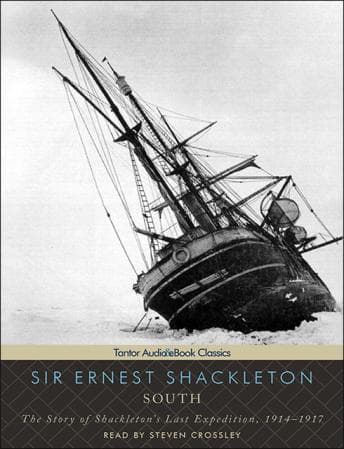

I did not expect to ugly-cry over a book about Antarctic ice and seal blubber. And yet here I am, mascara-streaked at 2 AM, absolutely wrecked by a 100-year-old expedition journal.
Look, I'll be honest—this is so far outside my usual romance-and-contemporary-fiction lane that I almost didn't finish it. My abuela would have side-eyed me hard for picking up a book about British explorers freezing their butts off instead of something with, you know, kissing. But sometimes a book finds you at exactly the right moment, and this one hit me like a freight train made of ice and determination.
Twenty-Eight Men and the Cruelest Place on Earth
Shackleton's writing is... a lot. I'm not gonna sugarcoat it. There are passages about barometric pressure readings and ice floe movements that made my eyes glaze over while I was designing a wedding invitation suite. The man loved his meteorological details the way I love a slow-burn romance subplot—obsessively and without apology.
But here's the thing that got me: underneath all that Edwardian stiff-upper-lip prose is a story about men who refused to let each other die. Twenty-eight guys stranded on Antarctic ice for almost two years, watching their ship get crushed like a soda can, and somehow—somehow—not a single one of them gave up. The quiet moments of care between them, the way Shackleton writes about keeping morale up, the tiny celebrations they manufactured out of nothing... my heart. MY HEART.
Yes, there's hunting. Seals and penguins. It's brutal to listen to, and I won't pretend I didn't wince. But they were starving. They were surviving. And Shackleton doesn't glorify it—he just tells it like it was.
Steven Crossley's Dignified Steadiness
I hadn't heard of him before this, and I couldn't find much about him online, but based on this performance? The man understands restraint in a way that serves this material perfectly. His Oxbridge accent feels authentic to the era without being cartoonish, and his pacing is measured—which some listeners call dry, but I'd argue is exactly right.
The moment when the Endurance finally gets crushed by the ice? Crossley's delivery shifts into something genuinely dramatic without going full Hollywood. He lets the horror of it breathe. I was walking my neighborhood at sunset, Diego and Frida waiting at home for dinner, and I literally stopped on the sidewalk with my hand over my mouth.
Is it the warm-honey-voice experience I usually crave? No. Julia Whelan this is not. But Crossley brings something else—a kind of dignified steadiness that mirrors Shackleton's own leadership style. It works. It really, really works.
Fifteen Hours of Ice (and Then That Boat Journey)
At fifteen and a half hours, this is a commitment. I listened over about three weeks, mostly during long design sessions and late-night work sprints. The pacing is slow—intentionally so, I think. You feel the weight of those months trapped on the ice. You feel time stretching. Some days I'd zone out during the technical passages and have to rewind.
But then you hit the boat journey. The 800-mile crossing in a tiny lifeboat through the most dangerous waters on earth. And suddenly you're white-knuckling your stylus pen and forgetting you have a deadline because how are they still alive? How is this real?
The emotional payoff is immense. Not in a romance-novel catharsis way, but in a deep, quiet way that sat in my chest for days after. This is a rainy Sunday book—or rather, a rainy Sunday month. It asks for patience and rewards you with something that feels genuinely profound.
Would Abuela Have Loved This?
Honestly? Probably not. Too cold, not enough drama between people who are in love. But she would have respected it. She would have understood the part about not giving up, about taking care of your people no matter what.
I cried during the rescue. I cried when they finally made it to South Georgia Island. I cried at Shackleton's quiet, understated pride in his men. Added three more tallies to my spreadsheet. Radium Girls hit me the same way—ordinary people doing extraordinary things under impossible circumstances, told with that same quiet devastation.
Who should listen: If you want to feel something ancient and true about human endurance, this is it. Who should skip: If you need action and pace, or if descriptions of animal hunting upset you, this one's not for you.
The vibes are immaculate, in their own frozen, brutal way.






![Steve Jobs [unabridged audiobook] audiobook cover](/_next/image?url=https%3A%2F%2Fcovers.audiobooks.com%2Fimages%2Fcovers%2Ffull%2F9788499923406.jpg&w=1920&q=75)