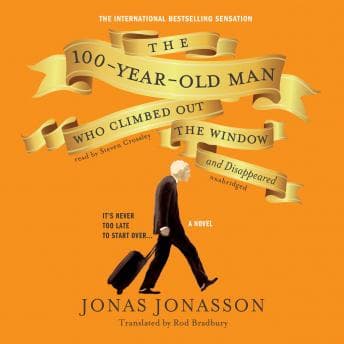

Everyone kept telling me this was "the Swedish Forrest Gump." I was skeptical. Forrest Gump works because of its earnest naivety meeting historical gravity. This? This is something else entirely—more absurdist, more deliberately ridiculous, and honestly, more European in its dark humor. The comparison sets wrong expectations. Allan Karlsson isn't naive. He's just genuinely, philosophically indifferent to everything except vodka and explosives.
I finished this during a particularly brutal week of grading junior essays on The Great Gatsby. (No, Jayden, the green light does not represent money. Well, okay, partly, but—never mind.) The escape into Allan's century-spanning chaos was exactly the literary palate cleanser I needed. Twelve hours of a centenarian stumbling through both 20th-century history and present-day Swedish crime felt less like a novel and more like someone's fever dream after reading too many Wikipedia articles about the Cold War.
The Prose Deserves to Be Savored (At Variable Speeds)
Here's my confession: I broke my own 1.0x rule. Multiple times. Jonas Jonasson writes in this deliberately meandering style—the flashback chapters where Allan accidentally influences Franco, Stalin, Truman, and Mao are genuinely clever. The man blows things up, drinks with dictators, and somehow survives every geopolitical catastrophe of the century through sheer apathy. It's brilliant satire.
But the present-day narrative? Where Allan and his accumulating band of misfits evade increasingly incompetent criminals? Some of those stretches felt like Jonasson was padding his word count. I found myself bumping to 1.25x during the third extended discussion about the elephant. (Yes, there's an elephant. Her name is Sonja. She's honestly more developed than some of the human characters.)
The structure keeps alternating between past and present, and Crossley handles the whiplash well. One moment you're in 1940s Los Alamos, the next you're watching Swedish gangsters argue about a missing suitcase. If you loved the historical-figure-cameo approach of Forrest Gump, this is its spiritual successor—but with sharper teeth and more explosions. Fellowship of the Ring takes a completely different approach to epic storytelling, but Crossley's dry delivery here reminded me why I love narrators who understand restraint.
Crossley's Allan Is Perfect. His Truman? Less So.
Steven Crossley's voice for Allan is perfect. That dry, matter-of-fact delivery as the old man describes accidentally causing international incidents? It's the whole joke. Allan's complete lack of emotional investment in anything—including his own survival—only works because Crossley plays it bone-dry. "Things are what they are, and what happens, happens," Allan keeps saying, and Crossley makes you believe this man genuinely doesn't care whether he's having lunch or overthrowing governments.
The supporting Swedish characters work fine. The criminals are appropriately menacing-but-stupid. The hot-dog vendor and his girlfriend feel real.
But then Allan meets American presidents.
Look, I've listened to a lot of audiobooks where narrators attempt American accents. Some pull it off. Crossley's Truman and Eisenhower sound like a British actor doing an impression of someone who once described an American accent to him. It's not terrible, exactly—just distracting enough to pull you out of scenes that should be funnier. (My students would roast him for this. They're ruthless about accent work since TikTok made everyone a dialect coach.)
The Iceberg Theory, Inverted
Hemingway talked about the iceberg theory—what's left unsaid matters as much as what's on the page. Jonasson does the opposite. Everything is said. Repeatedly. With extensive historical context. Crossley understands that pause is punctuation, and he uses that understanding well, but there's only so much pacing can do when the text itself wanders.
This is a 12-hour audiobook that probably should have been 9. The historical flashbacks are the novel's strength—Allan's accidental involvement in the Manhattan Project, his friendship with Einstein, his survival of a Gulag through sheer stubbornness. These sections crackle with satirical energy. The present-day chase narrative? It's entertaining enough, but it's also where the absurdity tips from "delightfully ridiculous" into "okay, I get the joke."
Denise asked me what I was laughing at during our lakefront walk last Sunday. I tried to explain the scene where Allan accidentally becomes a double agent for both the CIA and Soviet intelligence simultaneously, and she just looked at me like I'd lost my mind. Which, fair.
Who Should Climb Through This Window (And Who Should Stay Put)
If you want a plot-driven thriller, skip this. If you need tight pacing, skip this. If American accent work is a dealbreaker, maybe skip this.
But if you want something genuinely weird? Something that treats 20th-century history as a playground for one apathetic Swedish explosives expert? If you loved A Man Called Ove's curmudgeonly protagonist but wished he'd caused more international incidents? This is your book.
Road trips work well—the episodic structure means you can pause between historical eras without losing the thread. I wouldn't recommend bedtime listening unless you want dreams about elephants and nuclear physics.
Worth Pausing the Faculty Meeting For
I won't pretend this is high literature. It's not trying to be. It's a shaggy-dog story about a man who lived too long, cared too little, and somehow stumbled through every major event of the modern era with a vodka in hand. The audiobook experience is solid if uneven—Crossley's Allan is worth the price of admission, even when the pacing flags.
My students would hate this. Too long, too digressive, too many historical references they'd have to Google. I loved it anyway. Sometimes you need a book that reminds you history is just a series of accidents made by people who had no idea what they were doing.
Allan Karlsson would understand.