
The Book That Made Me a Reader
Look, I need to be honest about something before we go any further. I first read The Fellowship of the Ring in 1987, sitting in my grandmother's basement in Milwaukee, and it fundamentally rewired my brain. So reviewing this audiobook is like reviewing my own childhood. I'm biased. I know I'm biased. But hear me out anyway.
I listened to this over three weeks of lakefront walks with Denise, who has never read Tolkien and kept asking questions like "Wait, so the ring is bad?" and "Why don't they just fly the eagles there?" (Don't. Just don't.) Nineteen hours is a commitment. That's roughly the same amount of time I spend each semester trying to convince sophomores that The Great Gatsby isn't just about a rich guy who throws parties. But here's the thing—I never once felt the length. Not once.
Rob Inglis Gets It
This reminds me of what I always tell my students about Shakespeare: the words were meant to be performed, not just read silently in your head while checking your phone. Tolkien wrote Fellowship with an almost bardic quality—there's a reason he includes all those songs and poems that modern readers skip. Rob Inglis doesn't skip them. He sings them. Actually sings them, with melodies he composed himself.
Now, I know some people find this off-putting. One of my podcast listeners (hi, Gerald from Omaha) told me he switched to the Andy Serkis version specifically because he couldn't handle the singing. And I get it—if you're expecting Gollum doing his Gollum thing, Inglis isn't that. He's doing something older, something that feels more like sitting around a fire listening to someone tell you a story that's been passed down for generations.
The narrator understands that pause is punctuation. When Gandalf confronts the Balrog—"You shall not pass!"—Inglis doesn't shout it like a movie trailer. He delivers it with this terrible weight, this sense of a being who has lived for thousands of years finally drawing a line. It's quieter than you'd expect. It's better.
His hobbits are perfect. Frodo sounds young and earnest, Sam sounds like exactly the kind of loyal gardener you'd want at your side when the world is ending. Merry and Pippin are distinguishable without being cartoonish. But here's where I'll give the critics their due—his Aragorn does sound a bit old. Like, grandfather old. Aragorn is supposed to be weathered and ancient in spirit, sure, but he's also supposed to be vital, dangerous. Inglis makes him sound like he needs a nap. (My students would hate this. I love it anyway.)
Tolkien's Sentences Have a Rhythm Worth Protecting
I listened at 1.0x speed because—and I will die on this hill—Tolkien's sentences have a rhythm that gets destroyed at 1.25x. There's a passage early on, when Frodo is leaving the Shire, where Tolkien describes the road going "ever on and on, down from the door where it began." Inglis reads it like poetry because it IS poetry. Speed that up and you lose the ache of it, the sense of leaving home forever.
The pacing does drag in places. I'll admit that. The Council of Elrond is basically a forty-minute meeting where everyone recaps their homework, and even Inglis can't make Glorfindel's backstory riveting. I graded three sets of essays during that chapter. (Sorry, Tolkien. Sorry, Glorfindel.) But when the Fellowship enters Moria? When they're being hunted through those dark halls? I missed my turn three times because I couldn't stop listening.
That kind of immersion is rare, though I felt something similar with Silmarillion—Tolkien's mythology has this gravitational pull that makes you forget the outside world exists.
This is why we still read the classics. Because a book written in the 1950s, performed by a narrator who recorded this decades ago, can still make a 52-year-old English teacher forget where he's walking.
Who This Is For (And Who Should Maybe Try Something Else)
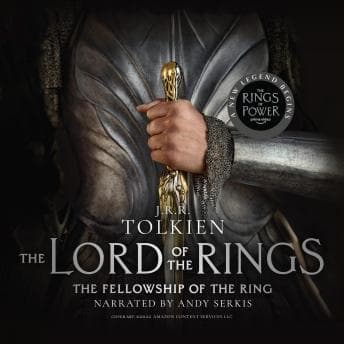
If you loved the Peter Jackson films and want that same energy—honestly, you might want the Andy Serkis version. He's more theatrical, more cinematic. Inglis is doing something different. He's doing the book as Tolkien wrote it, not as Hollywood adapted it.
Best for: long commutes, weekend cleaning marathons, anyone who wants to actually hear all those Elvish songs performed properly. Also anyone who, like me, read this book young and wants to experience it fresh through someone else's interpretation.
Skip if: you need constant action, you find traditional narration styles "boring" (a word I've banned from my classroom, by the way), or you genuinely cannot handle a grown man singing about Gil-galad.
The audio quality is clean and professional—no weird background hiss, no jarring edits. This is clearly a labor of love that got the production it deserved.
The Verdict
Nineteen hours. I'd do it again tomorrow. I'm already planning to continue with The Two Towers during next month's faculty retreat. Inglis also narrates Return of the King, so I'm committed to finishing the whole trilogy with him. (Principal Martinez, if you're reading this—I promise I'll pay attention during the budget presentation this time. I probably won't. But I promise.)
This isn't just an audiobook. It's a performance in the oldest sense of the word—one voice, one story, passed from teller to listener the way stories have been shared for thousands of years. Rob Inglis isn't just reading Tolkien. He's interpreting him. And that interpretation is warm, patient, and deeply respectful of the source material.
Worth pausing the faculty meeting for. Worth nineteen hours of your life. Worth revisiting a story you think you already know.