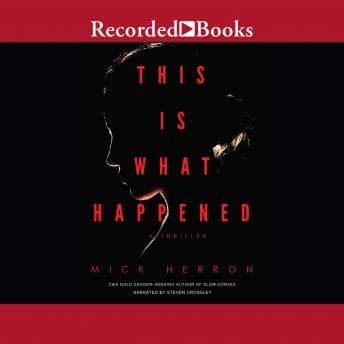
What happens when a thriller writer known for spy fiction decides to strip everything down to one woman, one room, and a whole lot of psychological manipulation?
I've been a Mick Herron evangelist since discovering the Slough House series, so when I saw he had a standalone about a lonely woman recruited by MI5, I was ready. Shirley (the cat, not Jackson) was unimpressed by my excitement. She remained unimpressed for the next seven and a half hours while I listened to this in increasingly dark corners of my apartment. Because that's how you do psychological suspense, apparently. I don't make the rules.
Here's the thing about This Is What Happened - it's not a spy thriller. Not really. It's a horror novel wearing a thriller's clothes, and I mean that as the highest compliment.
The Slow Dread That Herron Does Best
Maggie Barnes is exactly the kind of protagonist horror understands: invisible, isolated, desperate to matter. She's twenty-six, living alone in London, estranged from her only family, and when someone from MI5 approaches her with a mission to save Britain? She says yes. Of course she does. Wouldn't you?
This is where Herron's genius kicks in. The setup feels familiar - ordinary person thrust into extraordinary circumstances - but there's something rotten underneath from the very first chapter. The dread builds slowly, methodically, like water rising in a room with no exits. I kept waiting for the action-movie beats, the chase scenes, the dramatic reveals. Instead I got something far more unsettling: the horror of being manipulated by someone who knows exactly how lonely you are.
My podcast listeners are going to love this because it understands that horror isn't about gore - it's about dread. It's about watching someone walk into a trap while believing they're finally becoming the hero of their own story. Paris Apartment: A Novel plays with that same dynamic—ordinary people pulled into something sinister they can't quite see until it's too late. Dark? Absolutely. But Herron's dark humor cuts through just enough to keep you breathing.
Steven Crossley - The Voice That Divides
Okay, so. The narration situation is... complicated.
Steven Crossley commits. I'll say that much. When he shifts into Harvey - the MI5 handler who recruits Maggie - he becomes this seasoned, slightly oily London bloke, and the contrast with Maggie's quieter, more uncertain voice works beautifully. The tension builds because Crossley understands pacing. He knows when to let silence do the work.
But I've seen the reviews. Some people absolutely hated this narration - called it amateurish, couldn't finish despite multiple attempts. And look, I get it. Crossley's style isn't polished in that BBC radio drama way some listeners expect. There's something rawer about his delivery, almost uncomfortable at times.
Here's my take: that discomfort serves the story. This isn't a comfortable book. Maggie's situation is claustrophobic and increasingly awful, and having a narrator who sounds slightly off-kilter? It works for me. But I can see how it wouldn't work for everyone. If you need your narrators smooth and polished, sample first. Seriously.
When the Psychological Suspense Actually Delivers
I listened to the last two hours in complete darkness because I'd lost track of time and the sun had set and I was too invested to get up and turn on a lamp. Mistake? Maybe. Worth it? Absolutely.
The thing about psychological thrillers is that most of them cheat. They promise mind games and deliver car chases. Herron doesn't cheat. He keeps you in Maggie's head, in her increasingly small world, and forces you to experience her growing realization alongside her. When the pieces finally click into place - and they do, with the precision you'd expect from a CWA Gold Dagger winner - it's not a twist so much as a gut punch you should have seen coming. That gut-punch precision is something I desperately missed in Secret House, which telegraphed every reveal from chapter one.
Some readers found the plot predictable. I didn't, but I was also listening at night with all the lights off like a responsible horror enthusiast, so maybe I was too busy being creeped out to play detective. Either way, the destination matters less than the journey here. It's about watching manipulation happen in real time and feeling helpless to stop it.
Who Needs This in Their Ears (And Who Should Run)
If you scare easily, skip. If you don't, you need this.
Perfect for anyone who loves psychological horror dressed up as espionage, anyone who appreciates tight, lean prose that doesn't waste your time, and anyone who's ever felt invisible enough to be dangerous. Skip it if you want action-packed spy adventures or need your thrillers to move at a sprint. This is a slow burn, and it knows it.
The Lights Stay Off
Horror that respects the genre - even when it's technically shelved in mystery and thriller. Mick Herron wrote a horror novel and nobody told him. Or maybe he knew exactly what he was doing. With Herron, it's always hard to tell.