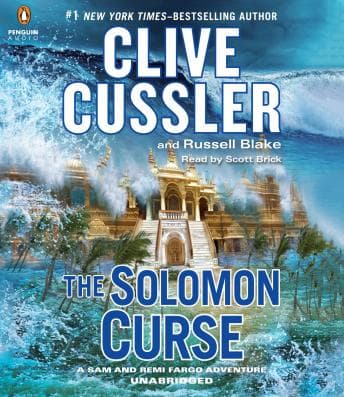

Faculty meeting. Third one this month about standardized testing metrics. Principal Martinez was explaining something about data dashboards, and I was forty minutes into a sunken temple exploration in the Solomon Islands. The irony of escaping bureaucratic tedium by listening to treasure hunters dodge cannibals and ancient curses wasn't lost on me. Neither was the fact that Sam and Remi Fargo were having considerably more fun than I was.
This reminds me of what Hemingway said about adventure—that it's just bad planning. The Fargos would disagree. They plan meticulously, they just happen to plan for chaos.
The Cussler Formula, Executed Competently
Look, I've been teaching long enough to recognize formula when I see it. Cussler novels—especially the ones with Russell Blake as co-author—operate like well-oiled machines. You get your globe-trotting setup, your mysterious legend that turns out to be real, your competent protagonists who are wealthy enough to never worry about mundane concerns like grading papers at 11 PM. It's escapism, pure and uncut. Heartburn offers a different flavor of escape—less treasure hunting, more emotional excavation—but both remind me why I keep audiobooks queued up during faculty meetings.
The Solomon Curse delivers exactly what it promises. The mystery of the vanished Solomon king's empire, islanders disappearing under suspicious circumstances, whispers of cannibal giants—it's pulpy and ridiculous in the best possible way. The trail from the Solomons to Australia to Japan keeps things moving, though I'll admit some of the middle sections drag. That pacing issue reminded me of Just After Sunset—King's collection has similar momentum problems between its stronger pieces. My students would probably call this "mid." They're not entirely wrong. But there's something to be said for reliable entertainment.
The plot logic gets wobbly in places. Characters make decisions that serve the story rather than common sense. (Why split up in the creepy temple? Why not call for backup before confronting the obviously dangerous antagonists?) I found myself mentally grading these choices. C-minus for self-preservation, A for narrative convenience.
Scott Brick: A Study in Polarization
Here's where things get complicated. Scott Brick has won over fifty AudioFile Earphones Awards. He's been named a Golden Voice. The man has credentials. And yet—
His performance here is... uneven. There's an understated, youthful masculinity to his read that works well for Sam Fargo. He conveys gravity and levity with equal skill, shifting between sarcasm and sincerity in ways that feel natural. When the action picks up, he brings genuine gusto.
But then there's the accent issue. Brick gives Solomon Islanders a Caribbean lilt, which is—how do I put this diplomatically—geographically indefensible. The Solomon Islands are in the South Pacific. The Caribbean is roughly ten thousand miles away. It's like casting someone with a thick Boston accent to play a character from Tokyo. My students would catch this. It pulled me out of the story every time.
And the pacing. During action sequences, Brick occasionally falls into a rhythm that's almost... soporific? One reviewer claimed he "could put a raging bull to sleep." That's harsh. But during the quieter stretches between set pieces, I understood the criticism. The emotional range is there, but the delivery sometimes flattens when it should punch.
Worth Pausing the Faculty Meeting For?
Here's my honest assessment: if you're already a Fargo Adventures fan, this is perfectly serviceable. Brick's narration made me enjoy it more than I probably would have reading it myself—his personality carries the lighter moments, and his gravitas sells the danger. But if you're new to the series, this isn't where I'd start.
The sunken temple exploration is genuinely fun. The "cannibal giants" revelation lands with appropriate pulpy horror. And there's something satisfying about husband-and-wife protagonists who actually like each other. (This is rarer in fiction than it should be. The prose deserves to be savored when Cussler and Blake let the Fargos just... be a couple.)
But the accent inaccuracies grated on my teacher's soul. And some listeners have reported audio volume issues—I didn't experience this, but if you're listening via car Bluetooth, maybe test it first before you're stuck on the highway.
Who Gets the Extra Credit (And Who Gets an Incomplete)
This is for you if: you want competent adventure fiction that doesn't demand your full attention, you enjoy treasure hunting narratives, you're already invested in the Fargos, or you need something to survive meetings about data dashboards.
Skip it if: geographical accuracy matters to you, you need tight plotting, or you find Brick's narration style stilted. Some people love him. Some people can't stand him. I'm somewhere in the middle—appreciative of his skill, frustrated by his choices.
Final Grades Posted
Eleven hours and forty-seven minutes. That's roughly the time it takes to grade two class sets of essays, or survive four faculty meetings, or walk the lakefront with Denise about fifteen times. I don't regret spending it in the Solomon Islands with the Fargos. But I'm not rushing to relisten, either. It's the literary equivalent of a decent action movie—entertaining in the moment, mostly forgotten by next week. Sometimes that's exactly what you need.