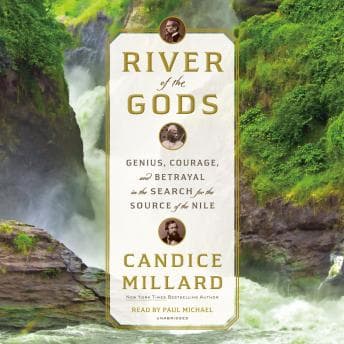

Candice Millard wrote a better case study on partnership failure than anything I assigned at McKinsey.
I picked this up during a solo weekend - Jenny took the kids to her parents', and I had the apartment to myself with leftover bulgogi and a rare stretch of unscheduled hours. Figured I'd catch up on something outside my usual business stack. Ten hours later, I'm pacing the kitchen at midnight genuinely angry at a dead Victorian explorer. That's good writing.
The Best Co-Founder Breakup Story You've Never Heard
Here's what grabbed me: Burton and Speke's expedition is basically a startup with two incompatible co-founders and no operating agreement. Burton is the visionary - speaks twenty-nine languages, thinks in systems, can't play well with institutions. Speke is the operator type, except he's also insecure, politically savvy, and willing to sprint to the Royal Geographical Society to claim credit while his partner is still bedridden with fever.
I've seen this exact dynamic blow up three companies. The guy who does the intellectual heavy lifting versus the guy who controls the narrative. Speke literally raced back to London to present Burton's shared expedition as his own discovery. If that doesn't sound like every equity dispute in Silicon Valley, you haven't been paying attention.
But Millard doesn't pick sides cheaply. Burton was arrogant and self-sabotaging. Speke was ambitious but not without real courage - the man explored East Africa half-blind from a beetle that burrowed into his ear canal. (Yeah. A beetle. In his ear. Paul Michael narrates that section with this calm matter-of-factness that somehow makes it worse.) The point is both men were flawed, both contributed, and the partnership was doomed from day one because nobody defined roles, expectations, or credit-sharing. Sound familiar?
The Third Name on the Cap Table Who Got Nothing
This is where Millard earns your time and then some. Sidi Mubarak Bombay - enslaved as a child, shipped to India, worked his way to freedom, then became the guide and translator who actually made both expeditions function. Without Bombay, Burton and Speke would've died somewhere in present-day Tanzania arguing about which direction was north.
This is what my parents did instinctively. Now it has a TED talk. Bombay was the one negotiating with local leaders, managing porters, solving logistics problems on the ground while the two Englishmen were busy being sick or being rivals. He ran the operation. William Cronon maps the same extraction mechanism in Changes in the Land - different continent, different century, same institutional template for deciding whose labor gets to become someone else's legacy. And the colonial system ensured his name got buried under imperial credit-taking for over a century.
Millard structures the book in rotating focus - Burton's chapters, Speke's chapters, Bombay's chapters. It's a smart structural choice because you feel the three parallel stories converging and diverging. By the time you reach the final act - Speke's death the day before the public debate with Burton - the tragedy hits different because you've tracked all three trajectories.
Paul Michael Earns His Fee
Paul Michael's performance is solid. His baseline is clean American, but he shifts into distinct British registers for Burton versus Speke - Burton gets this lower, more sardonic delivery while Speke comes across clipped and earnest. The accents for African and Indian characters are handled with care, which matters given the subject. Some listeners apparently found his default register a bit vanilla, and I get that - he's not doing anything showy. But for 10 hours of dense historical narrative, I'd rather have steady and accurate than theatrical and distracting.
At 1.5x (I actually dropped from my usual 2.0x - the geographical detail rewards slower processing), the pacing felt right. Millard writes lean. There's almost no padding here, which is rare for narrative nonfiction. No 40-page digressions into tangential history. She trusts the story to carry itself.
Who Gets the Memo
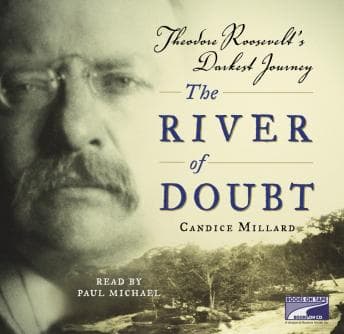
If you've burned through Millard's The River of Doubt and want more of her particular talent for making 19th-century exploration feel urgent and modern - skip nothing, listen front to back. If you're a business person who reads history for pattern recognition, this is rich territory. Partnership dynamics, credit disputes, the invisible labor that makes visible success possible. It's all here.
Skip this if you need action every chapter. There are stretches of geographical and political context that require focus. This isn't background listening. It's a sit-down-and-pay-attention book.
Bottom Line: Worth Every Hour of the Ten
Finally, a business-relevant history book that respects your time. Millard could teach most business authors how to structure an argument - give me the characters, give me the conflict, show me why it matters, get out. Ten hours, no filler, a story that's simultaneously about Victorian exploration and about who gets credit when the work is done by people the system wasn't built to recognize. My parents would understand Bombay immediately. Most CEOs wouldn't. That gap is the whole point.








![Steve Jobs [unabridged audiobook] audiobook cover](/_next/image?url=https%3A%2F%2Fcovers.audiobooks.com%2Fimages%2Fcovers%2Ffull%2F9788499923406.jpg&w=1920&q=75)