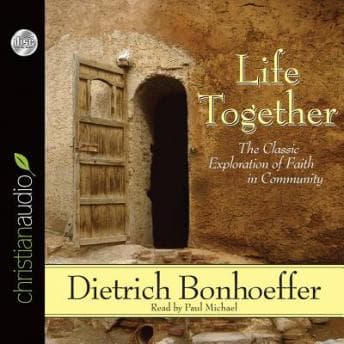

Bonhoeffer doesn't write like a theologian expecting tenure. He writes like a man expecting the Gestapo. Because he was.
I listened to this on a gray Tuesday morning, walking the path near Montrose Harbor while the wind tried to push me into Lake Michigan. It felt like the only appropriate setting. You can't listen to Life Together while folding laundry or grading papers. I tried grading a stack of sophomore essays on The Great Gatsby while listening to the first chapter, and I had to stop. The cognitive dissonance was too loud. You can't toggle between a teenager's analysis of the green light and Bonhoeffer's dissection of Christian fellowship under the shadow of the Third Reich.
This isn't the fluffy "let's all hold hands" spirituality my mom buys at the airport bookstore. This is a survival manual. Written while Bonhoeffer was leading an illegal underground seminary, it treats community not as a social bonus, but as a spiritual lifeline. And Paul Michael sounds exactly like the kind of guy you'd trust with that message.
A Stained-Glass Voice With a Speeding Ticket
Paul Michael has what I call a "stained-glass voice." Resonant. Measured. He has this specific gravity to his tone that fits a German pastor writing about the Psalms. He doesn't act the text; he delivers it. There's a credibility there—you believe he understands the weight of the words.
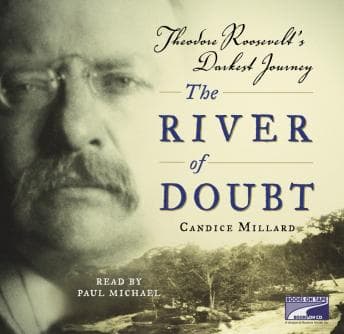
Paul Michael brought that same quiet authority to River of Doubt, another book where the subject matter demands a narrator who sounds like he's been somewhere difficult and come back changed.But—and this is a big but—the man is in a hurry.
I'm a purist. I listen at 1.0x speed. Always. I tell my students that speeding up an audiobook is like skimming poetry—you miss the music. But about twenty minutes in, I realized I was losing the thread. Bonhoeffer's sentences are dense; they're packed with theological muscle that requires a second to digest. Michael plows through them like he's reading a terms of service agreement.
I actually had to do the unthinkable. I swallowed my pride and dropped the speed to 0.9x. Suddenly, the text breathed. The pauses—which are crucial in a book literally about the importance of silence—finally appeared. If you don't slow this down, you're going to miss the architecture of his arguments. It's a 3.5-hour book that feels like a 10-hour lecture if you let the narrator rush you.
The Ministry of Listening (And Why Faculty Meetings Came to Mind)
There's a section where Bonhoeffer talks about the ministry of listening—how we love to hear ourselves talk more than we love our brothers. Ouch. Standing there in the Chicago wind, pausing the track to rewind that sentence, I felt that check in my spirit. It reminded me of faculty meetings where we all talk over each other to prove we're the smartest person in the room.
The audio format actually helps here. Hearing the admonition to "sing together" or "pray together" hits differently than reading it on a page. Michael's delivery, once I slowed it down, felt less like a lecture and more like an exhortation. He captures the urgency. Bonhoeffer knew the walls were closing in. He knew that this "life together" was a fragile, temporary gift. The narration eventually settles into that reality, stripping away the academic distance.
Who This Is For (And Who Should Keep Walking)
If you're tired of spiritual platitudes and want something that demands your full attention—and you're willing to fiddle with the speed settings—this is worth the afternoon. But if you need your theology gentle and your narration leisurely paced out of the box, you'll fight this one the whole way.
Class Dismissed
Is it perfect? No. The pacing issue is a real technical flaw. It forces the listener to do the production work that the director should have done. But the substance? Pure iron.
My podcast listeners usually want me to talk about Austen or Dickens—cozy classics. I don't know if I'll air an episode on this one. The last time I felt this reluctant to recommend something was with Kept for the Master's Use—another short spiritual text that asks more of the reader than most people realize they're signing up for. It feels too personal. Too demanding. But sometimes the hard stuff is exactly what the syllabus needs.