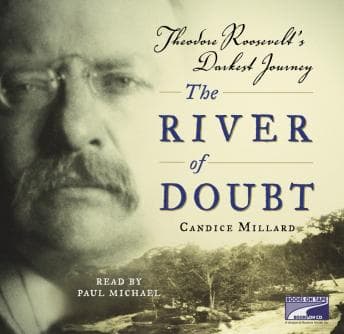

"I will not be a burden. I will not slow you down. I will get out."
That's Theodore Roosevelt - former President of the United States, Rough Rider, big game hunter - contemplating suicide in the middle of the Amazon jungle. I had to pause my walk along the lakefront when I got to that moment. Just stood there staring at Lake Michigan like an idiot while joggers went around me.
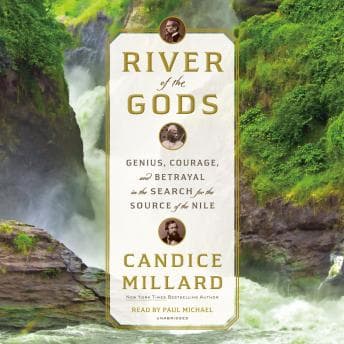
This is what I love about great narrative nonfiction. Candice Millard takes a footnote from history - Roosevelt's post-presidential expedition down an unmapped Amazon tributary in 1914 - and turns it into something that reads like Conrad's Heart of Darkness, except it actually happened. And honestly? It's more harrowing than fiction because you know these men really suffered through every mosquito bite, every bout of malaria, every capsized canoe.
When History Becomes a Thriller
Look, I teach high school English. I've spent two decades trying to convince teenagers that old things can be exciting. This audiobook is basically my entire pedagogical philosophy in 12 hours. Millard understands that pause is punctuation - she knows when to let a moment breathe and when to push you forward into the next disaster.
And there are so many disasters. The expedition loses canoes to rapids. Men get sick. Someone gets murdered. Roosevelt himself develops a leg infection so severe he can barely stand, yet insists on walking rather than being carried because he refuses to slow down the group. The man was 55 years old with a bullet still lodged in his chest from an assassination attempt. My students would say he was "built different." They wouldn't be wrong.
What Millard does brilliantly is layer the natural history of the Amazon alongside the human drama. You learn about piranha behavior (less dangerous than movies suggest, but still terrifying), about the indigenous Cinta Larga people watching from the jungle, about the parasites that burrow into human flesh. It's the kind of research that makes you feel like you're actually learning something important while being thoroughly entertained.
Paul Michael Gets the Assignment
Paul Michael's narration is measured and deliberate, which works perfectly for this material. Some reviewers have called it slow, and I get that - if you're used to listening at 1.5x or 2x, this might feel like wading through molasses. But I'm a 1.0x purist (my students think I'm ancient for this take, and they're not wrong), and at normal speed, Michael's pacing matches the grueling, day-by-day slog of the expedition itself.
His voice has this neutral, almost documentary quality that keeps the focus on Millard's prose rather than calling attention to itself. He's not doing voices for Roosevelt or Rondon or Kermit - this isn't that kind of performance. Instead, he's a steady guide through increasingly desperate circumstances. When things get dark - and they get very dark - his restraint actually amplifies the horror. He doesn't need to oversell Roosevelt's fever dreams or the murder that happens within the expedition. The facts are awful enough.
I will say there are moments where a bit more variation might have helped. Some of the scientific passages about jungle ecology can feel a touch dry in audio form. But honestly? That's a minor complaint. The production from Tantor is clean and crisp, no weird audio artifacts or volume issues.
The Man Behind the Myth
This reminds me of what Hemingway said about courage - that it's grace under pressure. Roosevelt had that in spades, but Millard doesn't let him become a two-dimensional hero. She shows us a man driven by ego and ambition, someone who chose this expedition partly to prove he wasn't washed up after losing the 1912 election. The River of Doubt was punishment he inflicted on himself.
The relationship between Roosevelt and his son Kermit is quietly devastating. Kermit essentially saves his father's life multiple times, and you sense the weight of that responsibility on a young man who never asked for it. There's a moment where Kermit has to physically stop his father from wandering off into the jungle to die. Worth pausing the faculty meeting for. (Sorry, Principal Martinez.)
If you loved David Grann's The Lost City of Z or Nathaniel Philbrick's In the Heart of the Sea, this belongs on the same shelf. Same DNA of meticulous research married to propulsive storytelling. Same willingness to show great men at their most vulnerable. That philosophical tension between greatness and vulnerability runs through Beyond Good and Evil too, though Nietzsche would probably argue Roosevelt's refusal to quit was the ultimate expression of the will to power.
Who Should Listen (And Who Should Skip)
If you love narrative nonfiction that treats history like a thriller - Grann, Philbrick, Erik Larson - this is essential listening. If you need fast-paced narration or dramatic voice acting, Paul Michael's measured approach might test your patience. Skip it if "former president nearly dies of gangrene in the Amazon" somehow doesn't sound like a good time to you.
Would I Listen Again?
Denise asked me why I kept stopping during our evening walks. I tried to explain that I was listening to a story about a former president almost dying of gangrene in the Amazon, and she just nodded the way she does when I go on about Faulkner. But later she asked if she could borrow my Audible login. So. That's my review, I guess.
This is history that reads like adventure, performed with the restraint the material deserves. My students would probably hate how serious it is. I loved every minute.





![Steve Jobs [unabridged audiobook] audiobook cover](/_next/image?url=https%3A%2F%2Fcovers.audiobooks.com%2Fimages%2Fcovers%2Ffull%2F9788499923406.jpg&w=1920&q=75)