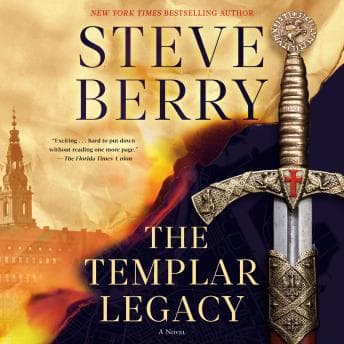

Look, I know I should've been working on my thesis chapter about procedural dungeon generation. But Steve Berry dropped a Knights Templar mystery in my lap, and honestly, what was I supposed to do? Be responsible? Please.
This is basically a 16-hour D&D campaign where the DM has done way too much historical research. And I mean that as the highest compliment.
The Lore Dump I Actually Wanted
So here's the thing about Templar Legacy - Berry does that thing where he threads real history into the thriller plot, and it actually works? Like, I'm learning about 14th-century Inquisition tactics while Cotton Malone is getting shot at in French cathedrals. The world-building is chef's kiss. Berry clearly spent months in libraries before writing this, and you can feel it. The puzzles, the hidden codes, the scattered clues across Europe - it's giving National Treasure but with actual historical depth.
Cotton Malone himself is a fun protagonist. Former Justice Department operative, now an antiquarian book dealer in Copenhagen? That's such a specific character choice and I'm here for it. He's competent without being insufferable, which is harder to pull off than it sounds. The villain, Raymond de Roquefort, has that zealot energy that makes for genuinely threatening antagonists. My D&D group would absolutely use him as a BBEG template.
The pacing does drag in places - I'm not gonna lie. There are stretches in the middle where the historical exposition gets a little dense, even for someone who voluntarily reads Sanderson's appendices. But when it moves, it MOVES. The action sequences are tight, the chase scenes are tense, and the reveals land with satisfying weight.
Paul Michael Carries the Quest
Paul Michael's narration is solid. Not Steven Pacey-level transcendent, but genuinely good. His delivery is smooth and easy to follow, which matters a lot when you're juggling this many plot threads and historical details. He's got decent range for the character voices - the French accents work, the distinction between Cotton and the supporting cast is clear enough.
I did notice some inconsistency with the secondary characters. Sometimes a voice that was distinct in chapter three sounds slightly different by chapter fifteen. It's not dealbreaking, but it pulled me out a couple times. And there are moments where he pushes the dramatic delivery a bit hard - like, we get it, tension is happening, you don't need to lean on it quite that much.
But overall? The narration serves the story well. The production quality is clean, no weird audio artifacts or jarring transitions. There's apparently a bonus epilogue which... exists? It didn't add much for me, but completionists will appreciate it.
Who Should Listen (And Who Should Skip)
Okay, real talk. If you bounced off The Da Vinci Code because the history felt shallow, this might actually work for you. Berry goes deeper. The Templar mythology here isn't just window dressing - it's central to the plot and he treats it with genuine respect. That same respect for historical detail shows up in Moby Dick, though Melville takes the cetology lectures to a whole different level.
If you don't like info-dumps, skip this one. Seriously though, there are extended sequences of characters explaining historical context to each other, and if that's not your thing, you'll get frustrated. I listened to most of this while debugging a pathfinding algorithm at 2 AM, and the exposition actually helped keep me focused. Your mileage may vary.
The twist at the end - the reveal about what the Templar treasure actually IS - genuinely surprised me. I won't spoil it, but it's not what you're expecting if you've read other Templar fiction. Berry zigged when I thought he'd zag, and I respect that.
The Final Session
Would I recommend this? Yeah, actually. It's a solid historical thriller with enough depth to satisfy nerds like me who want the world-building to matter. Cotton Malone is a character I'd happily follow into more adventures (and apparently there are like twelve more books, so thesis timeline just took another hit).
It's not perfect. The middle section could use some trimming, and Paul Michael's narration has moments where it oversells the drama. But for a 16-hour listen? It kept me engaged through multiple late-night coding sessions and a truly regrettable amount of procrastination.
My advisor would be disappointed. Worth it.