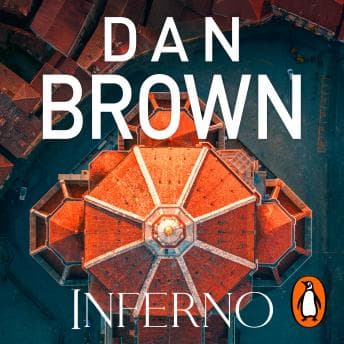

Look, I need to talk about something that's been bothering me since hour three of this audiobook. Robert Langdon has a photographic memory, an encyclopedic knowledge of Renaissance art, and the physical stamina to sprint through Florence while bleeding from a head wound. But the man cannot—CANNOT—resist stopping mid-chase to deliver a lecture about Vasari's ceiling techniques. I'm listening at 6 AM on a Cambridge jog, heart rate elevated, genuinely invested in whether Langdon and Sienna will escape their mysterious pursuers, and suddenly we're getting a fifteen-minute dissertation on Botticelli's Map of Hell. My therapist would have thoughts about this character's priorities.
And yet. Here's the thing that frustrates me as someone who studies why people do what they do: Dan Brown understands something fundamental about human psychology that most thriller writers miss. Langdon clings to his art history knowledge like a security blanket precisely because the present situation terrifies him. Classic avoidance behavior. It's actually brilliant characterization wrapped in occasionally tedious pacing.
The Amnesia Gambit (And Why It Works Better Than It Should)
Amnesia as a plot device? I've read approximately forty-seven thrillers that use this trope, and most of them make me want to throw things. But Brown does something clever here. Langdon's memory loss isn't just convenient—it forces him (and us) to piece together the puzzle without the usual Langdon smugness. He's genuinely vulnerable. Stripping away a character's core competency creates tension in ways that external threats simply can't match.
The Dante's Inferno framework gives the whole thing an intellectual backbone that elevates it above standard chase-thriller fare. Still Life uses art history in a similar way—the murder mystery becomes inseparable from the paintings themselves. Brown clearly did his homework on plague history, population ethics, and Florentine architecture. Whether you find this enriching or exhausting depends entirely on what you're looking for. I kept asking myself: why does Langdon really need to explain every single historical detail? Because that's who he is. Research actually shows that experts under stress often retreat to their area of expertise. Psychologically, this tracks.
Paul Michael's Italian Pronunciation Deserves Its Own Paragraph
Paul Michael does something I wasn't expecting—his Italian pronunciation is genuinely beautiful. Not performative, not over-the-top, just... correct. As someone who's sat through audiobooks where narrators butcher foreign words like they're being paid by the mispronunciation, this was refreshing. His Langdon has a slightly deep, professorial quality that works for the character. The voice softening for female characters like Sienna is subtle enough to not feel patronizing.
Where it falls slightly flat: Langdon's dry wit. Brown writes these little sardonic observations, and Michael delivers them straight. I wanted more of that raised-eyebrow energy. The Provost gets excellent treatment though—there's this cold, bureaucratic edge that made me genuinely uncomfortable. Minor characters pop in ways that kept me oriented during the more complex conspiracy reveals.
Who Should Commit Seventeen Hours to This
If you're the person who watches travel documentaries while folding laundry, who reads Wikipedia articles about the Medici family for fun, who genuinely wants to know how the Palazzo Vecchio's secret passages work—this is your audiobook. Brown's tour guide tendencies become features, not bugs.
If you want pure thriller momentum, you'll get frustrated. There are stretches where the pacing slows to a museum docent's pace. I caught myself speeding up to 1.25x during the art history deep-dives and slowing back down for the action sequences. Skip this if you need your thrillers lean and mean.
The ethical questions Brown raises about overpopulation are genuinely thought-provoking (my dissertation committee would appreciate that I'm noticing this). The villain's logic is internally consistent in a way that's more disturbing than mustache-twirling evil. I saw that same moral complexity in Tattooist of Auschwitz, where survival decisions force you to confront what you'd actually do under impossible circumstances. What makes this antagonist compelling is that you can almost see their point—which is exactly when you should start worrying.
Case Closed
This is a solid entry in the Langdon series—better than The Lost Symbol, if you're keeping score. The Florence setting feels lived-in, the Dante mythology adds genuine depth, and the central mystery kept me engaged through seventeen hours of morning runs and late-night cooking sessions. (I made an entire biryani during the Vatican conspiracy reveals. Don't ask.)
Paul Michael's narration is professional and occasionally excellent, though I wanted him to lean harder into Langdon's personality quirks. The production is clean, no weird audio jumps or background noise.
Is it essential listening? No. Is it a satisfying way to spend a long road trip or a month of commutes? Absolutely. Just accept that you're signing up for Art History 301 with occasional gunfire, and you'll have a good time.