
I expected something dusty. Victorian devotional writing? From a 19th-century English hymn writer? My brain was already preparing to zone out somewhere around hour two, letting the words become pleasant background noise while I charted.
I was wrong. Frances Ridley Havergal surprised me.
Not Your Grandmother's Prayer Journal
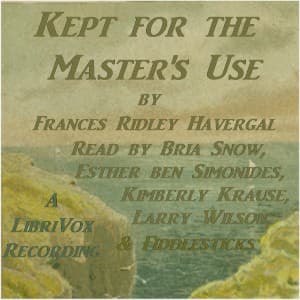
Here's the thing about Havergal - she wasn't writing from some ivory tower of piety. This woman was chronically ill for most of her adult life, dealt with real loss, and still managed to write "Take My Life and Let It Be" (which, if you grew up in any kind of church, you've probably sung about four hundred times). What struck me listening at 4 AM while the unit was finally quiet was how practical she is. She's not floating around in religious abstractions. She's talking about hands, feet, voices, time - the actual physical parts of your life and what you do with them. That same focus on the physical reality of faith shows up in Memories of Childhood's Slavery Days, though from a completely different angle—one rooted in survival rather than devotion.
It's structured around that hymn, actually. Each chapter takes a line - "Take my hands," "Take my voice," "Take my silver and my gold" - and she unpacks what consecration looks like in real, daily terms. For someone who spends twelve-hour shifts using my hands to start IVs and my voice to calm panicking families, this hit different than I expected.
The LibriVox Reality Check
Okay, let's talk about the elephant in the room. LibriVox is volunteer narration. You're not getting a polished studio production here. The readers rotate, so you'll hear different voices across chapters - some British, some American, varying levels of audio quality. One chapter might sound like it was recorded in a proper studio, the next like someone's living room.
Is it distracting? Sometimes. But honestly, at 3 AM when I'm just trying to decompress and not think about the code we ran earlier, the variety almost helped. Kept me from getting too lulled. And there's something fitting about a book on Christian service being read by volunteers giving their time for free. Havergal would probably appreciate the poetry of that.
The pacing is slow by modern standards - this is Victorian prose, after all. I bumped it to 1.25x and that felt right. Still meditative, but not dragging.
When Faith Gets Specific
What I appreciated most - and this is coming from someone who's pretty skeptical of religious writing that stays vague and comfortable - is that Havergal gets uncomfortable. She talks about money. About time. About the words that come out of your mouth when you're tired and frustrated. She wrote this in the 1870s and somehow anticipated every excuse I've ever made about why I can't be more generous, more patient, more present.
There's a section on "Take my moments and my days" that genuinely made me think about how I spend the forty-five minutes between work and home. Usually I'm just trying to shake off whatever happened on shift. But she's asking harder questions. Not in a guilt-trippy way - more like a friend who knows you can do better and isn't going to pretend otherwise.
Who Should Listen (And Who Should Skip)
If you're looking for a biography in the traditional sense - childhood stories, dramatic life events, narrative arc - this isn't it. It's more devotional than memoir, despite the category. The "memoir" part is woven through as personal illustrations, but the structure is thematic, not chronological.
Perfect for: Anyone in a contemplative season. Night shift workers who need something calming but substantive. People who grew up in church and want to revisit faith with adult eyes. My mom would love this (she still thinks I should've been a doctor, but she'd appreciate that I'm listening to something "good for my soul").
Skip if: You need action. You want polished production values. Victorian prose makes you want to throw things. You're not in a place where religious content feels welcome.
Night Shift Prescription
Four hours is a manageable commitment - about three quiet shifts of charting, or a week of commutes. It's not going to change your life overnight, but it might change how you think about the next twelve hours of it. Havergal died at 42, knowing her time was limited. She wasn't writing theory. She was writing from the middle of a life she knew would be short.
Carlos asked why I was so quiet driving home yesterday. I didn't have a good answer. Sometimes a book just sits with you, you know? This one's sitting.






![Steve Jobs [unabridged audiobook] audiobook cover](/_next/image?url=https%3A%2F%2Fcovers.audiobooks.com%2Fimages%2Fcovers%2Ffull%2F9788499923406.jpg&w=1920&q=75)