
How do you wage a war without firing a shot? You change the land itself.
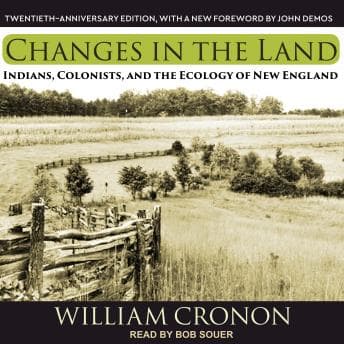
I finished this one during a three-hour drive to Houston for a client meeting - the kind of windshield time that usually gets eaten up by podcasts about corporate security trends. But Cronon's book grabbed me in a way I wasn't expecting. Here I am, a guy who spent decades thinking about territory in terms of tactical advantage and defensive perimeters, and this historian flips the whole concept on its head. The colonists didn't just take the land. They fundamentally rewrote what "land" meant.
The Terrain Assessment You Never Got in School
Let me cut to the chase: this is the environmental history of New England that your American History class completely skipped. Cronon's thesis is deceptively simple - Native Americans and European colonists had radically different concepts of property, and those differences literally reshaped the ecosystem. But the execution is anything but simple. He's pulling from ecological data, colonial diaries, property records, and anthropological research to build his case.
The author clearly did his homework. We're talking about a professor of History, Geography, AND Environmental Studies at Wisconsin-Madison. His other book was a Bancroft Prize winner and Pulitzer finalist. This isn't some armchair theorist - he's working with primary sources and scientific data in a way that would satisfy the most skeptical intelligence analyst.
What hit me hardest was the section on how the colonists' livestock changed everything. Pigs rooting through the forest floor. Cattle requiring permanent fencing. Suddenly you need boundaries where none existed before. The Native concept of seasonal land use - hunting grounds in winter, fishing spots in spring - became incompatible with English property law. It's a slow-motion collision, and Cronon documents it with the precision of an after-action report.
Bob Souer Delivers the Intel
Souer's narration is solid. Clear, well-paced, and he handles the academic material without making it feel like a lecture. For a book this dense - we're talking seven-plus hours of ecological and economic history - you need a narrator who can keep you tracking. He does.
One thing that'll bug some listeners: he mispronounces "quahog" as "quay-og." If you're from New England, that's going to grate on you every single time. It's a minor issue in the grand scheme, but it's the kind of detail that makes you wonder if anyone from Rhode Island was involved in the production. (Ranger perked up every time he said it wrong. Even my dog knows that's not right.)
The production is clean - no sound effects, no music, just straight narration. For academic material like this, that's exactly what you want. No distractions from the argument Cronon's building.
When and How to Deploy This One
Here's the thing - this isn't background listening material. Cronon's making a complex argument about ecological change, economic systems, and cultural collision. You lose the thread, you miss the point. I had to rewind twice when my mind wandered to the meeting ahead.
This book is for focused listening. Morning commute when you're sharp. A quiet afternoon. Maybe a long flight where you've got nothing else competing for attention. Don't try this one while you're at the gym or doing housework. The material deserves better.
Who should grab this? Anyone interested in how we got here - environmentally, economically, culturally. History buffs who want more than battlefield dates. Folks in conservation or land management who want historical context. And honestly? Anyone who thinks they understand American history but has never considered the ecological dimension.
Who should skip it? If you need explosions every chapter, look elsewhere. If academic prose puts you to sleep regardless of content, this might be a struggle. Linda would've checked out by hour two.
Mission Debrief
Cronon's closing line - "The people of plenty were a people of waste" - has been rattling around in my head since I finished. It's the kind of statement that sounds like judgment but reads like diagnosis. After 25 years in the military, I've seen what happens when one system of organizing the world collides with another. Story of My Life explores a different kind of collision—between who we think we are and who we actually become. Usually it's faster and louder than what Cronon describes. But the outcome? Territory changed hands. The land itself was transformed. And the people who'd lived there for millennia found their entire way of life made impossible - not by conquest alone, but by a different definition of what land was for.
Worth your time? If you're ready to think about American history from an angle you've never considered, this is essential listening. Just be prepared to actually listen. Ranger approved this one.








![Steve Jobs [unabridged audiobook] audiobook cover](/_next/image?url=https%3A%2F%2Fcovers.audiobooks.com%2Fimages%2Fcovers%2Ffull%2F9788499923406.jpg&w=1920&q=75)