
"The forests of Washington are the glory of the West."
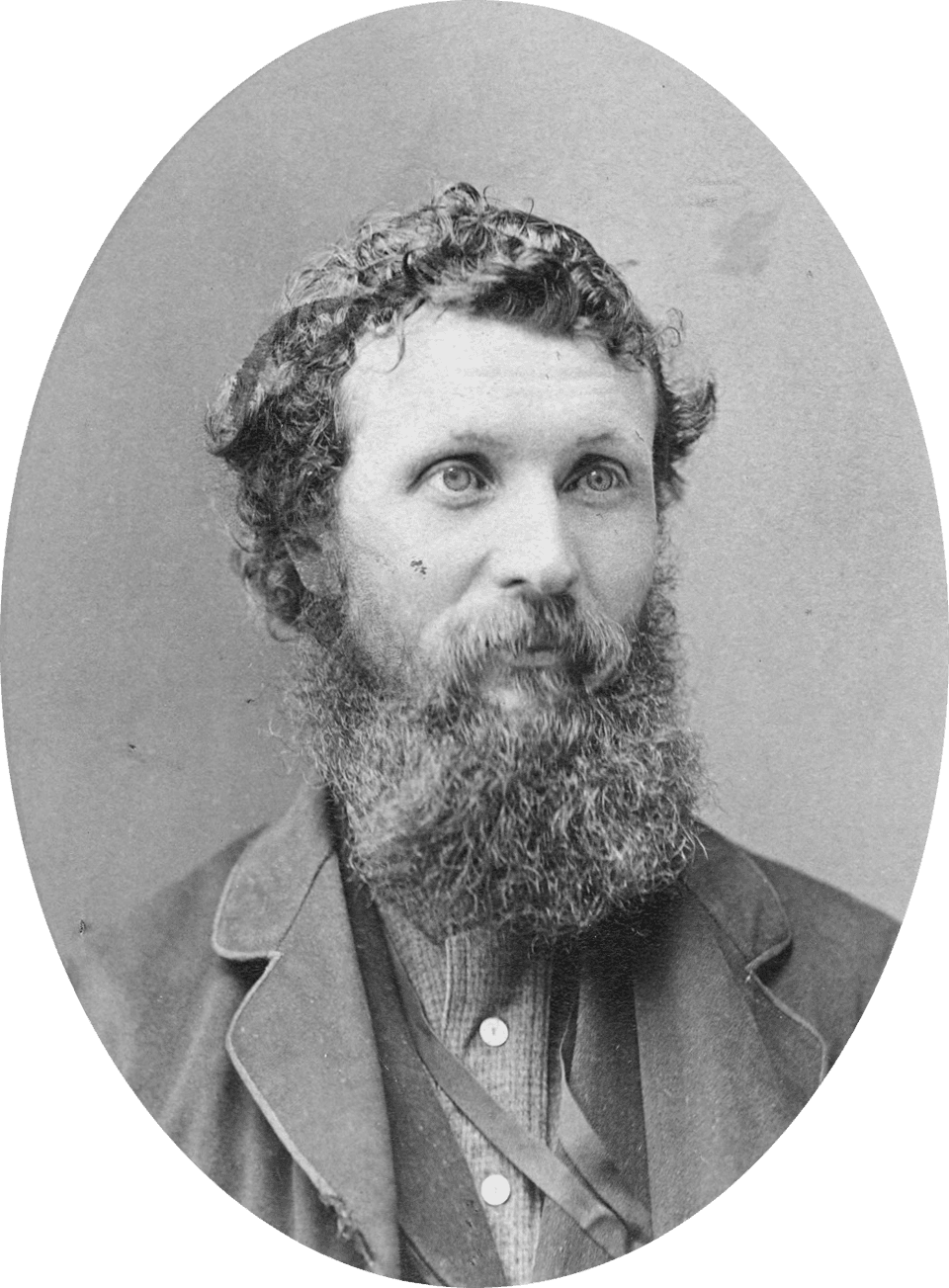
That's Muir, not me — though after twenty years of Chicago winters, I'm inclined to agree with anyone waxing rhapsodic about trees. I caught this one on a Sunday morning walk along the lakefront with Denise, and at eighteen minutes, it was barely longer than our coffee stop at the Bourgeois Pig. But here's the thing about Muir: the man could pack more reverence into a single sentence about a Douglas fir than most novelists manage across three hundred pages.
Eighteen Minutes of a Man Who Saw God in Bark
Let's talk about what John Muir is really doing in these excerpts. This isn't nature writing in the way we think of it now — no Instagram-ready reflections, no wellness-speak about "grounding" or "forest bathing." This is a man in the 1880s standing on Mount Shasta during a storm, genuinely uncertain he'll survive the night, and his instinct is to describe it. The Shasta passage is the standout here — Muir recounting the cold and the wind with the clinical precision of a scientist and the breathless awe of a mystic. It's the kind of prose that reminds you why we still read the classics. Not because they're old, but because nobody writes like this anymore. Nobody has the patience to watch a glacier for three days and then spend six paragraphs explaining exactly how the light hit the ice.
The Puget Sound descriptions are gentler — more watercolor than oil painting — but equally dense with observation. Muir catalogs trees the way a sommelier catalogs wine. You get species, height, texture, the quality of the light filtering through the canopy. My students would hate this. I love it. There's no plot, no character arc, no tension beyond man vs. weather. Just a brilliant, slightly unhinged Scottish immigrant staring at the American wilderness and writing it down before someone could pave over it.
Michael Scott and the Problem of Narrating Wonder
Here's where I have to be honest about limitations — both mine and the production's. At eighteen minutes, this is less an audiobook and more an appetizer. Michael Scott (no, not that one, and yes, I'm sure he's heard every joke) reads with steady, appropriate reverence. He doesn't oversell Muir's prose, which is the right call — Muir's sentences are already running at maximum intensity, and a narrator who tried to match that energy word-for-word would sound like a nature documentary parody.
But "appropriate" is doing a lot of work in that sentence. There's a flatness to Scott's delivery that doesn't quite capture the wild, almost manic energy Muir had. When Muir describes that stormy night on Shasta — the volcanic heat keeping him alive on one side while the blizzard tries to kill him on the other — the narration stays in comfortable second gear. I wanted more urgency there. More danger. The narrator understands that pause is punctuation, and he uses silence well, but I found myself wishing he'd leaned into Muir's exclamation points rather than smoothing them out. It's competent. It's pleasant. It's not the performance art that Muir's best writing demands.
Compare this to, say, a good reading of Thoreau — another nature mystic — where the narrator has to navigate between philosophy and observation. Muir is less philosophical than Thoreau, more visceral. He's not sitting by a pond thinking. He's clinging to a mountain in a storm. The narration needed to feel that difference more. The stakes of man versus extreme terrain — that particular flavor of mortal inconvenience — come through far more viscerally in K2: Life and Death on the World's Most Dangerous Mountain, where the narration doesn't have the option of staying in comfortable second gear because the mountain simply won't allow it.
Who This Is Really For
If you're a Muir completist, or if you're curious about him but intimidated by the full Steep Trails collection, this is a painless way in. Eighteen minutes. That's half a faculty meeting. (Worth pausing the faculty meeting for, actually — I've sat through worse budget presentations than this.) It's also a nice gateway for anyone who reads Muir quotes on Instagram and wonders if the full writing holds up. It does. The man earned every one of those inspirational poster placements.
But if you already know Muir, or if you want a substantial audiobook experience, this is going to feel thin. Four excerpts, no connective tissue between them, no context about when or why Muir was in these places. You're dropped into his observations mid-stream and pulled out just as quickly. For a teacher who spends his life arguing that context matters — it matters here, and its absence is felt.
The Lesson Plan I'd Never Assign
I wouldn't assign this to my students. Not because it's bad — because it requires a patience they haven't developed yet, and frankly, a relationship with silence that most adults haven't developed either. Muir writes the way old-growth forests grow: slowly, densely, and with no concern for your attention span. At eighteen minutes, this little collection is a reminder that some prose deserves to be savored, even — especially — when the world is moving at 2x speed around you. I listened at 1.0x, obviously. The man earned his commas.