
Denise and I were walking the lakefront last Sunday - one of those rare October mornings where the lake looks like hammered steel and you can smell winter coming - and I had my earbuds in, about fourteen hours deep into this thing. She asked me what I was listening to and I said "Cooper" and she gave me that look. The look that says: you're going to make this about teaching again, aren't you?
She wasn't wrong.
The Problem with Natty Bumppo (And Why I Keep Coming Back)
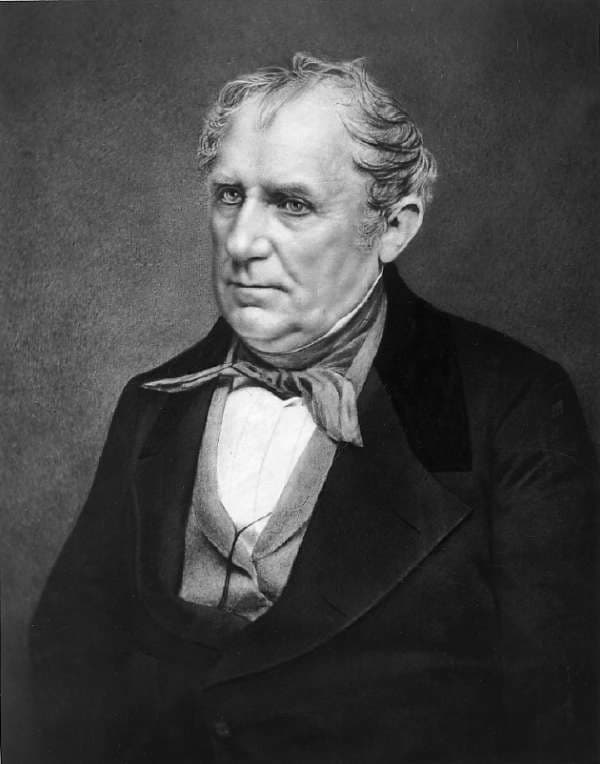
Let me be honest about something. I've been assigning excerpts from the Leatherstocking Tales to juniors for fifteen years, and every single year at least one kid tells me Cooper is "unreadable." And every single year I say something about patience and craft and the importance of historical context. And every single year, somewhere around the third paragraph of Cooper's description of a lake, I privately think: the kid has a point.
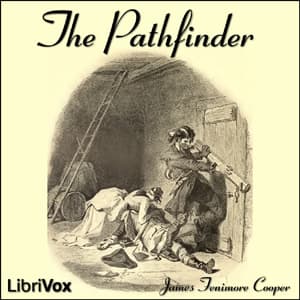
But here's the thing about Pathfinder in audio form - and this is what I couldn't explain to Denise between the jogging strollers and the cyclists - listening to Cooper is a fundamentally different experience than reading him. Those sentences that sprawl across half a page, those clauses nested inside clauses like Russian dolls, the way he'll spend 800 words describing the play of light on water before anyone draws a rifle? At 1.0x, with Mark F. Smith's steady, unhurried delivery, it stops being an obstacle and starts being atmosphere. The prose deserves to be savored, and audio forces you to do exactly that.
Smith reads Cooper the way Cooper wrote - deliberately. He doesn't rush the descriptive passages to get to the action, and that's the right call. Cooper wasn't writing action sequences. He was building a world where the action mattered because you'd spent forty minutes inside the silence of the forest first. Smith's voice has a kind of campfire gravity to it, this measured baritone that suits the frontier setting without tipping into theatrical pioneer cosplay. It works.
Where it gets uneven - and I want to be straight about this because eighteen hours and forty-eight minutes is a serious commitment - is character differentiation. With a single narrator handling Natty, Mabel Dunham, Jasper Western, the Tuscarora chief Arrowhead, Sergeant Dunham, and a whole garrison of British soldiers and indigenous characters, you're going to hit stretches where dialogue scenes require you to actively track who's talking. Smith keeps it clean enough, but there were moments during the island garrison siege where I had to rewind because I'd lost the thread between speakers. For a novel this dialogue-heavy in its middle sections, that's a real limitation.
Natty Bumppo, Terrible at Romance
Here's what nobody tells you about Pathfinder: it's a love story. Sort of. A deeply awkward, almost painful love story where a fifty-year-old frontiersman who's spent his entire adult life talking to trees and shooting things tries to court a twenty-year-old woman who is clearly - clearly - in love with the young sailor Jasper Western.
And Cooper does something genuinely interesting with this. Pathfinder is presented as noble, self-aware, even wise about wilderness survival and warfare, but he is an absolute disaster at reading romantic signals. There's a scene - I think it was around the twelve-hour mark - where Pathfinder essentially talks himself into believing Mabel loves him while Mabel is standing right there trying to figure out how to let him down gently, and it's excruciating in the best possible way. This reminds me of what Hemingway said about writing - that the dignity of movement of an iceberg is due to only one-eighth of it being above water. Cooper gives you Pathfinder's surface confidence while the submerged truth is that this man has no emotional vocabulary for romantic rejection.
My students would hate this. I love it.
The siege at the blockhouse on the island is where the book earns its adventure credentials, though. Treachery from within, a dwindling garrison, Mabel left essentially alone with the wounded - Cooper cranks the tension in a way that feels surprisingly modern. Smith picks up just enough pace here to signal the shift without abandoning the book's rhythmic DNA.
Who Should Brave These Eighteen Hours
If you loved The Last of the Mohicans, this is its quieter, more introspective sibling - less kinetic, more interested in what happens to Natty Bumppo when the shooting stops and he has to be a person instead of a legend. That same quality - a legendary figure measured against ordinary human need - is what made This Tender Land hit me just as hard, a completely different era but that same ache of watching someone built for the wilderness try to belong somewhere. If you're coming to Cooper fresh, I'd actually say start with Mohicans first. Pathfinder rewards you more if you already know who this man is.
If 19th-century prose makes you reach for the 2x speed button, this probably isn't your entry point. But if you're the kind of listener who treats a long audiobook like a slow hike - and honestly, walking the lakefront for weeks with this in my ears felt exactly right - then there's real pleasure here. Drums of Autumn scratches a similar itch - big, unhurried, frontier-adjacent storytelling that rewards the patient listener who just lets the landscape accumulate around them.
The duration is the commitment. Eighteen hours and forty-eight minutes. But Cooper didn't write short books, and he didn't write fast ones. Smith honors that.
Worth Pausing the Faculty Meeting For
I'm not going to pretend this is Cooper's best work. It's not. The pacing sags in the middle third, some of the indigenous characterization has aged about as well as you'd expect from 1840, and Smith's performance is competent rather than electric. But that scene where Pathfinder finally understands he's going to lose Mabel - where the greatest marksman in the territory can't hit the one target that matters - that landed. It landed hard enough that I stood at the edge of Lake Michigan with my coffee getting cold and just listened.
This is why we still read the classics. Even the imperfect ones.