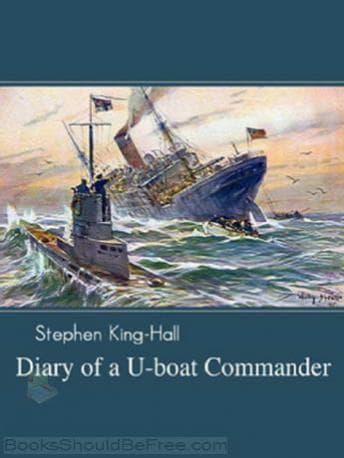

I spend my days surrounded by teenagers who believe they are the main character of the universe. So, honestly, I wasn't sure I had the patience for Captain Karl von Schenk.
Here we have a German U-boat commander who is—let's be charitable—full of himself. He thinks he's a tactical genius (okay, maybe true), a devastatingly handsome nobleman (debatable), and possesses a singing voice that could rival Caruso (absolutely false). The man is insufferable.
And that is exactly why this book works.
The Arrogance is the Point
Most war stories try to make the hero likable immediately. They save a cat or something. Not here. You're stuck in a metal tube with a guy who is obsessed with his own social standing and writes in his diary like he's drafting a press release for his own greatness. (This reminds me of a certain student in my AP Lit class, but I digress.)
But here's the trick—the author, Sir Stephen King-Hall, was actually a British Royal Navy officer. He wrote this as a German commander. The technical details? Spot on. The claustrophobia? Real. By writing a protagonist who is so stiff and proud, the cracks in his armor become devastating when the war actually starts to grind him down. When the "glory" fades and it's just oil smells and fear, von Schenk's diary shifts from boasting to something much more human. It's a character study masquerading as a war thriller.
Mark F. Smith's Worn-Leather Voice
I've listened to Mark F. Smith before—he's legendary in the LibriVox community—and the man has a voice like worn leather. His work on Sense and Sensibility showed me he can handle both restraint and emotional complexity. Turns out those skills translate perfectly to submarine warfare.
He doesn't do that thing where narrators try to scream over the explosions. He keeps it mellow. Almost too calm. It's disarming. You're listening to him describe hunting a merchant ship, and his tone is reverent, almost sad. It adds this layer of tragedy that I wasn't expecting.
(I was listening to this while grading essays on All Quiet on the Western Front, and the synergy was almost too much for a Tuesday night.)
Smith nails the "stiff upper lip" vibe, but for the German aristocracy. There's a section at the end—a love letter—where the emotional dam finally breaks. Smith handles it with such care that I actually put my red pen down and just stared at the wall for a minute. He brought that same careful pacing to Adventures of Pinocchio, proving he knows when to let a moment breathe. The guy understands that silence and pacing matter as much as the words.
Who Should Listen (And Who Should Skip)
Look, if you're looking for non-stop action where things explode every three minutes, go watch a Marvel movie. This is a diary. It's internal. It's about the waiting.
My students would call it a "snoozefest" because they don't have the attention span for a slow burn. But for those of us who appreciate that war is 99% boredom and terror-management, this is gold. It's short—under six hours—so you can knock it out in a week of commuting. Skip it if you need constant action; grab it if you want to watch pride slowly corrode under pressure.
Class Dismissed
It's not perfect. The start is slow. Von Schenk is annoying. But by the end, you realize that's the tragedy. You're watching a proud man get dismantled by a war he thought he could control.
Worth pausing the grading for. Just don't expect me to start singing in class.