
Twenty Hours with Pip on the Lakefront
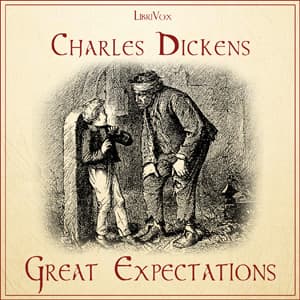
Look, I'll be honest with you. I've taught Great Expectations probably fifteen times over my career. I've read student essays about Miss Havisham that would make Dickens weep—and not in the good way. I thought I knew this book inside and out. But listening to it? Walking along Lake Michigan in early November, wind cutting through my jacket, Pip's voice in my ears describing those cold Kent marshes? That's a different experience entirely.
I started this one during a particularly brutal stack of junior essays on The Crucible. Twenty hours is a commitment—we're talking three weeks of grading sessions and morning walks with Denise. She kept asking why I was making faces at my phone. "Pip's being an idiot again," I'd say. She'd nod like she understood. (She was listening to a true crime podcast. We have a system.)
Mark F. Smith and the American Question
Okay, so here's the thing that's going to bother some people: Mark F. Smith is American. And yes, I know, I know—Dickens, Victorian England, shouldn't it be a British narrator? I had the same thought for about the first hour. Then I stopped caring. Because Smith does something really smart here. He doesn't try to do a full British accent for the narration itself. Instead, he keeps his natural voice warm and steady—like that uncle who actually reads to you instead of just performing—while shifting into character accents for dialogue.
The result is surprisingly effective. His Pip sounds earnest without being annoying, which is harder than it sounds. (Pip is annoying. That's kind of the point. The kid's a snob who doesn't realize he's a snob.) His Joe Gargery has this gentle, slow quality that made me genuinely emotional during the forge scenes. And Miss Havisham? Smith gives her this brittle, cracked delivery that captures her particular brand of theatrical madness without going full cartoon villain.
Smith brings that same careful restraint to Sense and Sensibility, where overdoing the drama would kill Austen's irony.
The narrator understands that pause is punctuation. There's a moment late in the book—I won't spoil it, but longtime Dickens readers know the scene I mean—where Smith just... lets the silence sit. Dickens wrote that pause into the prose, and Smith honors it. That's interpretation, not just reading.
Why This Book Still Works (My Students Would Disagree)
My students would hate this. I love it.
Seriously, though. Great Expectations is one of those novels that gets assigned so often it becomes wallpaper. Kids read it because they have to, not because they want to. But listening to it—actually hearing Dickens's sentences unfold—reminded me why I fell in love with Victorian literature in the first place. The man could write a sentence that goes on for half a page and somehow sticks the landing every single time.
This is a book about class, about shame, about the stories we tell ourselves about who we deserve to become. Pip starts as a blacksmith's apprentice and ends up... well, that would be telling. But the journey is the thing. Dickens is doing something sneaky here: he's writing a first-person narrative where the narrator is unreliable not because he's lying, but because he's wrong. Pip misreads everyone around him. He misreads himself. And we watch him figure it out, slowly, painfully, over twenty hours of audiobook.
Smith's narration captures this beautifully. There's a quality to his voice that sounds like someone looking back on their younger self with a mixture of affection and embarrassment. Which is exactly what Pip is doing. The prose deserves to be savored, and Smith gives it room to breathe.
Fair Warning: This Is a Commitment
Twenty hours and thirty-three minutes. That's not nothing. And Dickens, bless him, was paid by the word. There are sections in the middle—particularly some of the London scenes—where things drag a bit. I found myself zoning out during a few of Herbert Pocket's longer speeches, and I say that as someone who genuinely loves Herbert Pocket.
If you're dead set on a British narrator, this might not be for you. I get it. Some people can't get past it. A few listener reviews I came across mentioned the same thing—they wanted that authentic accent throughout. It's a valid preference. I just don't think it's a dealbreaker.
The audio quality is clean, no weird background noise or volume drops. For a twenty-hour listen, that matters more than people realize. Nothing worse than adjusting your volume every chapter.
Who Should Listen (And Who Should Skip)
This reminds me of what I always tell my students: the classics aren't classics because old people decided they were important. They're classics because they keep saying something true. Great Expectations is about wanting to be someone else, about the gap between who we are and who we think we should be. That's not a Victorian problem. That's a human problem.
If you loved David Copperfield, this is its spiritual successor—same autobiographical structure, same mix of comedy and genuine heartbreak. If you've never read Dickens, this is honestly a great place to start. It's more focused than Bleak House, less sprawling than Our Mutual Friend. Skip it if you absolutely require a British narrator or can't commit to twenty-plus hours—no shame in either.
Best for: long commutes, evening walks, those faculty meetings where you're definitely paying attention to the budget presentation. (Principal Martinez, I promise I'm listening this time.)
I listened at 1.0x because the author chose those words, and Mark F. Smith delivers them like they matter. Because they do.
Worth every one of those twenty hours.