
I started this one during a particularly brutal stack of sophomore essays on The Great Gatsby. You know the kind. "Nick is a good narrator because he tells the story." That kind. I needed something to remind me why I got into literature in the first place.
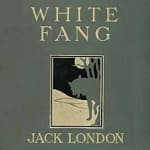
White Fang at 11 PM with a red pen in hand and Mark F. Smith's voice in my ears? That's the reset button I didn't know I needed.
What London Is Really Doing Here
This reminds me of what Hemingway said about prose being architecture, not interior decoration. London builds something here—a moral education told entirely through the consciousness of a wolf-dog who doesn't have words for what's happening to him. And that's the genius of it. White Fang doesn't understand cruelty as a concept. He just learns that certain beings bring pain, and others don't. The prose deserves to be savored because London's doing something sneaky: he's making you feel the formation of a soul without ever using that word.
My students would hate this. I love it.
The violence is unrelenting—I won't sugarcoat that. Dog fights, starvation, beatings. London doesn't flinch, and neither does Smith's narration. But here's the thing: the violence isn't gratuitous. It's the curriculum. White Fang is learning, and we're learning alongside him. Every brutal encounter teaches him something about power, about survival, about the thin line between wildness and domestication.
If you loved The Call of the Wild, this is its spiritual successor—or really, its mirror image. Buck goes from civilization to wilderness; White Fang travels the opposite direction. Same author, same Yukon, completely inverted arc. I went straight to Call of the Wild after finishing this one, and hearing them back-to-back really hammered home how deliberate London was with these parallel journeys.
Mark F. Smith's Measured Restraint
I couldn't find much about him online beyond this and a handful of other classic recordings, but based on this performance? The man understands that pause is punctuation.
His pacing is deliberate in the best way. Not slow—deliberate. There's a difference. Smith brings that same measured approach to Adventures of Huckleberry Finn, where the river scenes need room to breathe. When London spends three paragraphs describing the she-wolf's hunger, Smith doesn't rush through it to get to the action. He lets you sit in that hunger. He lets you feel the cold. The narrator understands something that a lot of audiobook performers miss: Jack London's sentences are built for weight. They're meant to accumulate. Speed through them and you lose the architecture.
The voice work isn't showy—no dramatic character voices or theatrical flourishes. Smith plays it straight, almost documentary-style, which works perfectly for a story told largely from an animal's perspective. You're not listening to a performance; you're listening to someone tell you what happened. That restraint makes the emotional moments hit harder. When White Fang finally—finally—experiences something like love, Smith's delivery shifts just slightly. Warmer. Less guarded. It's subtle, but it's there.
Worth pausing the faculty meeting for. (Sorry again, Principal Martinez.)
Fair Warning: This Isn't Disney's Version
The pacing I'm praising? It's going to drive some people nuts. London has this habit of philosophizing—stepping back from the narrative to explain what White Fang is learning, what laws of the Wild are being established. It's very 1906. Very earnest. If you're used to modern storytelling that trusts the reader to figure things out, London's occasional heavy-handedness might grate.
Also, and I cannot stress this enough: the violence. Dogs die. Horribly. If you're sensitive to animal suffering—even fictional animal suffering—sample first. Seriously. The dog-fighting chapters are rough.
But if you can sit with the discomfort, there's something almost cathartic about watching White Fang's transformation. The ending earned every ounce of its sentimentality because London made us watch the brutality first.
Who Should Listen (And Who Should Skip)
This is perfect for lakefront walks. I finished the last two hours with Denise on a Saturday morning, and we ended up talking about it for another hour over coffee. (She's not a literature person, but she got pulled in anyway. That's the sign of a good story.)
Commuters, long drives, anything where you want something immersive but don't need to track seventeen plot threads—this is your book. The episodic structure means you can pause between sections without losing the thread.
Skip it if you need fast pacing, if animal violence is a hard no, or if you're looking for something light. This isn't light. It's beautiful, but it's not light.
The Verdict
Seven hours and forty-six minutes of watching a wild thing learn to trust. London's prose still holds up over a century later—muscular, visual, morally serious without being preachy (mostly). And Smith's narration elevates what could've been a dusty classic into something that feels immediate.
I listened at 1.0x because the author chose those words. London chose every frozen breath, every snarl, every tentative tail-wag. Speeding through it would be like fast-forwarding through a nature documentary.
This is why we still read the classics. Or in this case, listen to them while pretending to grade papers.