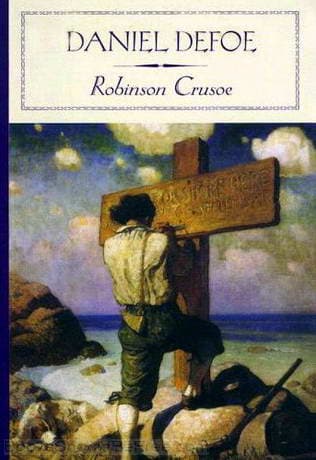

I'll be honest with you. I assigned Robinson Crusoe to my juniors for years before I actually sat down and read the whole thing cover to cover. Excerpts? Sure. The greatest hits? Absolutely. But all eleven hours of Defoe's 1719 survival manual slash spiritual diary slash proto-novel? That took an audiobook and about three weeks of lakefront walks with Denise.
And here's the thing - I'm genuinely glad I finally did it this way.
Mark F. Smith gets something about this text that I think a lot of readers miss. Robinson Crusoe isn't really an adventure story. I mean, yes, there are pirates and cannibals and mutineers and all the stuff that made it famous. But Defoe wrote this thing like a journal, like someone actually sitting on a beach talking to themselves for twenty-eight years. Smith reads it exactly that way. No theatrical flourishes. No trying to make it more exciting than it is. Just a man, alone with his thoughts, figuring out how to stay alive and stay sane.
The pacing is deliberate. Some might say slow. My students would definitely say slow. But the narrator understands that pause is punctuation - when Crusoe spends three pages describing how he built a fence, Smith doesn't rush through it like he's embarrassed by the material. He lets you feel the tedium. The repetition. The small victories that mean everything when you're the only person on an island.
(Don't tell my students I said this, but those fence-building passages? They're actually kind of meditative when you're grading papers at 11 PM.)
Fair Warning: There's a Lot of God in This Book
A LOT. Crusoe has what can only be described as a prolonged spiritual crisis that spans multiple years and many, many pages. Defoe was writing in 1719, and religious reflection wasn't optional - it was the whole point. If you're expecting pure adventure, you're going to hit some sections that feel like sermons. Because they basically are sermons. Smith handles these with the same steady clarity he brings to everything else, which means you're either going to appreciate the philosophical depth or you're going to zone out.
I zoned out a few times. I'm being honest here.
But then something would snap me back. The first time Crusoe sees a footprint in the sand - just one human footprint after years of solitude - Smith's reading made me stop walking. Denise asked if I was okay. I was fine. I was just standing on the lakefront path having feelings about a three-hundred-year-old novel.
This is why we still read the classics.
The Friday Problem
The Friday sections are complicated in ways I have to address. Defoe's portrayal of the man Crusoe "saves" and names Friday reflects 18th-century attitudes about colonialism and race that are... well, they're exactly what you'd expect from 1719. Smith reads it straight, without editorial commentary in his voice, which is probably the right choice. The text is what it is. You can engage with it critically or you can skip it, but pretending those elements aren't there would be dishonest.
Why This Still Works Three Centuries Later
What struck me most - and this is the English teacher in me talking - is how modern Crusoe's voice feels despite being over three centuries old. Defoe basically invented the realistic novel, and you can hear it. There's a directness to the writing, almost journalistic, that cuts through the archaic language. Smith's clear, unadorned delivery emphasizes this. He's not performing "ye olde literature." He's just telling you what happened to this guy.
Smith brings that same straightforward approach to How to Live on Twenty-Four Hours a Day, another older text that benefits from his no-nonsense style.
Audio quality is clean throughout. No weird artifacts, no volume issues. At eleven and a half hours, it's a commitment, but I never felt like the production was fighting me.
Should you listen at 1.25x? I mean, you could. Parts of it would probably benefit from a little acceleration, especially the religious passages if they're not your thing. But I listened at 1.0 because the author chose those words and - okay, also because I'm ancient and my students are right about that.
Who This Is (and Isn't) For
If you loved The Old Man and the Sea or Life of Pi, this is their spiritual ancestor. The original survival story. Watership Down has that same quality of making isolation feel both terrifying and transformative. But if you need constant action or can't stomach 18th-century religious reflection and colonial attitudes, this one's going to test your patience.
Class Dismissed
My students would hate this. I love it.
Worth pausing the faculty meeting for. (Sorry, Principal Martinez.)