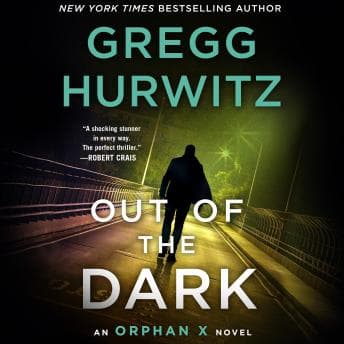

What makes a person capable of killing the President of the United States? Not the mechanics of it - the psychology. The cognitive restructuring required to see the most protected person on Earth as a target rather than an abstraction. This is what kept me up during my 5 AM runs through Cambridge last week, earbuds in, breath visible in the cold air, completely absorbed in Evan Smoak's moral calculus.
Look, I came to the Orphan X series late. My therapist would have thoughts about why I'm drawn to stories about emotionally stunted assassins who struggle with human connection. (She'd probably connect it to my research on attachment styles. She wouldn't be wrong.)
The Psychology of a Broken Weapon
Here's the thing about Evan Smoak that Hurwitz gets absolutely right: trauma doesn't create superheroes. It creates people with very specific skill sets and very specific deficits. Evan exhibits classic avoidant attachment - hyper-competent, emotionally restricted, relationships kept at arm's length. But what makes him compelling isn't the killing. It's the trying. The small, awkward attempts at connection that feel almost painful to witness.
The research actually shows that individuals raised in institutional settings often develop what we call "earned secure attachment" later in life - but it's messy. It's two steps forward, one step back. Hurwitz captures this without making it saccharine. Evan isn't healing. He's... managing. And that's way more realistic than most thriller writers bother to be.
The introduction of Orphan A - the first recruit, the original model - is a fascinating case study in nature versus nurture. Same program, same training, wildly different outcomes. What determines which way a person breaks? The book doesn't answer this definitively, and honestly, neither can psychology. But it asks the question without feeling cheap.
Scott Brick and the Sound of Emotional Flatness
Okay, so. Scott Brick. I've seen the discourse. Some people find him monotone. I get it. But here's my counterargument: Evan Smoak IS monotone. He's a character whose survival depended on emotional regulation to the point of suppression. Brick's calm, unemotional delivery isn't a bug - it's characterization.
The moments where Brick lets something crack through - a slight tension in the voice, a pause that lands just a beat too long - those hit harder BECAUSE of the flatness surrounding them. It's like watching someone who never cries finally tear up. The restraint makes the breaks meaningful.
I will say this: if you haven't listened to the earlier books in the series, Brick's style might feel jarring at first. He's not doing voices in the theatrical sense. He's doing something subtler - shifts in rhythm, in energy, that distinguish characters without ever breaking the overall tone. It took me about an hour to settle into it. By hour three, I couldn't imagine anyone else.
The pacing is excellent. Hurwitz writes tight chapters - some only a few pages - and Brick handles the transitions cleanly. I found myself missing my exit on the T more than once because I needed to know what happened next. (The other passengers definitely judged my muttered "oh come ON" when I realized where I was.)
Where the Narrative Gets Uncomfortable
I need to be honest about something: this book asks you to root for someone planning to assassinate the President. Even a corrupt, murderous President. Psychologically, this doesn't track for most readers' moral frameworks - and yet Hurwitz makes it work by keeping us so deep in Evan's perspective that his logic becomes our logic.
This is manipulation, by the way. Good manipulation. The kind narrative psychologists write papers about. Hurwitz understands human nature well enough to know that proximity breeds identification. We forgive in protagonists what we'd condemn in strangers.
The action sequences are intense - fair warning if you're sensitive to violence. But they're not gratuitous. Each one reveals something about character, about the cost of this life Evan was forced into. The violence isn't the point. The damage is.
Who's This For (And Who Should Skip It)
For fans of espionage thrillers who want something with actual psychological depth, this is the good stuff. Blowback scratches a similar itch, though with less emotional nuance. For my fellow character-obsessed listeners who need to understand WHY people do terrible things - this series delivers. Skip it if graphic violence isn't your thing, or if you need your protagonists morally uncomplicated.
The Clinical Assessment
Probably not an immediate relisten - it's a lot. But I've already started the next book in the series, which tells you something.
Just maybe don't start your day with it. I switched to evening listening after that one scene in the hotel. My morning jogs are for podcasts about behavioral economics now. Lighter fare.
The audiobook runs almost 13 hours, and I never felt it drag. That's rare. That's worth something.