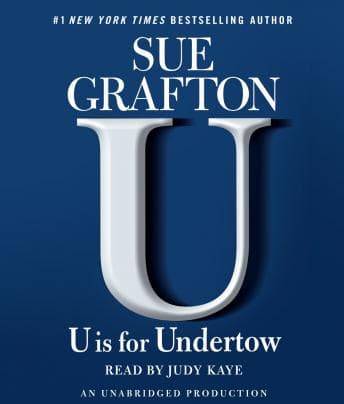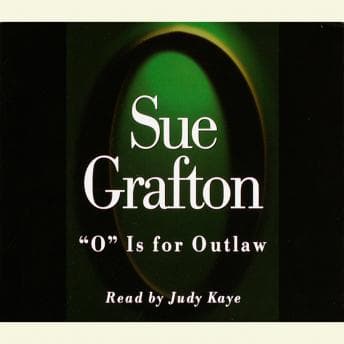

"The letter will force Kinsey to reexamine her beliefs about the breakup of her first marriage." That line from the jacket copy? It undersells what actually happens here by about a mile. I was up past midnight in the study, Ranger snoring at my feet, Linda long asleep, and I couldn't stop listening. Not because things were exploding — nothing explodes in this book — but because Sue Grafton does something gutsy at book fifteen of a series: she tears open her protagonist's past and makes her sit in the wreckage.
When the Intel Report on Your Own Life Turns Out to Be Wrong
Let me cut to the chase. Kinsey Millhone gets her hands on a box of old documents — childhood stuff, personal papers — bought from a defaulted storage unit. In that box is an undelivered letter that basically rewrites everything she believed about her first marriage to Mickey Magruder, a vice cop she'd written off as dirty. The whole book is Kinsey reckoning with the fact that she made a judgment call years ago, and she got it wrong. Dead wrong.
I've seen this scenario play out in real life. You build a narrative about someone based on incomplete information, and you live inside that narrative for years. Then one piece of evidence surfaces and the whole thing collapses. I ran into that same gut-punch reckoning in Innocent Victims, where the people closest to a crime spent years carrying a version of events that turned out to be incomplete in ways that cost them everything. Grafton nails that particular brand of shame — the kind where you're not just wrong about someone else, you're wrong about yourself. Kinsey's reflection on her younger self, on the certainty she had when she walked away from Mickey, is some of the best character work in the series. The woman's fifteen books deep and still finding new ways to make Kinsey uncomfortable.
The murder investigation threading through the story is solid — connected to Mickey's past, naturally — but this isn't really a whodunit. It's a who-was-I-when-I-did-it. The plot serves the character study, not the other way around. That's a bold choice for a mystery novel, and it mostly works.
Judy Kaye Steps Into Someone Else's Boots
Here's where it gets complicated. Judy Kaye replaced Mary Peiffer as narrator for this installment, and I can see why some listeners had a hard time with the switch. It's like getting a new commanding officer mid-deployment — even if the new one's competent, part of your brain keeps comparing.
Kaye's good. She's got this precise sarcasm in Kinsey's voice that works — that defensive edge Kinsey deploys like a weapon. When Kinsey's being a smartass with suspects or deflecting genuine emotion, Kaye lands it. And in the quieter moments, particularly when Kinsey's piecing together what really happened in her marriage, there's a mix of self-assuredness and nostalgia that feels right.
But — and this bugged me — her voice reads older than Kinsey should be. Kinsey's in her thirties in this book, and Kaye sounds like she's narrating from somewhere past fifty. It's not a dealbreaker, but during flashback-adjacent moments where Kinsey's recalling her younger self, the disconnect gets noticeable. Her Henry Pitts also lands on the wrong side of elderly — less sharp octogenarian, more fragile grandpa. Henry's supposed to have some steel in him. Kaye softens him too much.
Still, she's a professional. The emotional delivery in the final stretch — that last paragraph especially — hit me in a way I wasn't expecting from a mystery series. She earned that moment.
Who Should Saddle Up and Who Should Stand Down
If you've been following the Alphabet series, this is one of the stronger entries. It's not action-heavy, so if you need a body every chapter, look elsewhere. But if you want to watch a PI who's usually all confidence and wisecracks actually grapple with something she can't investigate her way out of — her own past — this delivers.
Casual listeners who haven't read the earlier books can jump in here, but you'll miss some of the weight. Knowing Kinsey's usual armor makes watching it crack that much better.
Fair warning: this requires focused listening. I tried playing it during a client site walkthrough and had to rewind twenty minutes. The plot's not complicated, but Grafton's layering is — she plants details early that pay off late, and if you're half-listening you'll miss the connections.
Mission Debrief
Worth your time? Here's the debrief. Grafton proves at book fifteen that she's not coasting. The undelivered letter premise is simple and devastating, and she plays it honestly — no cheap twists, no convenient revelations. Kaye's narration is competent with flashes of real emotional punch, even if her voice doesn't quite fit the character's age. The ending surprised me. Quietly. Which is harder to pull off than any explosion.
Ranger approved this one. Though he did look confused when I rewound the last paragraph to hear it again.