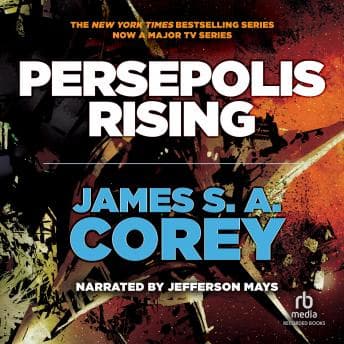

Look, I was supposed to be debugging a procedural dungeon generator for my thesis this week. Dr. Patel sent me an email with the subject line "Update?" and I archived it without reading. Why? Because the Roci crew is back, and apparently, we're doing a thirty-year time jump.
Yeah, you heard me. Thirty. Years.
The Time Jump That Hurt My Soul
I'm not gonna lie—the opening of this book hit me harder than a gelatinous cube in a narrow corridor. We pick up with Holden, Naomi, Amos, and Alex, but they aren't the scrappy underdogs anymore. They're legends. And they're tired.
There's something profoundly bittersweet about hearing Jefferson Mays voice these characters we've spent six books with, only now they're complaining about joint pain and retirement plans. It feels like when my D&D group tries to schedule a session and realizes we all have back problems and bedtimes now. You don't just get the epic space battles (though, oh boy, do you get those); you get the weight of decades of trauma and friendship.
(And let's be real, seeing Amos Burton as an old man who's still the scariest person in the room? Chef's kiss.)
Fascists With Magic Space Tech
So, while the Roci crew was aging gracefully, the Laconians were busy building the ultimate "Lawful Evil" empire on the other side of the gate network.
This isn't just another "ragtag rebels vs. evil empire" story. The Laconians actually make compelling points—in a terrifying, authoritarian way. They have tech that makes the Martian navy look like they're throwing rocks. The power scaling here is terrifying. It's like the DM suddenly decided to introduce high-level magic items into a low-magic campaign and handed them all to the bad guys.
Speaking of aging heroes facing incomprehensible threats, Dark Tower V: Wolves of the Calla pulls a similar move—throwing its gunslingers against tech they can barely comprehend.
The tension in Persepolis Rising isn't about "will they survive this firefight?" It's about "how do you fight a god?" A slow burn of dread that builds until you realize the board has completely flipped.
Jefferson Mays Is A National Treasure
I will defend Jefferson Mays with my dying breath. I know, I know—I talk about Steven Pacey like he's a deity, but Mays is the undisputed king of sci-fi narration.
His Avasarala? Iconic. He captures the rasp, the profanity, and the sheer grandmotherly menace of that woman perfectly. (If he doesn't narrate my internal monologue when I'm eighty, what's the point of aging?)
He handles the shift in the characters' ages subtly—a little more gravel here, a slower cadence there. And the Belter Creole? He nails it. Never sounds like a caricature; it sounds like a living, breathing language. If you think his accent work is "grating" (I saw that in a forum somewhere), you are objectively wrong. Fight me.
Who's Rolling Initiative On This One
If you've made it through the first six Expanse books, you aren't stopping now—this is the final trilogy and it earns every hour. Skip it if you haven't read the earlier books; this is not a jumping-on point. And if you need your space opera wrapped up neatly with a bow, brace yourself—this one leaves threads dangling for the next installment.
Closing The Laptop (Eventually)
This is the beginning of the end, folks. The final trilogy. It's darker, it's heavier, and the stakes are impossibly high. Twenty hours I should have spent writing code, but I have zero regrets.
If you haven't started The Expanse yet... honestly, what are you doing with your life? Go. Now.
(Dr. Patel, if you're reading this: The code is compiling. Probably.)