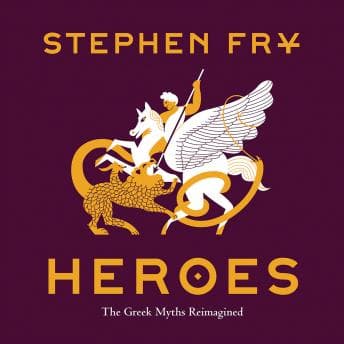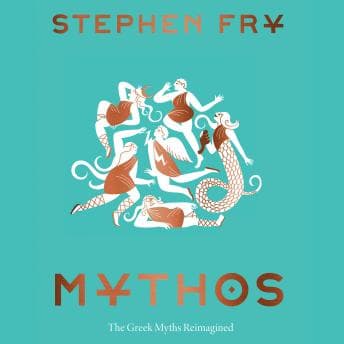

Let me cut to the chase: Stephen Fry narrating Greek mythology is basically cheating. It's like bringing a tank to a knife fight. The man could read a phone book and make it compelling, but when you hand him Zeus's thunderbolts and Prometheus's fire? Game over.
I picked this up expecting a decent refresher on myths I half-remembered from a Classical Civ elective I took about thirty years ago. What I got was fifteen hours of pure entertainment during a week of drives between client sites in Houston. Ranger kept looking at me funny because I was laughing out loud at stories about gods behaving badly.
The Voice That Commands Attention
Here's the thing about Fry narrating his own work - there's no translation loss. You're getting the jokes exactly as he intended them, with the timing he wrote them for. His delivery is warm without being saccharine, witty without being smug. The man knows how to hold a pause for comedic effect, and he knows when to let genuine wonder creep into his voice.
The character voices aren't over-the-top theatrical. He's not doing full-on voice acting like a radio drama. Instead, it's more like a brilliant uncle at a dinner party who can shift his tone just enough that you know exactly who's speaking. Zeus sounds appropriately pompous. Hera sounds dangerous in that quiet way that's honestly more terrifying than shouting. (I've known some senior officers with that same energy. You learn to pay attention.)
One thing I noticed - and this is minor - after about hour ten, you do start to feel the sameness of his delivery. It's still excellent, but if you're powering through this in big chunks, maybe break it up. I found myself switching to some podcasts for variety and coming back fresh.
Where the Stories Actually Land
Fry does something clever here. He doesn't just retell these myths like he's reading from an encyclopedia. He contextualizes them. He'll pause to explain why the Greeks found a particular story meaningful, or he'll draw connections between myths that I'd never considered. It's educational without ever feeling like a lecture.
The humor is genuinely funny too. Not forced, not trying too hard. He treats the gods like the dysfunctional cosmic family they are - petty, jealous, horny, vindictive, occasionally noble. Sound familiar? (I've been in enough command meetings to recognize the type.)
What surprised me was the emotional depth. There's a section on Prometheus that actually hit me harder than expected. The idea of enduring endless punishment for doing what you believed was right - yeah, that one stuck with me on a long stretch of I-10. That same kind of moral weight runs through Sergeant York and His People - ordinary people facing impossible choices and living with the consequences.
The Navigation Problem
Okay, here's my one real complaint. The audiobook has basically no chapter navigation worth a damn. If you want to go back and find a specific myth - say, you want to hear the Persephone story again - good luck. You're scrolling through fifteen hours of content hoping you remember roughly where it was.
For a book that's essentially a collection of distinct stories, this is frustrating. It's like having a rifle with no sights. You'll eventually hit what you're aiming at, but it's way harder than it needs to be. Not Fry's fault, probably a production decision, but someone should've thought this through.
SITREP
Look, I'm a history guy at heart. I've read Thucydides and Herodotus. I've studied military campaigns from Marathon to Thermopylae. But Fry made me realize I'd been treating Greek mythology as background noise to the "real" history. These stories matter. They shaped how Western civilization thinks about heroism, justice, fate, and what it means to be human. Radium Girls does something similar - takes stories that shaped how we think about worker rights and corporate responsibility and makes them deeply human.
Is this academically rigorous? No, and it doesn't pretend to be. Scholars might quibble with some interpretations. But as an accessible, entertaining entry point into this material? It's basically perfect.
The 15-hour runtime sounds daunting, but it flew by. I actually found myself taking the long way home a few times just to keep listening. At 1.25x speed, Fry's pacing still works beautifully - his natural rhythm handles the acceleration without losing the comedy.
Who should listen? Anyone who wants to be entertained while learning something. Anyone curious why these stories have lasted three thousand years. Who should skip? If you need deep academic analysis, look elsewhere. If you require clear chapter breaks for reference, the print book might serve you better.
Mission accomplished. Ranger approved this one.




![Steve Jobs [unabridged audiobook] audiobook cover](/_next/image?url=https%3A%2F%2Fcovers.audiobooks.com%2Fimages%2Fcovers%2Ffull%2F9788499923406.jpg&w=1920&q=75)