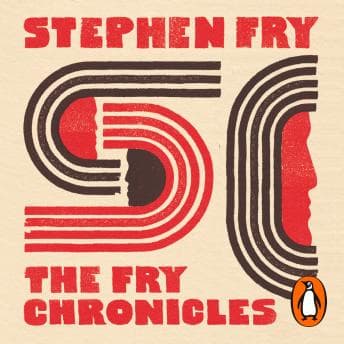

Look. I need to get something off my chest before we even start. Stephen Fry spends a genuinely alarming amount of this memoir apologizing for himself while simultaneously name-dropping every famous person in Britain circa 1982-1990. It's like watching someone say "oh, I'm really not that interesting" while pulling out a photo album of themselves with Hugh Laurie, Emma Thompson, and half the Royal Shakespeare Company. Sir. Please. Pick a lane.
I yelled at my dashboard during this one. Not because he got anything medically wrong - this isn't that kind of book - but because the man will spend twenty minutes building the most beautiful, self-deprecating anecdote about his cocaine use and crippling self-doubt, and then pivot to casually mentioning he was at a dinner party with Prince Charles like that's a normal Tuesday. The whiplash is real.
The Voice You Didn't Know You Needed at 7 AM
Here's the thing about Stephen Fry narrating his own memoir: it shouldn't work this well. Twelve and a half hours of one man talking about himself sounds like a punishment, not entertainment. But I was listening to this on my drive home after a brutal night shift - we'd had a multi-vehicle trauma come in around 2 AM that kept the whole unit running until nearly dawn - and Fry's voice just... settled something in me. That warm, measured British delivery with the self-deprecating little pauses where you can practically hear him raising an eyebrow at his own ridiculousness. He does this thing where he'll start a sentence with theatrical gravity, then undercut it with a perfectly timed admission of being an absolute disaster. The pacing is impeccable. He knows when to speed up during a comedic bit and when to slow down for the heavier stuff - the bipolar disorder, the self-loathing, the addiction.
And because it's him reading his own words, you get these micro-inflections that no other narrator could deliver. When he talks about his early friendship with Hugh Laurie at Cambridge, there's genuine tenderness there that would read as sentimentality on the page but sounds like a man remembering the best thing that ever happened to him. When he describes doing lines of cocaine in club bathrooms, his voice gets quieter, more clipped - almost clinical. He's not performing shame. He's just... being honest about it. That specific flavor of unflinching self-examination without the performance of it reminded me of Joan Rivers doing the same thing in I Hate Everyone...Starting with Me - though Rivers weaponizes the honesty outward while Fry turns it entirely on himself.
The Cambridge-to-Comedy Pipeline (and Why It's Both Fascinating and Exhausting)
The meat of this book covers Fry's years at Cambridge through his early career - Footlights, meeting Laurie, the genesis of Blackadder, his first West End roles. If you're a fan of British comedy history, this is basically sacred text. The stories about writing sketches with Laurie in their shared rooms, about the competitive ecosystem of Cambridge comedy where everyone was simultaneously brilliant and terrified - that stuff is gold.
But here's where I'll be honest: around hour eight or nine, the parade of famous names starts to blur. He's at a party with this person, having lunch with that person, and while each anecdote is individually charming, collectively they start to feel like you're trapped at a reunion for a school you didn't attend. My mom would love this - she's obsessed with British actors and would absolutely eat up every name drop with a spoon. Me? I kept waiting for him to go back to the raw, uncomfortable personal stuff. Because when Fry writes about his mental health, about feeling like a fraud even as success piles up, about the gap between the witty public persona and the man who can barely get out of bed - that's where this book becomes something special. The gap between dazzling public brilliance and private devastation is something Oscar Wilde: The Story of an Unhappy Friendship circles around too, and honestly, reading both back to back would wreck you in the best possible way.
There's a passage where he describes the specific physical sensation of a depressive episode settling in, and I literally pulled into my driveway and sat there with the engine running because I didn't want to pause it. Carlos found me in the car twenty minutes later. I blamed allergies.
Who Gets the Most Out of These 12 Hours
If you love Stephen Fry already, this is a no-brainer. His voice doing his own material is the platonic ideal of author-narrated memoir. If you're interested in the machinery behind British comedy - how Blackadder got made, how the Cambridge comedy scene actually functioned as a talent pipeline - you'll be fascinated. If you struggle with depression or bipolar disorder, there are sections here that feel like someone finally describing what's in your head, spoken in the kindest voice imaginable.
Skip it if celebrity anecdotes make your eyes glaze over, or if you need a tight narrative structure. This is a man meandering through his memories, and the meandering IS the point, but it's not for everyone.
Night Shift Rx
Perfect for that post-shift decompression. Twelve hours is a commitment, but Fry's voice is the audio equivalent of a weighted blanket - warm, steady, occasionally surprising you with something heavy. I finished the last three hours during a rare quiet stretch of charting at 4 AM, earbuds in, and it felt like having a conversation with the most articulate, self-aware, slightly exhausting friend you've ever had. Night shift approved.