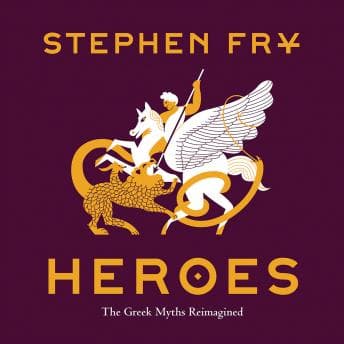

What makes a hero, exactly? And I don't mean the sanitized version we feed kids - the real deal. The ones who murder their own families, get tricked by gods, and somehow still end up with constellations named after them?
I was stuck in a hotel room in Phoenix last month - client meeting ran late, flight cancelled, nothing but a minibar and fifteen hours to kill. Perfect conditions for Stephen Fry to walk me through the absolute carnage that is Greek heroic mythology.
The Briefing You Actually Wanted in School
Let me cut to the chase: Fry does something here that most mythology books fail at completely. He makes you understand why these stories mattered to people for three thousand years. Not through academic analysis - through sheer storytelling craft. Perseus, Heracles, Jason, Theseus, Atalanta - these aren't museum pieces. They're cautionary tales wrapped in adventure, and Fry treats them that way.
The man's got this ability to pivot from explaining how Heracles strangled snakes in his crib to a dry aside about what that says about parenting in the ancient world. One moment you're tracking Jason's voyage on the Argo, the next Fry's making an observation about ambition and self-destruction that hits uncomfortably close to home. His bit about heroes needing "lots of words beginning with 'self'" - self-belief, self-righteousness, self-love - that's the kind of insight that sticks with you.
Compared to the mythology courses I slept through at West Point, this is a different animal entirely. Those were lists of names and lineages. Fry gives you the why behind the madness.
One Man, Dozens of Voices
Here's where the audiobook format becomes essential rather than optional. Fry narrates his own work, and the difference between reading his prose and hearing him perform it is the difference between reading sheet music and attending the concert.
His character differentiation is genuinely impressive - he'll slip into a Scottish accent for certain characters that shouldn't work but absolutely does. The gods sound appropriately insufferable. The heroes sound appropriately doomed. His comedic timing on the absurd bits (and Greek myths get absurd) lands perfectly because he knows exactly when to pause, when to let a punchline breathe.
Pronunciation is flawless throughout - fifteen hours of Greek names, and not once did I catch him stumbling. That matters more than you'd think when you're trying to keep Prometheus and Proteus and Procrustes straight in your head.
Not for the Squeamish (Or the Easily Bored)
Fair warning: these myths are brutal. We're talking dismemberment, infanticide, divine rape, and creative punishments that would make a medieval torturer wince. Fry doesn't sanitize any of it, though he handles the darker material with appropriate gravity. If you're thinking of sharing this with kids, preview it first. Some of these tales would give Ranger nightmares.
The fifteen-hour runtime might seem daunting, but the structure helps - each hero gets their own section, so you can take breaks between adventures without losing the thread. Fry's pacing keeps things moving. No section overstays its welcome.
Who's This For?
If you've got any interest in understanding where Western storytelling came from - why we still tell stories about flawed champions and tragic downfalls - this is your entry point. Better than any textbook. Better than most novels, honestly. Skip it if you need your heroes clean and your violence off-screen, or if fifteen hours sounds like a slog even with good company.
The Debrief
This is the second book in Fry's mythology series (after Mythos, before Troy), and it might be the strongest of the three. Where Mythos covered the gods themselves, Heroes focuses on the mortals who interacted with them - and mortals are always more interesting because they can actually die. That focus on mortality and consequence is what makes It Ends With Us hit so hard too - different genre entirely, but the same understanding that stakes only matter when characters can actually lose.
Fry clearly did his homework. He's not just recounting these stories from memory; he's synthesized multiple versions, acknowledges contradictions in the sources, and makes choices about which variations to follow. Scholarly without being stuffy.
Ranger approved this one. Though he did look concerned during the Heracles sections. Smart dog.
Mission accomplished, Mr. Fry.