
Can a mystery novel genuinely surprise you when it's been spoiled by nearly a century of cultural osmosis?
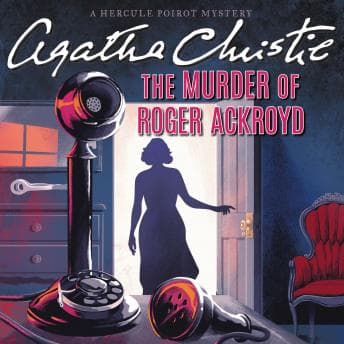
I went into The Murder of Roger Ackroyd knowing more than I should have. That's the curse of being an English teacher who's spent two decades surrounded by mystery readers, literary critics, and those insufferable "Did you know Agatha Christie once..." conversations at faculty holiday parties. I knew The Thing. The big twist. The one that made readers in 1926 write furious letters to newspapers. And I still found myself sitting on a bench along the lakefront on a Saturday morning, coffee going cold, genuinely riveted by how Christie pulls it off.
That's the mark of something extraordinary. Not that the destination surprises you - but that the architecture of getting there is so precise, so deviously constructed, that knowing the answer doesn't diminish the pleasure of watching the question unfold.
The Narrator You Didn't Know You Needed
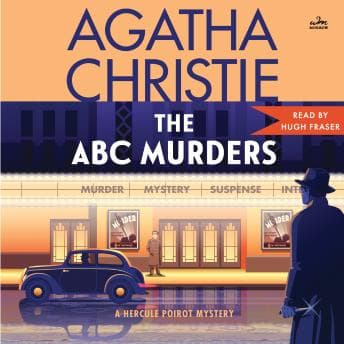
Hugh Fraser - Captain Hastings himself from the ITV adaptations - narrates this with the kind of quiet authority that makes you forget you're listening to a performance. His Dr. Sheppard is warm, measured, almost confessional in tone, which is exactly right for what Christie is doing with the first-person narration here. There's a subtle something in Fraser's delivery - a careful neutrality during certain passages - that on a second listen (or even a first, if you're paying the kind of attention Christie demands) becomes deeply unsettling. Fraser brings that same unsettling precision to his narration of The ABC Murders, another Poirot mystery where the details matter. He's not winking at the audience. He's not telegraphing. He's just... choosing his words with the same precision the character does.
His Poirot is Belgian without being cartoonish. There's a crispness to the consonants, a slight formality in the phrasing, that separates Poirot's dialogue from every other character without turning him into a caricature. And the supporting cast - Flora's breathiness, the bluster of Inspector Raglan, Parker the butler's careful deference - they're all distinct enough that you never lose track of who's speaking. At seven hours, Fraser keeps the energy steady without ever rushing. The prose deserves to be savored, and he clearly agrees.
What Christie Is Really Doing Here
Let's talk about what the author is really saying, because Roger Ackroyd isn't just a clever puzzle. It's a meditation on the reliability of storytelling itself. Christie chose first-person narration for a reason - she's implicating the reader in the act of trust. Every time Dr. Sheppard says "I did this" or "I went there," you accept it because that's the contract of first-person narrative. We believe narrators. We have to. And Christie weaponizes that trust so elegantly that even readers who figure out the twist early can't quite pinpoint where the deception happens, because the deception IS the form.
This is why we still read the classics. Not because they're old, but because they broke rules that hadn't been written yet.
My students would hate this - they'd call it slow, they'd want more action, they'd complain that Poirot is "extra" (he is, gloriously so). I love it. The pacing is deliberate in the way a chess game is deliberate. Every scene in King's Abbot - the gossip at the dinner table, Caroline Sheppard's relentless nosiness, the careful inventory of who was where at what time - it all serves the mechanism. Nothing is wasted. Christie gives you every piece of information you need to solve this yourself, and the fact that most people don't is her greatest trick.
The Listening Experience at 1.0x
I listened at my usual 1.0x because the author chose those words, and in a mystery this tightly constructed, speeding through means missing the very clues Christie embedded in Sheppard's phrasing. There are moments - particularly in the chapters following the murder's discovery - where what Sheppard doesn't say is more important than what he does. Fraser's pacing honors those silences. The narrator understands that pause is punctuation.
The production is clean, no distracting music or sound effects, just Fraser and Christie's words. Which is all you need.
Who Gets the Assignment
If you loved And Then There Were None, this is its spiritual successor in terms of structural audacity - Christie playing with form, daring you to keep up. Honestly, I think And Then There Were None is even more breathtaking in its audacity, but this one holds its own. It's perfect for mystery lovers, obviously, but I'd also push it toward anyone interested in narrative craft. Writers, English teachers, anyone who's ever argued about unreliable narrators at a dinner party.
Skip it if you need action every ten minutes. This is a village mystery with drawing rooms and garden paths and a retired detective growing vegetable marrows. The violence is almost entirely offstage. The tension is intellectual, not visceral.
And if someone's already spoiled the ending for you? Listen anyway. The magic isn't in the what. It's in the how.
Worth Pausing the Faculty Meeting For
This is the rare audiobook where narrator and material are so well matched that it feels inevitable - like Fraser was always supposed to read this. Seven hours of precise, patient, beautifully paced mystery that rewards close listening. Christie earned that "Best Crime Novel of All Time" designation, and Fraser's performance makes the case all over again. Buy it, listen at 1.0x, and pay attention to every single word Dr. Sheppard says. Especially the ones that seem ordinary.