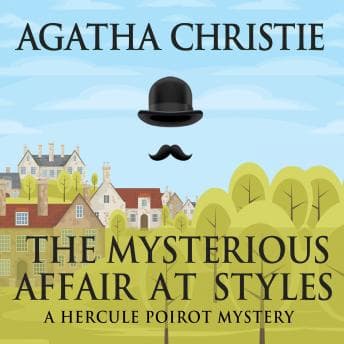

Everyone tells you to start with the classics. Read the originals. Go back to the source. And then you do, and sometimes you find out the source is... fine. Just fine. That's what I expected from Christie's debut - a historical curiosity, the literary equivalent of watching silent films to appreciate Scorsese.
I was wrong. Sitting in the faculty lounge during lunch (ignoring the debate about parking lot supervision), I found myself genuinely stumped by a 104-year-old whodunit. That's humbling for someone who teaches plot structure for a living.
The Birth of a Method
What strikes me most about The Mysterious Affair at Styles isn't the mystery itself - though it's clever - but watching Christie discover what she's doing in real time. You can feel her figuring out the rules she'll spend decades perfecting. The red herrings aren't quite as elegant as her later work. The misdirection is occasionally heavy-handed. But there's something thrilling about witnessing genius in its larval stage.
Poirot arrives fully formed, though. Those little grey cells, the fastidious manner, the wounded pride when his methods are questioned - it's all here from page one. (Or hour one, I suppose.) Christie understood her creation immediately, even if she hadn't yet mastered the machinery around him.
The setting - a country house called Styles Court during the Great War - functions as both backdrop and character. There's tension in the household that has nothing to do with murder: refugees, wounded soldiers, the collapse of old social orders. Christie doesn't belabor this context, but it's present. Hemingway's iceberg theory applies here - the dignity of movement comes from what's beneath the surface.
Armstrong's Poirot Problem (Solved)
Charles Armstrong does something smart with his narration: he doesn't try to compete with David Suchet. That would be suicide. Instead, he gives Poirot a Belgian accent that's precise without becoming caricature - formal, slightly fussy, but never comedic. It's a Poirot who takes himself seriously, which is exactly right for this early appearance.
The character differentiation is solid throughout. You can tell Hastings from John Cavendish from Lawrence Cavendish without checking who's speaking. That sounds like a low bar, but you'd be surprised how many narrators fumble ensemble casts. Armstrong keeps the English country house voices distinct without turning anyone into a cartoon.
Where he really shines is the interrogation scenes. Poirot questioning witnesses requires a narrator who can shift perspectives rapidly while maintaining tension. Armstrong handles these passages with the timing of someone who understands that pause is punctuation. The silences matter.
Why This Still Works
My students would hate this. The pacing is deliberate. The prose expects patience. There are no car chases, no explosions, no romantic subplots shoehorned in for demographic appeal. What there is: a puzzle constructed with architectural precision, clues planted so fairly that you'll kick yourself when they're revealed. Cat & Mouse attempts similar precision but doesn't quite stick the landing the way Christie does here.
The tea under the sycamore tree scene - where Mrs. Inglethorp recites that poem - is pure atmosphere. Christie understood that murder mysteries need domesticity to violate. The horror of death in a drawing room only works if you first believe in the drawing room.
At five hours and forty-five minutes, this is a comfortable weekend listen. Not so long that you lose the thread, not so short that the solution feels rushed. I finished it during a particularly tedious faculty meeting about standardized testing protocols. Principal Martinez, if you're reading this, I was definitely engaged with your PowerPoint. (I wasn't. I was watching Poirot examine a coffee cup.)
Who Should Investigate (And Who Should Skip)
If you've only experienced Christie through adaptations - the Suchet series, the Branagh films, that Knives Out movie that owes her royalties - go back to the source. Same goes for Yearling - sometimes the original text reveals layers the screen versions miss. This is where the template was invented. You'll recognize techniques that have been borrowed, stolen, and homaged for a century.
If you're already a Christie devotee, Armstrong's narration offers a fresh perspective on familiar material. It's not definitive, but it's respectful and engaging.
Skip this if you need action, constant stimulation, or prose that moves at podcast speed. Christie chose these words, and they deserve to be heard at their intended pace. I listened at 1.0x because I'm apparently ancient. My students would agree.
Worth Pausing the Faculty Meeting For
This is why we still read the classics. Not because they're old, not because they're assigned, but because they still work. Christie's debut isn't her best - that comes later, repeatedly - but it's a remarkably assured beginning. The mystery is fair, the solution is surprising, and Poirot is already Poirot.
Armstrong's narration serves the material without overshadowing it. That's harder than it sounds. For a first encounter with the Belgian detective, or a nostalgic return, this audiobook earns its place on your shelf. Just maybe don't listen during important meetings.
(I'm going to listen during important meetings.)