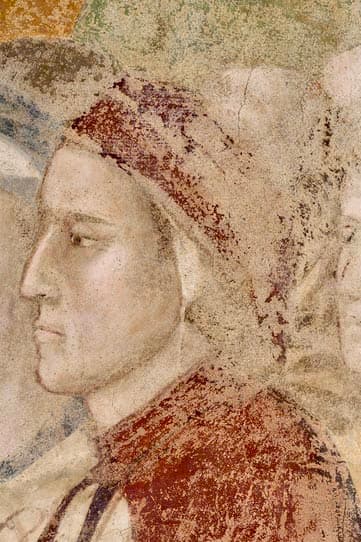

"Midway upon the journey of our life, I found myself within a forest dark, for the straightforward pathway had been lost."
I was walking the lakefront with Denise on a Sunday morning - gray sky, wind off the lake sharp enough to make your eyes water - and those opening lines hit me like they did twenty-five years ago in a cramped grad school seminar. Except this time I wasn't reading them off a yellowed paperback with someone else's marginalia. I was hearing them, and there's something about hearing Dante's terror spoken aloud that makes the hair on your arms stand up in a way the page never quite managed.
Let me be upfront: this is a four-hour audiobook of a 14th-century Italian epic poem in English translation. My students would hate this. I love it.
The Voice Descending Through Nine Circles
Charles Armstrong narrates with a clarity that this text desperately needs. And I mean desperately. I've watched bright seventeen-year-olds bounce off Dante like rubber balls off concrete - the allegory, the historical figures, the nested structure of sin and punishment - it's a lot. Armstrong doesn't try to make it easy, but he makes it legible. I heard that same clarity in his work on Mysterious Affair at Styles, where he navigates Christie's tangled clues without ever losing the thread. His voice carries genuine fear during Dante's early confusion in the dark wood, and he shifts into something colder, more measured as Virgil guides them deeper. That tonal arc matters. The Inferno isn't just a catalog of suffering - it's a psychological descent, and Armstrong tracks it.
His character differentiation works in spots. He distinguishes Virgil's calm authority from Dante's anxious questioning, and when they encounter the damned - Francesca da Rimini, Ulysses, Count Ugolino - he finds different registers for each. Not full theatrical voices, but enough vocal shading that you can track who's speaking without rewinding. For a single narrator handling a poem where the emotional range goes from pity to horror to something like grim satisfaction, that's solid work.
But here's where I have to be honest. At four hours, the pacing sometimes works against itself. The structure of the Inferno is inherently repetitive - arrive at circle, meet sinners, hear their stories, descend further. Rinse and repeat nine times. A great narrator can vary the energy enough that each circle feels distinct, and Armstrong manages this for the big moments (the wind-tossed lovers in the second circle, the ice of Cocytus at the bottom). But in the middle cantos - the wrathful, the heretics, the violent - the delivery settles into a rhythm that can lull you. I caught myself drifting during a faculty meeting, which, granted, I was already only half-present for. (Sorry, Principal Martinez. Again.)
Why Dante Still Matters at 11 PM on a Tuesday
Here's what I keep coming back to. The Inferno is built on a radical idea: that punishment should mirror the sin. The fortune-tellers walk with their heads twisted backward. The flatterers are submerged in excrement. The wrathful tear each other apart for eternity. It's brutal and imaginative and - this is the part my students never expect - deeply personal. Dante populated his Hell with real people. Political enemies, corrupt popes, people who wronged him in Florence. The poem is revenge fantasy disguised as theology, and hearing it performed rather than reading it on the page strips away the academic distance.
Armstrong delivers the descriptions of punishment with an emotional register that walks the right line. He doesn't relish the violence, but he doesn't shy from it either. There's a moment when Dante weeps with pity for the damned and Virgil essentially tells him to knock it off - that God's justice doesn't need his tears. Armstrong plays Virgil's rebuke with real steel, and it lands. That exchange is the whole moral engine of the poem, and the narrator understands that pause is punctuation.
Now, some listeners have found the content harsh or the punishments disagreeable. And look - if you're coming to the Inferno expecting comfort, you've picked up the wrong book. This is medieval Catholic cosmology at its most unforgiving. But that's also what makes it electric. Dante wasn't writing to soothe. He was writing to shake people.
Who Gets the Most Out of This
If you've always meant to read the Inferno but never got past Canto III, this is your way in. Four hours is a modest commitment for one of the foundational works of Western literature. If you loved Circe by Madeline Miller or The Song of Achilles - anything that takes ancient material and makes it breathe - this is the original version of that impulse. This is its spiritual ancestor, really.
But I'd skip this if you need heavy annotation or context to follow the poem. There's no supplementary material here, no scholarly introduction, just the text performed. For newcomers, that can mean missing the political and historical layers entirely. I'd suggest pairing it with a good companion guide. (This reminds me of what Hemingway said about Dante - that he learned more from him than from any living writer. Even Hemingway needed the context first.)
If you want something from the same era that wears its scholarship a little more lightly, Sir Nigel brings medieval chivalry to life without requiring a companion guide—though it's a very different kind of journey.Listen at 1.0x. The prose deserves to be savored. The tercets have a rhythm even in translation, and speeding through them defeats the purpose.
Worth Pausing the Faculty Meeting For
This isn't the definitive audio Inferno - a fuller production with music or a more dynamic narrator could elevate the experience. But Armstrong's clear, emotionally grounded reading makes the poem accessible without dumbing it down. At four hours, it's the kind of thing you can finish in a long weekend of walks, and you'll come out the other side understanding why we still read the classics. Even when they're seven hundred years old and full of people getting their heads twisted backward.