
"Prayer is not a monologue. It is a conversation with a God who actually wants to respond."
Somewhere around hour three, Eldredge drops this line and I had to stop walking. Just stood there on the lakefront path like an idiot while joggers swerved around me. Because here's the thing—I've been in church pews for forty-plus years, and I've heard approximately ten thousand sermons on prayer. Most of them made me feel like I was doing it wrong. This one made me feel like I'd been handed a map I didn't know existed.
When the Author Becomes the Teacher
There's a particular magic when an author reads their own work. Sometimes it's a disaster—writers aren't performers, and flat delivery murders whatever life existed on the page. But Eldredge? The man teaches for a living, and it shows. His pacing has this conversational quality that made me forget I was listening to a book at all. Felt more like sitting across from a mentor who's genuinely excited to share something he's discovered.
He brings humor where you don't expect it—little asides about his own prayer failures, moments of self-deprecation that remind you he's not preaching from some spiritual mountaintop. The clarity is remarkable. Passages that might have felt dense on paper become almost obvious when he reads them, because you can hear which words he's emphasizing, where he's building to a point. Hemingway said the reader should never notice the writing. Eldredge makes you forget you're learning.
The Taxonomy of Talking to God
What sets this apart from the standard "just pray more" Christian advice is structure. Eldredge breaks prayer into categories—intervention, consecration, warfare, healing, listening—and treats each like a distinct skill to be developed. Not in a clinical way. More like how you'd teach someone to fish: here's the rod, here's the bait, here's why this matters.
The warfare prayers section hit different than I expected. I'm an English teacher, not a charismatic preacher. I don't naturally gravitate toward spiritual combat language. But Eldredge presents it with enough theological grounding that even my skeptical brain stayed engaged. He's not asking you to shout at demons in your living room. He's asking you to take seriously the idea that prayer might actually *do* something in the unseen world.
The listening prayer material—that's where I found myself rewinding most. The concept that prayer involves shutting up and actually waiting for a response. Revolutionary? No. But the way he walks through practical steps for discernment, for distinguishing between your own thoughts and something else entirely... my students would hate this. I love it.
Where It Gets Uncomfortable (In a Good Way)
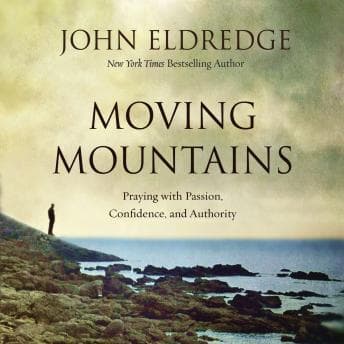
Around hour five, Eldredge addresses the elephant: unanswered prayer. Why some mountains don't move no matter how hard we push. He doesn't offer easy answers—thank God, because I've heard enough of those to last a lifetime. Instead, he acknowledges the mystery while still insisting that prayer matters, that our participation changes things even when we can't see how.
This is why we still read the classics, honestly. Because the best spiritual writing doesn't pretend to have everything figured out. It invites you into the struggle. That same vulnerability shows up in Love and Respect, though applied to marriage instead of prayer—both books treat relationship as something you can actually get better at through intentional practice. Eldredge does that here. There's a vulnerability in admitting that he's still learning, still failing, still showing up anyway.
Who This Is (and Isn't) For
If you've grown cynical about prayer—if it feels like talking to a ceiling—this might be the reset you need. Not because Eldredge has magic formulas, but because he treats prayer as a relationship skill that can actually be developed. If you loved *Wild at Heart*, this is its spiritual successor: practical mysticism with feet on the ground and eyes toward heaven.
Skip it if you want academic theology. This isn't systematic. It's pastoral. Also skip if Eldredge's particular brand of masculine Christianity rubs you wrong—it's less pronounced here than in his other work, but the DNA is still present.
At seven hours, it's a commitment that rewards focused listening. I wouldn't recommend this for background noise while grading papers. (Trust me, I tried. Kept having to rewind because I'd miss something important while marking comma splices.) This one deserves your attention.
Class Dismissed
I finished the last chapter during Principal Martinez's quarterly budget review. Sat there with my earbuds hidden under my hair, watching his lips move while Eldredge talked about the intimacy of desperate prayer. Felt appropriate, somehow. Eldredge's own voice is the best possible guide through this material. Whether it moves your particular mountains remains to be seen. But it might change how you approach them.