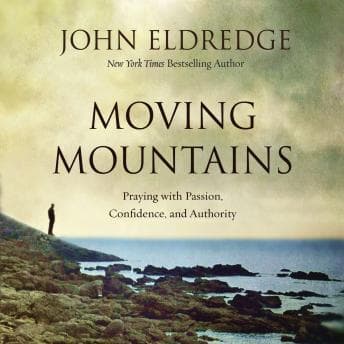
"God is initiating you. The question is whether you'll let him."
That line hit somewhere around hour two, and I had to pause - which I almost never do. I was at my desk at 11 PM, supposedly reviewing a pitch deck for a Series A startup, and instead I'm sitting there thinking about my dad pressing shirts at the shop on Western Ave. Thinking about the things he taught me without ever saying a word, and the things he couldn't teach because nobody taught him either.
Let me be upfront: I'm not Eldredge's target demo in the traditional sense. I grew up Presbyterian by way of a Korean immigrant church, not the Colorado-wilderness-Christianity that Eldredge runs on. But this book got under my skin in ways I didn't expect.
Six Stages, One Uncomfortable Mirror
The framework here is the backbone: beloved son, cowboy, warrior, lover, king, sage. Six stages of masculine development, each building on the last, each requiring initiation - ideally from a father, but ultimately from God when human fathers fall short. And let's be honest, most of us had fathers who fell short somewhere.
What I appreciate is that Eldredge doesn't pretend this is a system. It's not a 6-step McKinsey framework you can implement in Q3. The stages are descriptive, not prescriptive. He's saying: here's the path men have walked, here's where you probably got stuck, and here's why you're still compensating for it at 40.
The "cowboy" stage - that wild, adventurous boy energy - hit hard. My parents didn't have room for cowboys. They had a business to run. I went from beloved son straight to warrior (study, compete, win) and skipped the part where you learn that risk and play aren't the same as irresponsibility. I've seen this pattern in half the founders I work with. Type-A guys who can execute but can't play, can't rest, can't receive. Eldredge would say they got stuck. He might be right.
Where the Trail Narrows
Here's where I get honest. The book is pretty simple. Not simple in a "this is accessible" way - simple in a "I needed more" way. Each stage gets maybe 40 minutes of attention at 2.0x, and some of them deserve a whole book. The "king" stage, for instance - the idea that mature masculinity means ruling your kingdom well, providing order and protection - gets surface treatment when it could've gone deep into what that looks like for men who aren't leading wilderness retreats in Colorado.
And the cultural lens is narrow. Eldredge's masculine archetypes come from a very specific American Christian tradition. My dad's masculinity looked like silence, sacrifice, and showing up at 5 AM every day for thirty years. That doesn't map cleanly onto "cowboy" or "warrior." It maps onto something Eldredge doesn't quite have a stage for - the endurer, maybe. The man who fathers through presence rather than initiation. That tension between inherited identity and the stories we're handed to explain ourselves - it's something Sherman Alexie captures with brutal honesty in Absolutely True Diary of a Part-Time Indian, and it hit me in a similar spot: the feeling of doing translation work when the framework wasn't built for your experience.
Some listeners have said Eldredge could use wider insight into what it means to be a man. I'd agree. The framework works best if your experience tracks with his. If it doesn't, you're doing translation work the whole time. Not impossible, but it's extra labor.
Eldredge Reading Eldredge
The author-narrated format works here better than most business or self-help audiobooks. Eldredge sounds like a guy talking to you around a campfire - warm, a little intense, genuinely caring. There's no performative narrator energy. When he tells stories about his own sons, about his own father wounds, you can hear the weight in his voice. It's not polished. It's real.
At 6 hours 24 minutes, this is mercifully short by the genre's standards. I didn't feel like he was padding. If anything, I wanted more depth in certain stages. That's a better problem to have than the reverse.
Who Gets ROI Here
If you're a Christian man wrestling with fatherhood - either what you received or what you're trying to give - this is worth your time. Especially if you read Wild at Heart and wanted the practical sequel. This is that book.
If you're looking for a broad, culturally diverse examination of masculinity? This isn't it. If you want academic rigor or data? Wrong shelf entirely.
If you're a woman who grabbed this to understand the men in your life - one reviewer's wife did exactly that - there's real value here. Jenny listened to chunks of it over my shoulder and said it explained some things about me that eight years of marriage hadn't. I'm choosing not to unpack that statement.
The Consultant's Bottom Line
Bottom line: Eldredge gives you a map. It's not the only map, and it won't work for every terrain. But for men who grew up with absent, distracted, or wounded fathers - and that's a lot of us - having any map at all is better than wandering.
This is what my parents did instinctively. Now it has a TED talk. Except Eldredge would hate that comparison, and honestly, his version is warmer.
My dad never read a book about fatherhood. He just showed up every day. Eldredge would say that was God initiating through him. I don't know if my dad would agree. But I think he'd appreciate someone trying to put words to the thing he did with his hands.