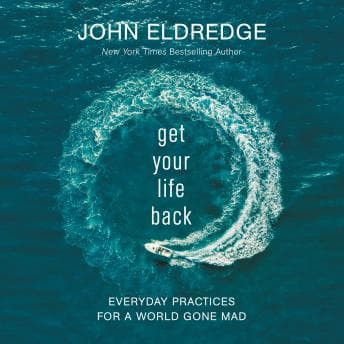

I need to talk about the phrase "benevolent detachment" for a second. Because I was chopping onions for a dal that was going to take two hours I didn't have, listening to John Eldredge describe this concept like he'd just invented emotional boundaries, and I found myself asking: why does this feel both genuinely useful and slightly irritating at the same time?
That's basically this entire audiobook in a nutshell.
When Your Soul Needs a Framework But Gets a Mood Board Instead
Here's what Eldredge is trying to do, and I want to give him credit for it: he's packaging spiritual practices into accessible, bite-sized habits. The "One Minute Pause" — literally stopping for sixty seconds to breathe and release — is the kind of thing that the research actually shows works. Micro-interventions for stress reduction have solid evidence behind them. And his emphasis on beauty as a restorative force? There's real psychological grounding there, even if he doesn't cite it. Exposure to natural beauty reduces cortisol. We know this.
But the problem is structural. The material is genuinely scattered. He'll introduce a practice like the One Minute Pause, then drift into a personal anecdote about fly-fishing in Colorado, then pivot to spiritual warfare language, then circle back to beauty, and by the time you've tracked the thread you've lost the practical instruction. It reads — or rather, listens — like a series of loosely connected devotional entries rather than a coherent program. For a book that promises to give you tools, the toolbox feels like it was packed by someone who kept getting distracted by the sunset.
Psychologically, this doesn't track as effective self-help design. The best behavior-change literature gives you a clear model, then specific implementation steps, then addresses obstacles. Eldredge gives you a feeling. Which — fine, if that's what you came for. But the title says "Everyday Practices," and I wanted more structure than I got.
The Author-as-Narrator Problem
So Eldredge reads his own book, and this is a fascinating case study in the double-edged sword of author narration. On one hand, the conversational tone is genuine. You can hear him thinking. There's bonus content that doesn't appear in the print version, which is a nice touch for the audio format. He sounds like your well-meaning pastor who corners you after service to tell you about this thing God showed him on a hiking trip.
On the other hand — and this is the thing that nagged at me through most of the six hours — the delivery slides into a register that feels performative. There's this particular cadence he adopts when he gets into spiritual encouragement mode, a sort of warm, knowing, breathy earnestness that starts to feel rehearsed after a while. Like he's performing vulnerability rather than being vulnerable. My therapist would have thoughts about this character — the counselor who's so busy modeling emotional health that the modeling itself becomes a kind of armor. The gap between performed and actual emotional availability is something Adult Children of Emotionally Immature Parents dissects with far more precision — and far less pastoral warmth covering the seams.
Is that fair? Maybe not entirely. But when someone tells you to "let it all go" in a tone that sounds like it was focus-grouped for maximum pastoral gravitas, something in your psychology-trained brain starts raising flags.
Who This Actually Works For (And Who Should Keep Scrolling)
Look, I came to this as someone who studies how narratives shape identity, and Eldredge is doing something specific here: he's offering a story about your life in which you are an overwhelmed soul in a broken world, and God is gently reaching toward you through beauty and stillness. If that narrative frame fits your existing worldview, this book will feel like a warm blanket. The practices themselves — pausing, unplugging, noticing beauty, practicing kindness toward yourself — are genuinely good advice, even if none of them are original.
If you're looking for evidence-based approaches to burnout and overstimulation, this isn't it. If spiritual language that leans heavily into "spiritual warfare" and "the enemy" makes you uncomfortable, you'll spend half the book with your eyebrows raised. If you need tight organization and clear action steps, you'll be frustrated.
At six hours and nineteen minutes, it's a modest commitment. But I'd honestly recommend this more as something to dip into — a chapter here, a practice there — rather than a straight-through listen. The conversational style works better in small doses. Binge-listening it while cooking an elaborate meal alone on a Tuesday night? The scattered structure starts to wear on you. (The dal turned out great, though. Small mercies.)
My Clinical Notes on This One
What makes this book compelling is also what limits it: Eldredge genuinely believes the world is too much for us and that the answer is radical simplicity with God. That belief gives the book its emotional warmth. But it also means he never really grapples with why some people can't just "pause" — the systemic, economic, psychological barriers to the kind of stillness he prescribes. The protagonist of this book — you, the exhausted reader — exhibits classic burnout patterns, but the treatment plan assumes a fairly specific life context. Pretty much a middle-class, Christian, nature-adjacent one. That unexamined assumption about who the "exhausted person" is reminded me of the same blind spot I noticed in True North, which also prescribes authenticity and stillness while quietly assuming its reader has the kind of life that makes stillness a scheduling problem rather than a luxury.
It's a decent listen if you're already in Eldredge's world. If you're not, there are sharper tools available.