
Okay, so here's the thing. I'm a software engineer. I debug distributed systems for a living. I approach problems with logic, data, and reproducible results. So when Kevin suggested we listen to a marriage book together during a weekend road trip, I was... skeptical. But also, we'd been having some communication issues (who hasn't after two years of pandemic WFH overlap?), and I figured worst case, I'd have something to roast later.
Bottom Line: This book has some genuinely useful frameworks buried under a LOT of traditional Christian gender role assumptions. Your mileage will vary wildly depending on your worldview.
Let me break this down.
The Core Framework (Actually Pretty Clever)
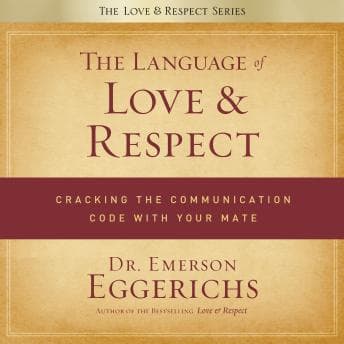
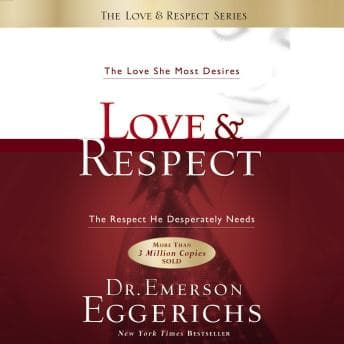
Eggerichs's main thesis is basically this: women's primary emotional need is love, men's primary emotional need is respect, and when one partner doesn't get their need met, they react in ways that deny the other partner's need. He calls this the "Crazy Cycle" - she feels unloved, acts disrespectfully, he feels disrespected, acts unlovingly, rinse and repeat until you're fighting about who left the cabinet open for the 47th time.
Honestly? This clicked for me. I've definitely been in arguments where I'm thinking "why won't he just LISTEN" and Kevin's thinking "why is she being so dismissive" and we're both right and both wrong simultaneously. It's like a deadlock in concurrent programming - both threads waiting on each other, nothing progresses.
The book also introduces the "Energizing Cycle" (mutual positive reinforcement) and the "Rewarded Cycle" (doing it for God even when your spouse doesn't reciprocate). The acronyms he uses - C.O.U.P.L.E. for her needs, C.H.A.I.R.S. for his needs - are cheesy but memorable. I retained them, which is more than I can say for most business books.
Though honestly, Give and Take had better frameworks for understanding relationship dynamics without all the gender baggage.
The Part That Made Me Pause. A Lot.
Here's where it gets complicated. Eggerichs is VERY traditional in his gender role views. Like, the wife should respect her husband even when he's being a jerk because that's what God commands, and eventually he'll come around. The husband is the head of the household. Women are nurturers, men are providers and protectors.
I kept waiting for the nuance. For the acknowledgment that maybe some women also need respect? That some men also desperately need to feel loved? That relationships exist outside the heteronormative Christian marriage model? That nuance... didn't really come.
Kevin and I had to pause multiple times to discuss. Some chapters I was nodding along, and then he'd say something like "even if your husband is wrong, you should respect his position" and I'd be like... no? That's not how healthy relationships work? You can respect someone AND disagree with them AND tell them they're wrong?
(I may have ranted about this for twenty minutes somewhere around Gilroy. Kevin was very patient.)
The Narration Situation
Eggerichs narrates his own book, which is... fine. He's warm, clearly believes deeply in what he's saying, and you can tell he's spent decades counseling couples. There's an authenticity there that a professional narrator couldn't replicate. But it's not exactly dynamic. More like listening to a really long sermon. Which makes sense, because he's a pastor.
I bumped it to 1.5x pretty quickly. At 1x it dragged. The production quality is clean though - no weird audio issues, no background noise.
Who Should Listen (And Who Should Skip)
Look, I need to be real here. If you're a Christian couple who shares traditional values about marriage and gender roles, this book will probably be genuinely helpful. The framework is solid, the biblical references are extensive, and Eggerichs clearly knows his audience.
But if you're secular, or egalitarian in your relationship views, or in a same-sex relationship, or just someone who bristles at "wives submit to your husbands" theology - this is going to frustrate you. A lot. You might still extract some useful concepts (the Crazy Cycle thing is legitimately applicable), but you'll be doing a lot of mental filtering.
Perfect for: Long drives with your spouse where you can pause and discuss. Skip for: Solo commutes when you're already cranky.
Final Verdict
The ROI on this audiobook is highly dependent on your starting position. For Kevin and me, it sparked some good conversations, gave us shared vocabulary for certain patterns, but also required significant adaptation. We took what worked and left what didn't.
Could parts of this have been a blog post? Honestly, yes. There's a lot of repetition and illustration that pads the runtime. But the core concepts needed the depth.
I'm giving this a middle-of-the-road rating because it's genuinely helpful for its intended audience and genuinely problematic for everyone else. That's not a cop-out - that's just the reality of a book this polarizing. Know thyself before you click play.