
Why do I keep buying books when I have a stack of fifty unread ones staring at me from my nightstand? My mother asks me this every time she visits ("Priya, beta, this is wasteful"). I usually mumble something about "reference material," but let's be real.
It's the thrill of the hunt. The purchase. The potential of what that book could make me feel.
That same obsessive drive—the dopamine hit of wanting something more than having it—is what fueled Edwin Rist in The Feather Thief, except he channeled it into stealing rare bird specimens instead of hoarding books.
And then I buy it, put it on the shelf, and the feeling evaporates. Poof.
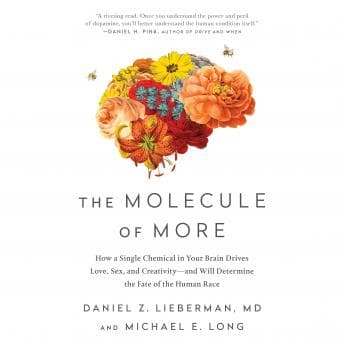
I listened to The Molecule of More while jogging along the Charles River this week, and honestly? I felt personally attacked. But in a good way. Because finally, someone explained the neurochemistry behind why we—why I—can't just sit still and be happy.
The "Up" vs. "Down" Brain
Here's the gist, minus the dry academic jargon I usually have to wade through. The authors break the brain down into two main players: Dopamine (the chemical of "more," of the future, of wanting) and the "Here and Now" chemicals (serotonin, oxytocin, etc., which are about enjoying).
Psychologically, this tracks. It explains so much about human behavior that usually drives me up the wall.
Why do passionate romances turn into boring marriages? Dopamine fades, oxytocin takes over—if you're lucky. Why do artists and geniuses tend to be miserable people to be around? High dopamine makes you creative but also kind of a jerk who can't appreciate the present moment.
I found myself stopping mid-run near the Harvard Bridge because the section on political ideologies hit me hard. They argue that liberals are high-dopamine (obsessed with change, the future, fixing things) and conservatives are "Here and Now" focused (protecting what exists, valuing the present). As a researcher, I usually side-eye broad generalizations like that, but... okay. It makes a scary amount of sense.
The way systemic structures shape behavior—and how we rationalize those structures—gets a much deeper (and more devastating) treatment in The New Jim Crow, which I'm still processing months later.
Tom Parks Has the Right Amount of Espresso Energy
I hadn't listened to him before, but narrating non-fiction is a trap. Go too dry, and I'm back in a lecture hall falling asleep. Go too enthusiastic, and it sounds like an infomercial.
Parks nailed the balance. He sounds like that one professor you actually wanted to go to office hours with—authoritative, but conversational. He didn't get in the way of the science. He just delivered it with this crisp, clean pacing that made the complex brain chemistry stuff digestible. (Honestly, listening at 1.25x speed, he sounded like he'd had just the right amount of espresso). He handled the shift between scientific data and anecdotal stories without weird pauses or robotic intonation.
Why We Can't Have Nice Things (Forever)
What makes this book stick with me isn't just the biology. It's the philosophy hidden inside the biology.
The authors basically argue that we aren't built for happiness. We are built for survival. And survival means never being satisfied. If our ancestors sat around being happy with their food supply, they would've starved next winter. So, nature gave us a chemical that screams "MORE."
Bleak? Maybe. But also liberating.
When I'm cooking dinner alone and feeling that itch that I should be doing something else, or achieving something more, I can just blame the dopamine. It's not a character flaw. It's just biology doing its job a little too well.
(My therapist is going to love this new rationalization, I'm sure.)
One More Book for the Stack
If you're the type of person who achieves a massive goal and then immediately feels empty—listen to this. If you write fiction and want to understand why your characters make terrible, self-destructive choices—listen to this. Skip it if you want actionable life advice; this is more "here's why you're wired this way" than "here's how to fix it."
It gets a little repetitive in the middle (classic non-fiction problem), but the framework it gives you for viewing the world is worth it. Now, if you'll excuse me, I have a sudden urge to buy a new planner I definitely don't need. Thanks, dopamine.







![Steve Jobs [unabridged audiobook] audiobook cover](/_next/image?url=https%3A%2F%2Fcovers.audiobooks.com%2Fimages%2Fcovers%2Ffull%2F9788499923406.jpg&w=1920&q=75)