
Look, I thought I knew what obsession looked like. I work in tech. I've seen engineers spend three weeks optimizing a function that runs once a year. But this book? This book made me realize we're all amateurs.
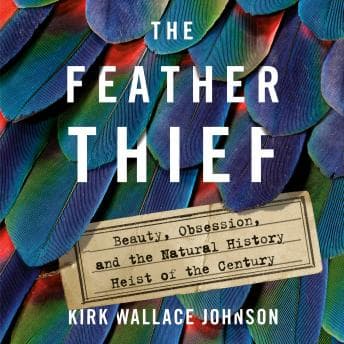
The Feather Thief landed in my queue because someone on Hacker News recommended it in a thread about "niche obsession rabbit holes." I figured it'd be a quirky true crime thing to get me through a few commutes. What I didn't expect was to find myself genuinely angry at a flute-playing fly-tier by the time I hit Mountain View.
When Debugging Becomes Personal
Here's the setup: a twenty-year-old musical prodigy breaks into a British natural history museum and steals hundreds of rare bird specimens - some collected by Alfred Russel Wallace, Darwin's contemporary. Why? Because the Victorian art of salmon fly-tying requires specific feathers from specific birds, and the community of people who do this will pay thousands for the right plumage.
Kirk Wallace Johnson stumbles onto this story while fly-fishing in New Mexico, and then does what any reasonable person would do: becomes completely consumed by it for years. As someone who once spent an entire weekend reverse-engineering a deprecated API just because I couldn't let it go, I felt seen. And slightly called out.
The book works on multiple levels. It's a heist story. It's an investigation. It's a meditation on how passion curdles into something darker. And honestly? It's a pretty solid primer on Victorian natural history and the ethics of collecting. I learned more about bird taxonomy than I ever expected to care about.
MacLeod Andrews Nails the Weird Energy
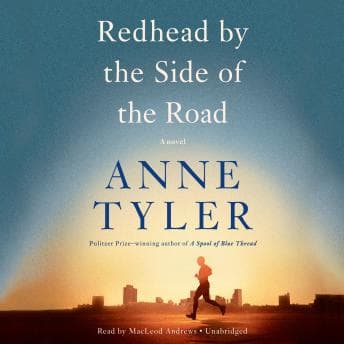
I wasn't familiar with MacLeod Andrews before this, but he's apparently an Earphones and Audie Award winner, and yeah - I get it now. This material could've gone sideways fast. You're dealing with fly-tying forums, museum bureaucracy, and some genuinely eccentric characters. Andrews finds the exact right tone: engaged but not mocking, serious but aware of the absurdity.
His pacing is excellent. The book bounces between historical context (Wallace's expeditions, the origins of fly-tying culture) and the modern investigation, and Andrews handles the transitions smoothly. When Johnson is doing his detective work - tracking down feathers on eBay, interviewing tight-lipped fly-tiers - Andrews brings this low-key intensity that kept me hooked even during the 6AM zombie train.
The character voices work too. Edwin Rist (the thief) comes across as exactly the kind of person you've met in any competitive hobby community: talented, entitled, convinced the rules don't apply to him. Andrews captures that energy without overdoing it.
The ROI Question
Okay, so here's where I have to be honest. The book does drag slightly in the middle. There's a section where Johnson is really digging into the fly-tying community and the history of feather trading, and while it's interesting, I found my attention wandering around the Palo Alto stop. Not a dealbreaker, but worth noting.
The last third picks up again as the investigation intensifies and you start to realize just how unsatisfying the legal resolution was. Johnson's frustration becomes your frustration. The ending left me genuinely irritated in a way that felt earned - not at the book, but at the situation.
At 8 hours, this is basically a perfect commute length. I finished it in about a week of train rides, and it's the kind of book where you actually look forward to your commute. (A rare thing, especially when BART is doing maintenance and you're stuck on a bus bridge.)
Who Should Listen (And Who Should Skip)
Perfect for: train, gym, weekend errands. Skip for: deep focus work - you'll actually want to pay attention. Also skip if you need tidy resolutions; this one will leave you frustrated (by design).
If you liked The Orchid Thief or any of those "weird niche obsession" books, this is your jam. True crime fans will dig the investigation angle. And honestly, if you've ever been deep in any hobby community - gaming, mechanical keyboards, whatever - you'll recognize the specific flavor of obsession on display here.
The science actually holds up, by the way. Johnson clearly did his homework on ornithology and conservation, and he doesn't dumb it down. I appreciated that. Hot Zone had that same quality—real science that trusts you to keep up.
Bottom Line
I'm giving this a 4.2. It's not quite Ray Porter territory (nothing is), but MacLeod Andrews delivers a really solid performance on material that could've been dry or condescending. Instead, it's genuinely engaging - a weird, specific story about birds and crime and the lengths people go to for beauty.
Would I listen again? Probably not. But would I recommend it to basically everyone I know? Already have. Kevin's halfway through it and keeps texting me about the eBay feather market. So that's fun.





![Steve Jobs [unabridged audiobook] audiobook cover](/_next/image?url=https%3A%2F%2Fcovers.audiobooks.com%2Fimages%2Fcovers%2Ffull%2F9788499923406.jpg&w=1920&q=75)