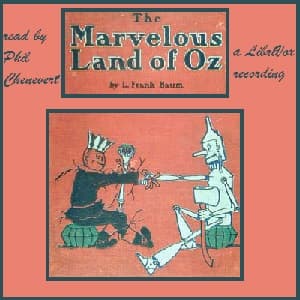

L. Frank Baum's second Oz book is not the book you think it is. And I mean that as a genuine compliment.
I came to this one sideways - shelving a bunch of donated Oz paperbacks at the library last week, the kind with the John R. Neill illustrations that smell like your grandmother's attic. I realized I'd never actually read past The Wonderful Wizard of Oz, which felt like a professional failing. So I queued up Phil Chenevert's LibriVox recording and hit play while reorganizing my apartment bookshelves (horror section was encroaching on the fantasy shelf again - Shirley Jackson kept ending up next to Shirley my cat's food bowl, which felt thematically appropriate but practically inconvenient).
Baum Was Doing Something Weird Here and He Knew It
Let me set expectations: this is not a horror book. Obviously. But here's what surprised me - The Marvelous Land of Oz has a genuinely unsettling undercurrent that I don't think gets enough credit. The witch Old Mombi is keeping a child essentially as a slave. Tip creates a pumpkin-headed man named Jack who is alive and terrified of his own fragility - his head could rot, and he knows this. That's body horror for children, and Baum just... slides it in there between whimsical adventures like it's nothing.
The Powder of Life - this substance that animates anything it touches - is used to bring a sawhorse to life, then later an entire flying contraption made of sofas and a mounted Gump head. Baum treats creation as casual, almost reckless, and nobody stops to reckon with the implications. The Gump's head is aware it used to be a living creature mounted on a wall. That's dark. Shirley Jackson walked so... okay, Baum was actually walking alongside her in a parallel lane, decades earlier, just wearing a much more colorful outfit.
The Army of Revolt subplot - General Jinjur leading an all-female army to overthrow the Scarecrow's rule of the Emerald City - reads differently in 2024 than it did in 1904. The only other 19th-century text that gave me that same "wait, what exactly is this author arguing" vertigo was Little Women - Alcott is doing something similarly slippery with gender and ambition, and neither book lets you settle into a comfortable reading. Baum was a suffragist's husband, and whether this is satire, sympathy, or something messier is genuinely hard to pin down. The book doesn't resolve this tension so much as sidestep it with a plot twist I won't spoil, but it's the kind of thing that made me pause the audiobook and stare at my ceiling for a minute.
Phil Chenevert Gets the Assignment
Here's what works about Chenevert's narration: he treats Baum's prose with the same sincerity Baum wrote it with. No winking at the audience, no "isn't this quaint" energy. When Tip is genuinely frightened of Old Mombi, Chenevert's voice tightens. When the Scarecrow and Tin Woodman bicker with that particular brand of earnest absurdity Baum loved, Chenevert leans into the comedy without turning it into a bit.
The narrator commits. That's rare - especially for public domain recordings where the quality can be wildly inconsistent. At five hours, this is a brisk listen, and Chenevert's pacing matches the book's breathless adventure-to-adventure structure. He doesn't try to do wildly distinct character voices for every single Oz inhabitant (which would be exhausting across dozens of characters), but he shifts register enough that you always know who's speaking. Jack Pumpkinhead sounds appropriately bewildered. The Woggle-Bug - this insufferably intellectual insect - gets a slightly pompous cadence that made me actually laugh out loud while alphabetizing my Patricia Highsmith collection.
Is it a professional studio production? No. This is LibriVox - a volunteer recording. There are moments where the audio quality shifts slightly between chapters, and you're not getting the kind of post-production polish you'd find in an Audible exclusive. But honestly? For a free recording of a public domain classic, the quality-to-price ratio is absurd.
Who Needs This (And Who Doesn't)
If you're a fantasy reader who's only experienced Oz through the 1939 movie, this will genuinely surprise you. Baum's Oz is stranger, darker, and more politically complicated than Judy Garland's Kansas nostalgia suggests. If you have kids in that 8-12 range who are starting to outgrow picture books, this is a perfect bridge - weird enough to hold their attention, short enough to finish in a weekend of car rides.
If you need high production values and a full cast to stay engaged, this isn't that. It's one guy, a microphone, and a 120-year-old story. But sometimes that's exactly enough.
For my horror people specifically: come for the surprisingly creepy moments (animated pumpkin man contemplating his own mortality, a witch who transforms people against their will, the casual existential dread of being a sewn-together creature made of straw). Stay because Baum understood something fundamental about fantasy that a lot of modern writers forget - wonder and unease are not opposites. They're neighbors.
My Podcast Listeners Are Going to Have Opinions About This One
I'm putting this on the show. Not as a horror rec, but as a "the roots of weird fiction go deeper than you think" episode. Baum was doing things in 1904 that we now file under body horror, identity horror, and political allegory, and he was doing them in children's books. The fact that Chenevert's reading lets those elements breathe instead of smoothing them over? That's the whole reason to pick this version.
Five hours well spent. Shirley (my cat) was unimpressed. I was genuinely charmed - and a little unsettled, which is always where I want to be.