
"I'm Billina," said she, "and I'm a hen."
Somewhere around the forty-minute mark, a chicken introduces herself with more dignity than half my students manage on the first day of school. And honestly? That's when I knew this audiobook was going to be a different kind of Oz adventure.
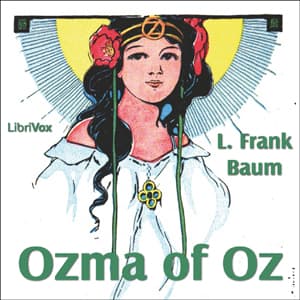
Look, I'll admit something. I've been teaching Baum's work in my American Literature unit for years, but I'd never actually read past the first Oz book. (Don't tell my department chair.) So when I finally got to Ozma of Oz during my morning walks along the lakefront, I wasn't prepared for how much darker this third installment would be. The Nome King? The ornament-transforming prisoners? This is not your grandmother's Oz. Well, actually, it literally was your grandmother's Oz—1907 was a wild time for children's literature.
When Dorothy Grows Up (Sort Of)
What struck me most about this book—and what Judy Bieber captures beautifully in her narration—is how much more agency Dorothy has here. She's not just swept up by a tornado and stumbling through adventures. She's making choices, standing up to villains, and partnering with a mechanical man named Tiktok who needs to be wound up like a clock. There's something almost proto-feminist about Dorothy in this one, and Bieber reads her with this quiet confidence that feels right.
The prose deserves to be savored. Baum writes with this accessible whimsy that my students would probably call "extra," but there's real craft underneath. He's building a mythology here, not just telling a story. You can feel him settling into Oz as a place worth returning to again and again.
Judy Bieber Knows What Children's Classics Need
Bieber has this warm, clear quality that works perfectly for family listening. She's not doing a full theatrical production—no wild character voices or dramatic crescendos—but she understands something important: children's classics need clarity first, drama second. The pacing is measured. Deliberate. The kind of narration that lets the words breathe.
I listened at 1.0x, obviously. (The author chose those words.) And at that speed, Bieber's slight dramatic touches land exactly where they should. When the Nome King threatens our heroes, there's just enough menace in her voice. When Billina the yellow hen delivers her matter-of-fact observations, Bieber nails that chicken-with-attitude energy. Yes, I just wrote "chicken-with-attitude energy." Twenty years of teaching has brought me to this.
The production is clean—no weird audio artifacts or background noise. Just Bieber and Baum, doing their thing.
The Darker Corners of Oz
This reminds me of what Hemingway said about writing—that the dignity of movement of an iceberg is due to only one-eighth of it being above water. Baum's doing something similar here. On the surface, it's a children's adventure with talking chickens and mechanical men. But underneath? There's genuine peril. The Princess Langwidere, who changes heads like outfits, is frankly unsettling. The threat of being transformed into an ornament and forgotten forever—that's existential horror dressed up in fairy tale clothing. Seven H.P. Lovecraft Stories trades the fairy tale wrapping for cosmic dread, but that same existential unease runs through both.
My students would hate this. I love it.
One listener quote I came across stuck with me: "For many years Ozma was my heroine." And I get it now. Ozma represents something aspirational—a young ruler who governs with compassion, who values her friends, who doesn't let power corrupt her. In an age when we're constantly debating what we teach kids about leadership and morality, Baum was already there in 1907, showing rather than telling.
Class Dismissed
At just over four hours, this is a perfect length for a week of commutes or a few evening listening sessions. It doesn't overstay its welcome. The adventure builds to a satisfying conclusion, and Bieber carries you through without ever losing momentum.
If you loved the original Wizard of Oz, this is its spiritual successor—but with teeth. If you're introducing kids to classic fantasy, this is an excellent entry point. If you're an English teacher who's been pretending to know the Oz series for two decades... well, join the club. We have audiobooks now.
Skip this one if you need a full-cast production with different actors voicing each character. Bieber handles everything solo, and while she does it well, some listeners want more vocal variety. But honestly? For a classic like this, a single skilled narrator feels right. It feels like being read to. And sometimes that's exactly what you need.