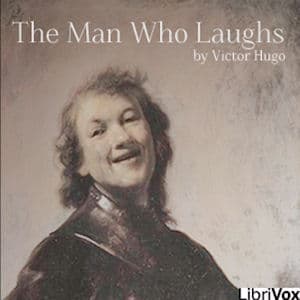

What kind of writer spends forty pages on English lighthouses before getting back to his protagonist's mutilated face?
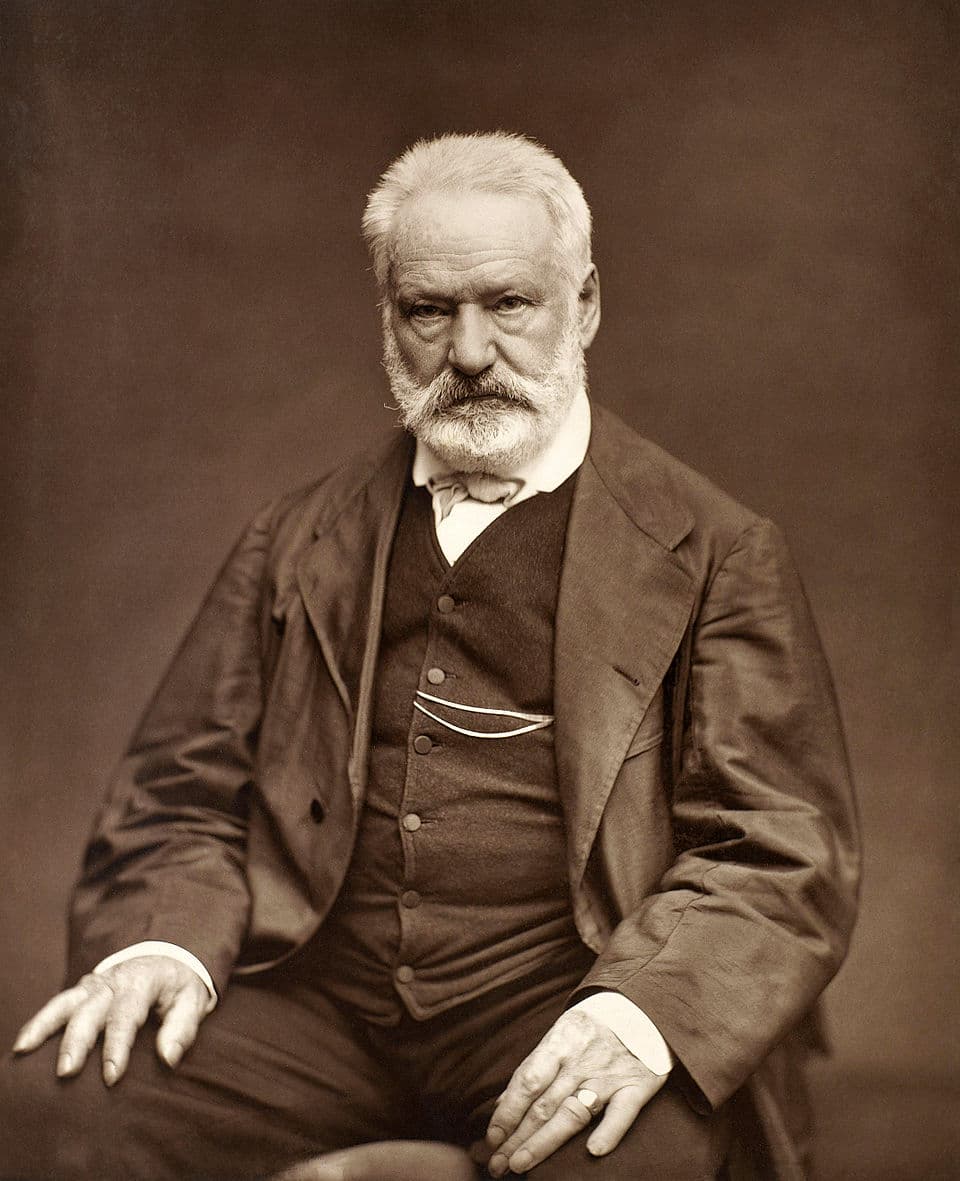
Victor Hugo. That's who. And honestly? I wouldn't have it any other way.
The Cathedral You Have to Build Yourself
Let me set the scene. It's a Saturday morning, Denise is still asleep, and I'm walking the lakefront path with my earbuds in. The wind off Lake Michigan is doing that thing where it cuts right through your jacket, and Hugo is doing that thing where he cuts right through your patience - a sprawling, gorgeous, absolutely unhinged digression about the British peerage system that has nothing and everything to do with the story of Gwynplaine, a boy whose face was carved into a permanent grin by child traffickers called the Comprachicos.
This is Hugo at his most Hugo. If you've read Les Misérables, you know about the Waterloo chapters, the sewer chapters, the convent chapters. The Man Who Laughs is built the same way - these enormous architectural digressions that feel like the novelist is actively daring you to quit. I didn't quit. But I understood, around hour six, why this novel never achieved the fame of its siblings.
Here's what the author is really saying, though, underneath all those pages about English constitutional law and maritime navigation: this is a story about how society disfigures people - literally, politically, spiritually. Gwynplaine's carved smile is the central image, but Hugo surrounds it with an entire social anatomy of 17th-century England to argue that the disfigurement goes all the way up. The aristocracy is grotesque too. They just hide it better.
Simon Vance Versus the Beast
Now, this particular LibriVox version lists "Various Readers," and I want to be upfront about that - the narration is a communal effort, which means quality varies chapter to chapter. Some readers handle Hugo's marathon sentences with genuine grace, finding the rhythm in those endless subordinate clauses. Others sound like they're reading aloud in a library study room, which - fair enough, that's basically what volunteer recording is.
But I've also listened to clips of the Simon Vance version, and the reviews I've read suggest his narration is fluid and evocative, which tracks. Vance is an AudioFile Golden Voice for a reason. The challenge isn't the narrator here. The challenge is Hugo himself. Even Vance apparently can't fully rescue those verbose expository stretches - and I'd argue that's not a failure of performance. It's just that Hugo wrote passages that resist being read aloud because they were designed to be contemplated on the page, turned over slowly, maybe re-read.
The prose deserves to be savored. But some prose tastes better in small sips than in a 25-hour pour.
The Exposition on English Lighthouses Is Real, and It's Spectacular (Sort Of)
I keep coming back to something a listener wrote: "The exposition on English lighthouses is particularly challenging." And yes. Yes it is. Hugo will spend pages describing the mechanics of coastal illumination when you're desperate to know what happens to Gwynplaine and Dea, the blind girl who loves him without ever seeing his face. That relationship - a man defined by his visible deformity loved by the one person who literally cannot see it - is one of the most devastating romantic conceits in all of literature. The quiet devastation of two people connecting across an impossible gulf reminded me of what Natsume Soseki does in Kokoro - that same sense of love circling something it can never quite name, and the reader watching helplessly from outside. Hugo knew it. He just also really wanted to tell you about lighthouses.
This reminds me of what Hemingway said about prose being architecture. Hugo builds cathedrals. Hemingway built clean modernist houses. Both work. But you have to know which one you're walking into.
My students would hate this. I love it. Not every minute - I won't pretend I didn't zone out during certain historical passages and have to rewind. But the moments that land? Gwynplaine confronting the House of Lords, the storm at sea in the opening chapters, the horrible tenderness between Gwynplaine and Dea - those moments hit with a force that earns every digression.
Who Gets the Assignment (and Who Gets to Skip It)
If you loved Les Misérables - the book, not the musical, though the musical's fine - this is its darker, stranger cousin. Same DNA, same obsessive social conscience, same refusal to edit. If you bounced off Hugo before, this won't convert you. The man writes like he's being paid by the word, because he was.
This is a focus listen. Full stop. Don't put this on during a commute unless you want to miss your exit and also an entire subplot about parliamentary procedure. Dedicate yourself to it the way Hugo dedicated himself to writing it - with unreasonable commitment and a tolerance for beautiful excess.
Worth Pausing the Faculty Meeting For
At 25 hours, this is a commitment. The volunteer narration is uneven. Hugo tests your patience the way only a genius can - by being so brilliant you can't quit, and so verbose you sometimes want to. But Gwynplaine's permanent smile haunts me weeks later. It haunted the creators of Batman's Joker too - look it up. Some images are too powerful to stay in one book.
This is why we still read the classics. Not because they're easy. Because they're the ones that carved something into us.