
My students want fireworks. They want plot twists, explosions, and dialogue that snaps like a Marvel movie. Soseki Natsume gives them fog. Thick, heavy, suffocating fog.
I listened to Kokoro while walking along Lake Michigan in November. The wind was cutting right through my coat, which felt appropriate because this book is bleak. Beautiful, yes. But bleak. (Denise asked why I looked so grim when I got home. I told her I was hanging out with Sensei. She rolled her eyes and went back to watching The Great British Baking Show. She’s the smart one in this marriage.)
When the Silence Gets Loud
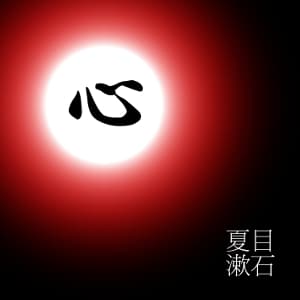
Here’s the thing about Kokoro—it’s the Japanese literary equivalent of looking into a mirror and realizing you don't actually know the person staring back. It’s split into three parts, starting with a young student befriending an older man he calls "Sensei."
It reminds me of The Great Gatsby, honestly. What Alice Forgot plays with that same disconnect between who we think we are and who we actually were, though Moriarty's version is a lot less bleak. If Gatsby was deeply depressed, hated parties, and spent all his time visiting a grave instead of staring at a green light. It’s about the gap between eras—Meiji vs. Modern—but really, it’s about the gap between people. That terrifying distance where we can never truly know another human being's heart. (And yes, Kokoro translates to heart/mind/spirit, which is something I definitely lectured my empty classroom about at 4 PM on a Friday.)
The Voice in the Machine
Let’s talk about the narration. The narrator goes by "Ekzemplaro." I couldn’t find a bio, and honestly, the performance is… utilitarian.
If you’re used to the high-drama performances of a full-cast production, this is going to feel like a cold shower. The delivery is super clear, precise, and completely stripped of theatricality. At first, I hated it. I was ready to switch to the paperback. It felt flat.
But—and stick with me here—about an hour in, while I was grading a stack of truly terrible essays on Macbeth, the monotone style started to click. Soseki’s prose is restrained. The characters are repressing everything. The narrator’s detachment actually mirrors Sensei’s emotional wall.
That said, I had to crank this up to 1.3x speed. At 1.0x, the pauses were long enough for me to rethink my entire career choice. The narrator has a "reading a manual" vibe that can drag the pacing down if you aren't careful. It’s not bad, it’s just… very, very dry.
Why We Read the Sad Stuff
The last third of the book—Sensei’s testament—is where the gut punch lands. This is why we still read books from 1914. It’s a confession of guilt that feels suffocatingly real. The narrator’s steady voice actually makes the confession creepier, like a ghost whispering in your ear rather than an actor shouting from a stage.
It’s a slow burn. A super slow burn. My students would claim nothing happens. But everything happens. Betrayal, suicide, the crushing weight of expectation. It’s all internal.
So, is it worth the listen? If you have patience. If you’re okay with a narration that serves the text rather than elevating it. It’s not a fun time. But it stuck with me. I found myself staring at the lake, thinking about my own regrets, which is exactly what Soseki wanted.
(Just don't listen to it on a sunny day at the beach. It feels wrong.)