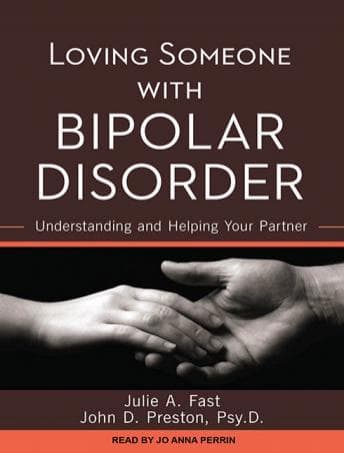

I picked this one up after a conversation with a colleague that got a little too real. She'd been struggling with her partner's diagnosis, and honestly, I didn't have great resources to recommend. So here I am, ten and a half hours later, with thoughts.
The research on supporting partners of people with mental health conditions is woefully underdeveloped. Most clinical literature focuses on the person with the disorder—which, fair—but leaves the people loving them kind of stranded. Preston and Fast get this. They actually get it.
The Psychology That Actually Tracks
What makes this book work is that it doesn't treat the non-bipolar partner as either a saint or a victim. The authors understand something fundamental about relationship dynamics: you can love someone completely and still need strategies to survive their illness. That's not cold. That's just honest.
The concept of "bipolar conversations"—learning to recognize when you're talking to the disorder versus talking to your partner—is genuinely useful clinical framing. I found myself thinking about how this applies to other conditions too. Depression, anxiety, PTSD. There's something universal here about separating the person from the episode. It's the kind of reframe that shifts how you approach conflict entirely, similar to how The Art of War treats opposition as something to understand rather than just react to.
And the financial stuff? Manic spending is one of those topics that gets whispered about in support groups but rarely addressed head-on in the literature. They go there. They give actual strategies. (My therapist would appreciate that they don't sugarcoat how hard this is.)
Jo Anna Perrin's Steady Hand
Perrin has this clear, steady delivery that works really well for self-help content. You're not here for dramatic performance—you're here for information you can actually absorb while folding laundry or, in my case, chopping vegetables for a curry that I'll eat alone over three days.
Her voice is soothing without being sleepy. That's harder to pull off than it sounds. Some reviewers mentioned a Southern accent that bothered them, but honestly? I barely noticed. What I did notice was that she paces the heavier sections well. When the content gets emotionally dense—and it does—she doesn't rush through it.
Production quality is solid. Clean audio, consistent levels. Nothing fancy, but nothing distracting either.
Where the Research Shows Its Age
Here's where I have to be honest. Some sections felt dated to me. The research has moved since this was written, and a few of the recommendations feel a bit... 2008? The medication landscape has shifted. The understanding of bipolar II has evolved. If you're looking for cutting-edge clinical information, this isn't it.
Also—and this is a personal gripe—the book leans heavily on the authors' experiences. Which can be valuable! Lived experience matters. But sometimes I wanted more research citations and less "when this happened to us." The plural of anecdote is not data, as we say in academia. (Don't tell my students I'm this picky.)
Some reviewers complained the book lacks structure, and I can see that. It meanders a bit. If you need clear chapters with distinct takeaways, you might find yourself frustrated.
Who Needs This (And Who Doesn't)
If you're in a relationship with someone who has bipolar disorder and you feel alone, confused, or frankly exhausted—this book sees you. It validates that your experience is hard without making you feel guilty for struggling. Skip it if you're a clinician looking for current research to recommend; pair it with something more recent instead. And if you're the person with bipolar disorder considering this book to understand your partner's perspective? That could actually be really valuable. Just know it's written TO them, not about you.
I listened to this over a week of morning jogs through Cambridge. There's something about processing heavy emotional content while your body is moving that helps. By the end, I felt like I had actual tools to share with my colleague. Not perfect tools. But real ones.
First Aid, Not a Cure
The goal of a peaceful, loving relationship that the authors promise? Achievable, probably. But this book is more like a first aid kit than a long-term treatment plan. Use it accordingly.