
At what exact dollar amount does the human moral compass demagnetize?
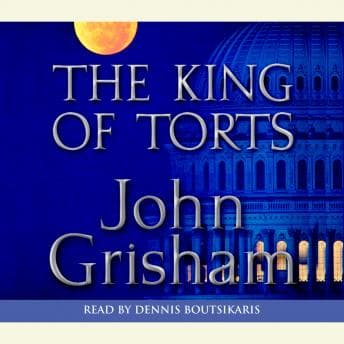
That's the question I found myself asking about ten minutes into The King of Torts. (My mother still asks why I didn't go into corporate law instead of academic psychology. This book is officially my Exhibit A for the defense, Maa.)
We start with Clay Carter. Public defender. Overworked, underpaid, wearing a cheap suit. He's relatable. We root for the underdog. But then Grisham does something fascinating—he doesn't give us a hero's journey. He gives us a descent. Clay stumbles onto a massive pharmaceutical conspiracy, and instead of exposing it like a good little protagonist, he leverages it. He sells out. Big time.
The Anatomy of a Sell-Out
Psychologically, Clay is a walking, talking case study in situational ethics. There's this concept in social psych about how environment shapes behavior more than character traits do, and Clay proves it. Give a desperate man an easy check for a few million, and watch how fast his justifications kick in.
I've read reviews where people complain that Clay is arrogant or unlikable. Honestly? That's the point. Beck also narrates Sycamore Row, where you actually do get that Atticus Finch energy—it's a fascinating contrast. If you're looking for Atticus Finch, you're in the wrong aisle. This is about the seduction of wealth. Watching Clay transform from a guy worried about his rent to a "mass tort" shark obsessed with private jets is like watching a train wreck in slow motion. You want to look away, but the morbid curiosity keeps you there. My therapist would probably say I enjoyed his downfall a little too much, but hey, schadenfreude is a valid emotion.
Michael Beck's Expensive Scotch Voice
I hadn't listened to him before this, but the man has a voice like expensive scotch. Smooth, authoritative, slightly detached. It works perfectly for Clay. Beck captures that specific tone of a lawyer who thinks he's the smartest person in the room—even when he's clearly about to drive off a cliff.
He handles the pacing well, which is crucial because Grisham... well, Grisham loves his details. Beck keeps the energy up even when we're deep in the weeds of legal maneuvering. He's equally solid in A Time for Mercy, another Grisham courtroom drama where his pacing skills really shine.
However—and I have to mention this because it pulled me out of the trance a few times—his female voices? A bit shaky. It's a common issue with male narrators trying to pitch up without sounding like a caricature. Not a dealbreaker, just a momentary glitch in the matrix. But when he's in Clay's head? Spot on. He nailed the arrogance.
When the Law Gets Literal
Here's the thing about the middle of this book: it drags. There's a section where the thrill of the conspiracy fades, and we get into the nitty-gritty of how mass tort litigation actually works. Class actions, settlements, marketing for clients.
If you're a legal nerd, you'll eat this up. For the rest of us? I found myself zoning out a bit during my morning jog along the Charles River. Actually had to rewind twice because I'd spent five minutes thinking about my dissertation defense instead of listening to the settlement negotiations.
It feels like Grisham wanted to write an exposé on the tort industry disguised as a thriller. And look, I learned a lot. The system is terrifyingly broken. But purely from a narrative psychology perspective, the stakes felt lower when we were just moving money around. I missed the danger of the opening chapters.
Case Closed (Over Coffee)
Is this Grisham's best work? No. But is it a compelling psychological portrait of greed? Absolutely.
It's cynical, dark, and doesn't offer a lot of hope for the legal system. But sometimes you don't want a fairy tale. Sometimes you want to watch a guy get everything he ever wanted and realize it's actually a curse.
Who should listen: Anyone who wants to analyze the moral decay of a man who thought he could buy happiness. Who should skip: If you need high-octane action or a protagonist you can root for, this isn't it. Just maybe speed it up to 1.25x during the settlement talks.