
I started this audiobook while chopping an obscene amount of onions for a vindaloo that takes three hours to simmer. Fitting, honestly. Because The Boys from Biloxi isn't a sprint; it's a marathon through the humidity of the Mississippi coast. Seventeen hours and twenty-two minutes. (My mother would ask why I spend that much time listening to imaginary lawyers when I could be finding a real husband, but that's a conversation for another therapy session.)
Here's the thing about John Grisham: he understands the architecture of a small town better than almost anyone. But psychologically? This book is a textbook case of environmental determinism.
The Nature vs. Nurture Cage Match
We have two kids. Keith and Hugh. They play Little League together. They breathe the same air. But their fathers represent the classic dichotomy: the crusading prosecutor and the mob boss. It's almost too perfect of a setup, psychologically speaking.
I found myself analyzing the divergence point. At what moment does a child absorb the moral compass of the parent? Grisham lays it out methodically. Maybe too methodically. We spend a lot of time in the history of the "Dixie Mafia." Fascinating stuff—don't get me wrong—but as a narrative device, it felt less like a thriller and more like a lecture series I didn't sign up for.
The protagonist exhibits classic "Golden Child" syndrome, while Hugh is the inevitable result of normalized deviance. It tracks, but it lacks the chaotic unpredictability of real human behavior. People are messy. These characters felt a bit like chess pieces moving exactly where the plot required them to go.
Beck's Drawl: A Love-Hate Relationship
Let's talk about Michael Beck.
If you've listened to Grisham before, you know Beck. He is the sound of the legal South. His voice has this gravelly, worn-in quality, like a leather chair in a judge's chambers. He sells the atmosphere beautifully. You can practically feel the sweat sticking to your shirt.
But—and this is a big but—you need to change your settings. I had the same issue with A Time for Mercy—Beck's deliberate pacing works for courtroom drama, but you have to meet him halfway with the speed controls.
At 1.0x speed? He drags. Agonizingly slow. I bumped him up to 1.25x (okay, fine, 1.4x during the courtroom procedural parts), and suddenly, the pacing snapped into place. Slow drawl became brisk walk.
A small grievance from the psychology department: his female voices. (Why is this so hard for male narrators?) They lean into caricature. Every woman sounds a bit breathless or shrill. It pulled me out of the immersion. My brain stopped processing "character dialogue" and started flagging "man doing a funny voice." Not ideal.
The Verdict
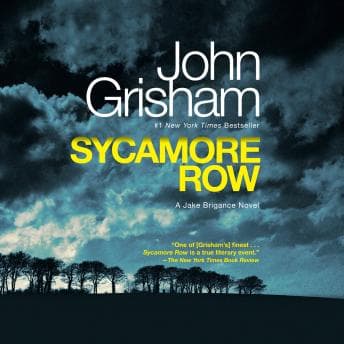
This isn't The Firm. It's not going to keep you up until 3 AM with heart-pounding twists. Sycamore Row strikes a better balance between Grisham's courtroom tension and his love of Southern sprawl—Beck narrates that one too, and it moves.
Boys from Biloxi is a generational saga. Heavy on history, heavy on atmosphere, heavy on the inevitability of fate.
Who should listen: If you want to sink into a world, understand the corruption of a specific time and place, and watch a slow-motion car crash of two families destroying each other—this delivers. Who should skip: Anyone expecting a fast-paced thriller will want to throw their phone into traffic.
Just do yourself a favor and hit that speed button. Life is too short for slow narration, and my vindaloo was done way before the book was.