
I was stuck in gridlock on I-35 just south of Austin when I started this one.
Normally, traffic like that makes me want to call in an airstrike on the highway infrastructure, but I had Ranger in the back seat and a fresh coffee in the cup holder. My wife, Linda, keeps telling me I need to broaden my horizons beyond "books where things go boom." She thinks because I spent 25 years in the Army, I can't appreciate a story without a body count in the first chapter.
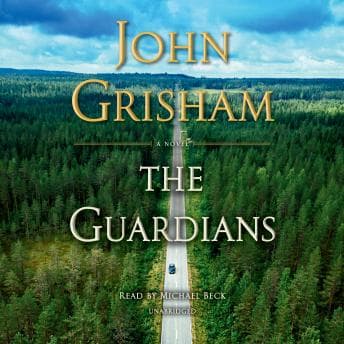
So, I picked up Grisham's The Guardians. Fine, Linda. You win this round.
Let me be clear right up front: nobody gets blown up. There are no suppressed pistols or night vision goggles. But make no mistake—this is a war story. It's just fought with paperwork and rusty ballistics evidence instead of 5.56 rounds.
Michael Beck Sounds Like He's Lived It
I've spent enough time at Fort Benning and Polk to know a fake Southern accent when I hear one. Nothing ruins a book faster than a narrator who sounds like he learned "Southern" from watching Looney Tunes. Beck isn't acting; he's just being.
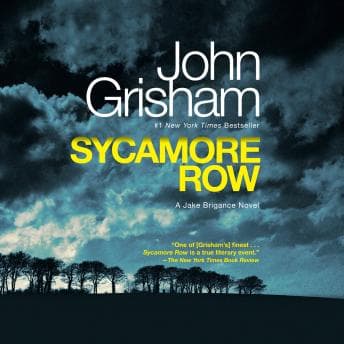
He's got this weary, worn-leather voice that fits the protagonist, Cullen Post, like a broken-in combat boot. Post is a lawyer/minister (weird combo, I know, but it works) driving around the backroads of the South trying to free innocent men. Beck captures that exhaustion perfectly. You can hear the miles in his voice. He brought that same road-weary authenticity to Sycamore Row, another Grisham courtroom battle where his Southern drawl feels lived-in, not performed.
I usually crank my audio to 1.25x or 1.5x because most narrators drag. With Beck? I kept it at 1.25x, but I honestly could have slowed down. He makes distinct voices for the corrupt small-town sheriffs and the inmates without doing those cartoonish villain voices that drive me up the wall. When he does the voice of Quincy Miller—the guy rotting in prison for 22 years—it hits you in the gut.
(Ranger actually woke up from his nap during the prison interview scenes. I think he sensed the tension.)
The Mission: Patience as a Weapon
The story itself? It's a slow burn.
If you're looking for a Jack Reacher situation where the hero walks into town and breaks everyone's arms, this isn't it. For that kind of tactical satisfaction, Terminal List delivers the kinetic action my trigger finger craves. Cullen Post's weapon is patience. He's digging into a 22-year-old murder of a lawyer in Florida, trying to prove his client was framed.
As a security consultant, I deal with corporate risk. But this... this is systemic rot. Grisham clearly did his homework on the "science" used in old convictions. He tears apart stuff like "bite mark analysis" and reliable snitches. It reminded me of some intelligence briefings I used to sit through—where you realize the intel was bad, but the decisions were already made.
It's frustrating. Intentionally so. There were moments on my drive where I was gripping the steering wheel so hard my knuckles turned white. Not because of a car chase, but because of the sheer incompetence and malice of the legal system portrayed here.
Where It Drags (Just a Little)
Look, I'm a man of action. There are parts of this book where Post is just driving. And driving. And eating sandwiches. And talking on the phone.
It's realistic—investigations are 90% boredom and 10% terror—but about halfway through, I was itching for a breach-and-clear. The pacing is deliberate. If you have a short attention span or you're used to rapid-fire thrillers, you might find yourself checking the time remaining.
But then the threats start coming in. The "Guardian" team gets too close to the truth, and the people who killed the original lawyer decide they don't mind killing another one. That's when the tactical side of my brain woke up. The tension in the last three hours is solid. Not kinetic action—psychological pressure.
The Debrief
Linda was right. (Don't tell her I said that.)
The Guardians is a heavy hitter. It's not about the adrenaline dump; it's about the long, hard slog for justice. Michael Beck elevates the material from a standard legal procedural to something that feels like a documentary you can't turn off.
It made me angry. It made me think. And it made the drive from Austin to Dallas feel like twenty minutes.
Who should listen: Anyone who wants a legal thriller with real stakes and doesn't need explosions to stay engaged. If you've got a long drive and patience for methodical investigation, this one's for you. Skip it if you need constant action—the first half will test you.
Mission accomplished, Grisham.