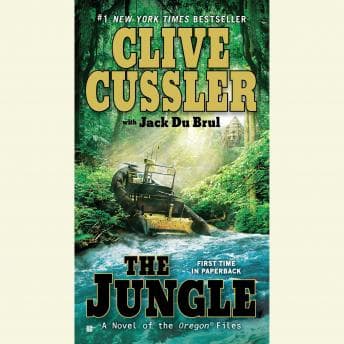

"The jungles of Burma are unforgiving. But so am I."
I'm paraphrasing, but that's the energy Juan Cabrillo brings to this thing, and honestly? It's exactly what I needed while grading forty-seven essays on The Great Gatsby at 11 PM last Tuesday. Sometimes you don't want Faulkner. Sometimes you want a guy with a ship full of mercenaries solving problems with explosions.
(Don't tell my students I said that.)
Look, here's the thing about Cussler and Du Brul's Oregon Files series - it's the literary equivalent of a really well-made action movie. You know what you're getting. The good guys are competent, the bad guys are megalomaniacal, and somewhere along the way there's going to be a historical mystery that ties everything together. In Jungle, that historical thread reaches back to thirteenth-century China, which - as someone who teaches world lit - I actually found pretty clever. The weapon they've unearthed isn't some generic doomsday device. It's got roots. Context. Cussler's team always does their homework on the historical bits, even when the modern plot goes full Michael Bay.
Jason Culp and the Art of the Thriller Voice
I've listened to a lot of narrators over the years - probably too many, if we're being honest - and Jason Culp falls into that category of "solid professional who knows exactly what he's doing." His voice has this smooth, deep quality that works beautifully for Cabrillo's calm-under-pressure leadership style. When Juan's making impossible tactical decisions while hanging off a helicopter, Culp sells it without overselling it. That's harder than it sounds.
But I'll be honest about something. The character differentiation isn't always crisp. The Oregon's crew is pretty large, and there were moments - especially during the faster action sequences - where I lost track of who was speaking. Culp doesn't do wildly different voices for each character, which some listeners will appreciate (no cartoonish accents) and others will find frustrating. I landed somewhere in the middle. By hour six, I'd figured out who was who mostly through context clues.
The pacing, though? Spot on. This is a 12-hour-45-minute listen, and it moves. The Afghanistan rescue sequence in the early chapters had me walking past my usual turnaround point on the lakefront because I couldn't stop. Denise had to text me asking where I was. (Worth it.)
Where Cussler Meets Conrad - Sort Of
Okay, stay with me here. This reminds me of what Joseph Conrad was doing in Heart of Darkness, except instead of exploring the darkness of colonial exploitation, we're exploring the darkness of... well, covert ops and global domination schemes. The "jungle" metaphor works on multiple levels - the physical jungles of Myanmar and Thailand, sure, but also the jungle of intelligence work where everyone's lying to everyone else.
Is it Conrad? Obviously not. My students would hate this comparison. But there's something to be said for how Cussler and Du Brul use setting as character. The Burmese highlands aren't just backdrop - they're actively hostile, shaping every tactical decision the crew makes. That's solid craft, even in genre fiction.
The woman-gone-missing plot thread felt a little thin compared to the historical mystery and the Afghanistan rescue, if I'm being critical. It's the connective tissue that pulls everything together, but it doesn't have the same weight. You can feel which parts the authors were more excited about.
Would I Listen Again?
Probably not - but that's not a knock. This is beach-read territory. Airport-listen territory. It's designed to be consumed, enjoyed, and moved on from. And it does that job extremely well.
If you loved The Da Vinci Code for its historical puzzle-box structure, this scratches a similar itch with way more firepower. My Brilliant Friend works the same way with its sense of place—Naples becomes as much a character as the friendship at its center. If you're already an Oregon Files fan, you know what you're getting and you'll be satisfied. If you're new to Cussler, this isn't a bad entry point, though you might want to start earlier in the series to really connect with the crew.
I listened at 1.0x because - and I will die on this hill - the author chose those words, and Culp's pacing is calibrated for a reason. But I could see bumping it to 1.25x if you're in a hurry. The prose can handle it.
Worth pausing the faculty meeting for? Absolutely. Principal Martinez's budget presentation had nothing on the thirteenth-century weapon reveal. Nothing.