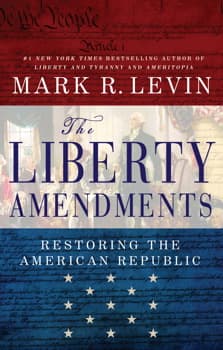

People love to tell me Levin is just a talk radio guy shouting into the wind. I went in half-expecting that - a polemic dressed up as constitutional scholarship. And look, there's definitely some preaching-to-the-choir energy here. But I'll say this: the man did his homework on Article V, and that alone makes this worth the listen even if you disagree with half his proposals.
I finished this one on a Saturday morning, sitting on the back porch with Ranger and a third cup of coffee while Linda was at her book club. The kind of listen that demands you actually pay attention - no multitasking, no checking emails. This isn't background noise material.
Eleven Amendments, Zero Filler
Let me cut to the chase. Levin lays out eleven proposed constitutional amendments using the Article V convention process - the one that bypasses Congress entirely and lets state legislatures propose amendments directly. Term limits for Congress and the Supreme Court, spending caps, tax limitations, restrictions on the Commerce Clause. Each amendment gets its own chapter with the actual proposed language, the constitutional history behind it, and extensive quotes from the Founders.
What surprised me is how much primary source material Levin pulls in. He's not just riffing on Federalist No. 51 and calling it a day. He digs into the notes from the Philadelphia Convention, pulls quotes from state ratification debates, references Anti-Federalist arguments. The chapter on congressional term limits traces the debate all the way back to the Articles of Confederation's rotation requirements. That's the kind of detail that separates a serious argument from a bumper sticker.
Now - and this is where it lost me occasionally - some of the amendments feel like they're solving today's political grievances rather than addressing structural problems. The amendment to give state legislatures override power on federal regulations, for instance, reads more like a response to specific Obama-era EPA rules than a timeless constitutional principle. You can feel the talk radio host bleeding through in those sections. But even there, Levin at least grounds the argument in Madison's concerns about consolidated federal power, so it's not entirely untethered from constitutional theory.
Jason Culp Does the Heavy Lifting
Here's where I need to separate Levin the author from Levin the narrator. Because Mark Levin does appear on this audiobook - there's an introduction and I believe a foreword section in his own voice - and if you know his radio show, you know that voice. Intense. Urgent. Not exactly what you'd call measured.
Jason Culp handles the bulk of the narration, and frankly, he's the right call for this material. His read has a steady, almost judicial weight to it that keeps the constitutional analysis from feeling like a political rally. When he's working through the Founders' quotes - reading Hamilton's arguments at the Convention or Jefferson's correspondence - he gives them appropriate gravity without trying to do full character performances. Smart choice. You're here for the ideas, not dinner theater.
The pacing works well at just under seven hours. Dense enough to be substantial, short enough that you won't lose the thread between the spending amendment and the tax amendment. I bumped it to 1.25x as usual and it held together fine - Culp's delivery is deliberate but not draggy.
The Article V Argument Nobody Talks About
Here's what I think gets lost in the partisan noise around this book. Whether you're left, right, or thoroughly disgusted with both sides, Levin makes a genuinely interesting structural argument: the Founders specifically included the state-convention amendment process because they anticipated a federal government that would never voluntarily limit its own power. That's not a conservative or liberal point. That's just... accurate. I've seen this scenario play out in real life - no institution willingly shrinks itself. The Pentagon sure doesn't.
The weakness is that Levin doesn't spend much time on the practical obstacles to an Article V convention. How do you get 34 state legislatures to agree on anything? What happens if a convention goes rogue and starts proposing amendments nobody intended? He waves at these concerns but doesn't really engage with them. For a book this methodical about everything else, that gap is noticeable.
Who Should Grab This
If you're a constitutional originalist, you probably already own this. If you're on the other side of the aisle, this is actually worth your time if you can separate the partisan moments from the structural arguments - know your opposition's best case, not their worst. If you have zero interest in constitutional mechanics and just want someone to tell you your political team is winning, skip it. This is dry, detailed policy work dressed in accessible language.
Not for you if you want action. This is a briefing, not an operation. I've read books that aim for that same blend of accessibility and substance and mostly miss — Friday Night Lights is one of the rare exceptions, a work of serious journalism that never once makes you feel like you're doing homework.
Mission Debrief
Worth your time? Here's the debrief: it's a serious constitutional argument wrapped in some talk-radio packaging. The scholarship is real, even if the conclusions are debatable. Culp's narration elevates the material. At seven hours, it respects your time. Ranger slept through most of it, but constitutional law was never his strong suit.







![Steve Jobs [unabridged audiobook] audiobook cover](/_next/image?url=https%3A%2F%2Fcovers.audiobooks.com%2Fimages%2Fcovers%2Ffull%2F9788499923406.jpg&w=1920&q=75)