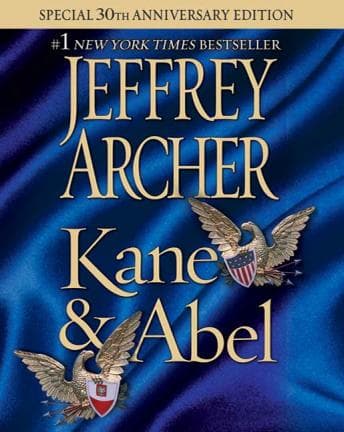

"He had never been able to forgive Abel Rosnovski for being everything he most feared."
That line hit me somewhere around hour sixteen, and I had to sit in my driveway for an extra ten minutes because I wasn't ready to walk into my house and pretend I was fine. Carlos asked why I looked like I'd been crying. I blamed allergies. It's January in Phoenix. He didn't buy it.
I picked up Kane and Abel because I needed something big - not big like important, big like long. Nineteen and a half hours. I'd just come off a stretch of four consecutive night shifts and my audiobook queue was empty. The kind of empty that makes you panic at 2 AM when the unit goes quiet and you're staring at charting that could wait but your brain needs somewhere to go. Jeffrey Archer's been on my "I'll get to it" list for maybe a decade. Finally got to it.
Two Boys, One Birthday, Zero Mercy
Here's what Archer does that I didn't expect: he makes you love both men equally and then forces you to watch them destroy each other over misunderstandings that could've been resolved with one honest conversation. William Lowell Kane - Boston blue blood, banking dynasty heir, stiff upper everything - and Abel Rosnovski, born in a Polish forest, surviving things no human should survive before he's even old enough to shave. Born the same day in 1906. The structural symmetry is almost too neat, but Archer earns it because he doesn't cheat on the details.
Abel's early chapters in Poland and then the Russian labor camps are brutal. I've worked trauma for fifteen years and some of those scenes still made me grip the steering wheel harder. The immigration experience, the hustle from bellboy to hotel magnate - my mom would love this. She came from Manila with nothing and built a life through sheer force of will. Abel Rosnovski is every immigrant parent I've ever known, just with more revenge plotting.
Kane's trajectory is the opposite kind of compelling. He's born into everything and spends sixty years terrified of losing it. His rigidity, his inability to see past his own privilege - Archer doesn't make him a villain exactly, but he makes you want to shake him. Hard.
The Writing Is Choppy and I Don't Care
Look, some people complain about Archer's prose style. They're not wrong. The man writes in short declarative bursts. This happened. Then this. Then this. It reads like a news ticker sometimes. But here's the thing - in audio, that style works. It keeps the pace relentless across nineteen hours. There's no filler. No chapters where nothing happens while the author describes curtains for three pages. Every scene moves the story forward by years sometimes, and Jason Culp handles those time jumps cleanly enough that I never got lost.
Speaking of Culp - the man narrates for nineteen and a half hours and never drops a character. His Kane is measured, clipped, Boston restraint in every syllable. His Abel starts rougher, more hunger in the voice, and gradually smooths into something polished but never quite settled. You can hear Abel's immigrant anxiety even when he's worth millions. That's not just voice acting, that's understanding a character. Culp doesn't do flashy accents or dramatic pauses. He trusts the story. And the story delivers. The narration in Timeless: A Drizzt Novel gave me that same feeling — a narrator so locked into the characters that you stop noticing the performance and just live inside the story.
When the Feud Gets Stupid (and That's the Point)
There's a stretch in the middle - maybe hours ten through fourteen - where both men are making decisions so petty, so driven by wounded ego, that I actually got angry. Not at the book. At them. Kane tanks Abel's hotel financing out of spite. Abel retaliates by going after Kane's bank. Their wives suffer. Their children suffer. And neither man can stop because stopping would mean admitting the other one matters.
As someone who's actually worked a code, who's watched families fall apart at 4 AM over things that seemed enormous at the time and meaningless six months later - this book understands something real about pride. How it eats you. How the grudge becomes the whole personality.
The ending wrecked me. When Kane finally learns what Abel did for him - what Abel sacrificed - and it's too late. It's just too late. That kind of dramatic irony shouldn't work this well after nineteen hours, but Archer sticks the landing because he's been building to exactly this moment since page one.
Who Needs This in Their Ears
If you want literary prose, this isn't it. If you want a sweeping, addictive saga about two men who could've been friends and instead chose war - this is your book. Perfect for long commutes, road trips, or anyone doing a stretch of nights who needs something absorbing enough to keep the 3 AM fog away. It's old-fashioned storytelling done right. No gimmicks, no tricks, just story.
Skip it if you need fast action or can't handle a slow build. This is a sixty-year family saga. It takes its time. But it earns every single hour.
Night Shift Approved, Dashboard Tear-Stained
Nineteen hours with these two men and I'm still thinking about them a week later. Carlos caught me googling whether there's a sequel. (There is. It's called The Prodigal Daughter. It's already downloaded.) My mom asked what I was listening to and I told her it's about a Polish immigrant who builds an empire from nothing. She said, "Like me, but with hotels." She's not wrong.