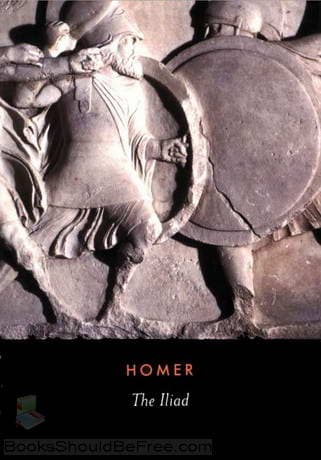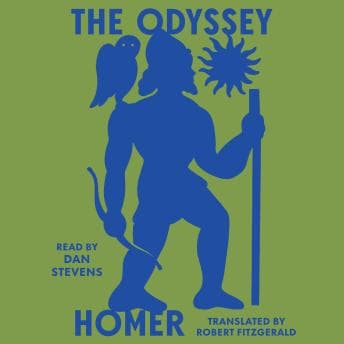

Look, I have a complaint. I've spent twenty years trying to get teenagers to care about Homer, and now Dan Stevens walks in with that honeyed British voice and makes the whole thing sound like a fireside chat with the most charming man at a dinner party. Where was this energy when I was assigning Book 16 and getting blank stares from thirty-two juniors?
I started this one on a Saturday morning walk along the lakefront with Denise. She had her own podcast going, and I had Achilles sulking in his tent. By the time we hit North Avenue Beach, I was so locked in that Denise had to physically steer me around a cyclist. Fourteen hours is a commitment — this isn't background listening while you pretend to organize your desk. But the Fitzgerald translation earns every minute.
Why Fitzgerald Still Wins the Translation Wars
Let me put on my teacher hat for a second. There are a dozen Iliad translations floating around now — Fagles, Lattimore, the Emily Wilson version everyone's excited about. Fitzgerald's has been the benchmark since the 1970s for a reason: it reads like poetry without making you feel like you're translating poetry. The lines have a conversational lightness that — and this is the key thing — actually works better spoken aloud than read on the page. This is why we still read the classics. Or in this case, listen to them.
Stevens understands this. His delivery leans into Fitzgerald's rhythm rather than fighting it. He doesn't try to turn every battle sequence into a Hollywood trailer. Instead, he treats the language like it has its own momentum, and mostly, he's right. When Nestor launches into one of his long-winded advice sessions — the chariot race bit with Antilochus is a perfect example — Stevens plays it with this gentle, almost amused patience. You can hear the old man's self-importance without Stevens mugging it up. The narrator understands that pause is punctuation.
His dialogue work is genuinely impressive. Achilles sounds different from Agamemnon sounds different from Hector, not through wild vocal gymnastics but through subtle shifts in tempo and weight. Achilles' speeches have this coiled tension, while Hector carries something warmer, more grounded. It's interpretation, not just performance.
Where the Rage Goes Quiet
But here's where I have to be honest. The Iliad is a poem about rage — literally, that's the first word — and Stevens sometimes keeps things too controlled when the text demands eruption. There's an evenness to his delivery that serves 80% of the poem beautifully but undercuts the remaining 20%. The moments where grief or fury should crack the voice open? They stay polished. Pleasant. A little too composed.
And the Hector and Andromache scene — which is arguably the emotional center of the entire poem, the scene I use every year to prove to my students that a 2,800-year-old war poem can still gut-punch you — gets split awkwardly between disc breaks. There's a jarring pause right in the middle of their goodbye. It's a production issue, not a narration issue, but it matters. That scene depends on sustained emotional pressure, and the break lets the air out.
The pacing runs a touch quick in places too. Not dramatically so, but enough that some of the genealogical connections and battlefield geography can blur together if you're not paying close attention. I listened at 1.0x because the author chose those words, and even at normal speed I occasionally had to rewind during the catalog-heavy sections.
The Ancient Greek Bonus Track
Small detail that made my entire week: there's a section read in the original ancient Greek. Just a portion, but hearing those dactylic hexameters — the actual music Homer's audiences would have heard — is extraordinary. It's a reminder that this was always meant for the ear, not the eye. My students would hate this. I love it.
Who Gets the Most Out of This
If you've never read the Iliad and you're intimidated by it — which, fair — this is a genuinely accessible way in. Stevens doesn't condescend, but he also doesn't assume you've got a classics degree. The Fitzgerald translation does a lot of the heavy lifting there, and Stevens matches its clarity.
If you're a fellow English teacher, or someone who read this in college and remembers approximately nothing beyond "Achilles, heel, something something," the audiobook is worth revisiting. It's like hearing a song you thought you knew played by a different musician — same notes, new resonance. I had that same disorienting-but-rewarding experience revisiting Selected Poems of Robert Frost as an adult — poems I'd assigned for years suddenly felt like they'd been hiding something from me the whole time.
Skip this if you want full theatrical drama. If you're coming from Derek Jacobi's reading or some of the more operatic performances out there, Stevens will feel understated. That's a feature for some listeners and a flaw for others.
Worth Pausing the Faculty Meeting For
Dan Stevens gives us an Iliad that's intelligent, clear, and — here's the word — listenable in a way that a fourteen-hour ancient war epic has no business being. He doesn't quite reach the emotional peaks the poem demands at its most devastating, and that production break during Hector's farewell is a genuine wound. But the sustained quality of his reading, the way he honors Fitzgerald's line without genuflecting to it, makes this one of the better ways to experience Homer right now. Not perfect. But close enough to keep me walking past my turn-around point on the lakefront three times in one week.