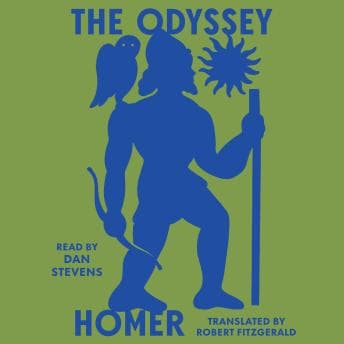

What does it mean to really hear a poem that was never meant to be read?
I've been teaching The Odyssey for fifteen years. Fifteen years of watching seventeen-year-olds glaze over at the phrase "rosy-fingered Dawn." Fifteen years of explaining that this wasn't a book - it was a performance. A song. Something meant for firelight and wine and an audience that leaned in.
And then Dan Stevens opened his mouth, and I finally understood what I'd been trying to teach.
The Rhapsode in Your Earbuds
Look, I'll admit something embarrassing. I've read Fitzgerald's translation probably a dozen times. Assigned it more than that. But listening to it? That's different. That's what Homer intended - or as close as we can get, three thousand years removed.
Stevens doesn't perform The Odyssey like he's auditioning for a BBC drama. He performs it like he's sitting across from you, late at night, telling you a story he genuinely loves. His voice has this quality - regal but warm, precise but never cold. When Odysseus weeps on Calypso's island, longing for home, Stevens doesn't sob. He lets the grief sit in the words themselves. The restraint is the point.
Is it always as emotionally explosive as some listeners might want? No. There are moments - Odysseus revealing himself to Penelope, the slaughter of the suitors - where you might expect a more theatrical delivery. Stevens stays controlled. Even-keeled, some would say. But here's the thing: Fitzgerald's translation isn't bombastic either. It's conversational. Almost intimate. Stevens matches that energy perfectly.
(My students would hate this take. They want everything at eleven. I'm old enough to appreciate a seven that knows exactly what it's doing.)
Why Fitzgerald, Why Now
I listened to this during my morning walks along the lakefront. October in Chicago. Gray water, gray sky, wind that cuts through your jacket. Perfect conditions for a story about a man desperate to get home.
Fitzgerald's translation has been the standard for over three generations - and hearing it aloud, you understand why. His verse flows. It breathes. It doesn't feel like a translation; it feels like English poetry that happens to be telling a Greek story. Stevens leans into this. His pacing is unhurried but never slow. He gives the repetitions - all those epithets, all those ritual greetings - their proper weight. This is how oral poetry works. The repetition isn't laziness. It's rhythm. It's memory. It's the heartbeat of the thing. That same understanding of how language creates rhythm shows up in Passionate Friends, where the narrator lets the prose breathe instead of rushing through it.
There's also a section read in ancient Greek, which - okay, I'll be honest - made me feel things I can't quite explain. You don't need to understand the words. The music is there. The lyricism. It's a reminder that what we're hearing is an echo of something impossibly old and impossibly alive.
Who Should Hit Play (And Who Should Skip)
If you're coming to The Odyssey for the first time, this is a beautiful way in. Stevens' character work is excellent - he differentiates voices without ever tipping into cartoon territory. Athena sounds different from Penelope sounds different from the Cyclops. But they all sound like they belong in the same world.
If you're a teacher like me, this is the version to recommend. Students who claim they "can't do audiobooks" will find themselves pulled in. The production is clean, the pacing is accessible, and Stevens has that quality that makes you want to keep listening. (The Boston Globe said they could listen to him all day. I walked an extra mile twice because I didn't want to pause.)
If you want high drama - voices cracking with emotion, theatrical pauses, the full operatic treatment - this might feel too restrained. Stevens trusts the text. He doesn't oversell it. For me, that's a feature. For some listeners, it might feel like something's missing.
Class Dismissed
Here's what I keep coming back to: The Odyssey survived for centuries because people told it to each other. Not because scholars wrote it down - that came later. It survived because it was heard.
Dan Stevens isn't Homer. He's not a rhapsode performing for Greek nobles. But he understands something essential about this poem: it's not a museum piece. It's a story about longing and homecoming and the terrible cost of survival. It's about a man who just wants to get back to his wife and his dog and his own bed.
I finished the last chapter standing on the rocks at Promontory Point, wind in my face, and I thought about Odysseus finally seeing Ithaca. About what it means to return to a place that's changed because you've changed.
That's not something you get from reading. That's something you hear.
(Principal Martinez, if you're wondering why I was late to the staff meeting that Thursday - this is why. Worth it.)