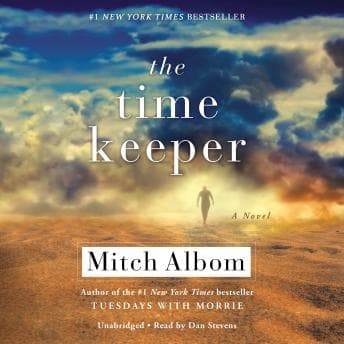

I was walking the lakefront with Denise last Tuesday - one of those gray Chicago mornings where the wind off the lake makes you question every life choice - when Father Time started talking about the weight of centuries. And I stopped. Just stood there like an idiot while joggers swerved around me.
Mitch Albom got me. Again.
Look, I've been teaching literature for twenty years. I've read the classics, analyzed the allegories, written more papers on the nature of time in fiction than I care to admit. So when I say this little four-hour fable made me reconsider how I spend my Tuesday nights grading papers instead of actually talking to my wife? That means something.
The Voice That Makes Mythology Feel Personal
Dan Stevens. The man from Downton Abbey. The Beast himself. I wasn't sure what to expect, honestly. British actors narrating American fables can go sideways fast. But Stevens does something remarkable here - he shifts between this crisp, almost otherworldly British tone for Dor (Father Time) and casual American voices for the modern characters, and it never feels jarring. It feels... intentional. Like the accent itself is part of the storytelling.
The inflection is spot-on. When Dor listens to centuries of human voices begging for more time, Stevens delivers it with this exhausted grief that - I'm not exaggerating - made me pull over during my commute. (Yes, I listen while driving. My students would be horrified. Don't tell Principal Martinez.)
Now, I did read some reviews where listeners found his character voices a bit much. One person said they sounded "mocking." I get it. Stevens makes bold choices - the teenage girl Sarah sounds distinctly young and desperate, the elderly businessman Victor has this particular rasp of entitlement. If you're not buying what he's selling, it could feel like caricature. But I bought it. The AudioFile Earphones Award wasn't wrong on this one.
When Allegory Actually Works
Here's the thing about fables in 2024: they're hard to pull off. My students roll their eyes at anything that feels like a "lesson." And Albom's spare, almost biblical prose style could easily tip into preachy territory.
It doesn't.
The structure is deceptively simple. Three timelines weaving together - ancient Dor learning to measure time, teenage Sarah planning to end her life, and Victor the billionaire trying to freeze his body to live forever. Both modern characters want to manipulate time. Both are missing the point entirely. And Dor, who invented the problem, has to fix it.
This reminds me of what Hemingway said about prose - that the dignity of movement of an iceberg is due to only one-eighth of it being above water. I saw that iceberg principle at work in It too - King's surface story about a killer clown, but underneath it's really about childhood trauma and memory. Albom's writing works the same way. Simple sentences. Short chapters. But underneath? There's weight. My Brilliant Friend pulls off that same trick - deceptively simple language hiding massive emotional depth.
The prose deserves to be savored. I listened at 1.0x because the pauses matter. Stevens understands that pause is punctuation. When Dor finally speaks to Sarah about what she's planning, there's this silence that stretches just long enough to hurt.
My students would hate this. I love it.
Who Should Press Play (And Who Should Skip)
If you loved The Five People You Meet in Heaven, this is its spiritual successor. Same philosophical DNA, same emotional gut-punches, same Albom magic.
But let's be real. This isn't for everyone.
Skip it if you want plot twists and thriller pacing. Skip it if you need your fiction to feel "realistic" - a magical hourglass and a cave of voices isn't going to work for you. And if bold character voices pull you out of a story, maybe sample first.
But if you're a commuter who wants something that makes the drive feel meaningful? If you're someone who's been thinking too much about time lately? (And honestly, who hasn't?) This is worth four hours of your life.
The content warning is real, by the way - Sarah's storyline deals directly with suicidal thoughts. It's handled with care, but it's there. Worth knowing going in.
Worth Hiding an Earbud at a Faculty Meeting
I finished this book during a professional development session on "leveraging technology in the classroom." I had one earbud in, hidden under my collar. When Dor delivers his final lesson about time, I actually teared up. In public. At a faculty meeting.
Denise asked me that night what I'd been listening to. I tried to explain it - the cave, the hourglass, the way Albom makes you feel the weight of every hour you've wasted. She just smiled and said, "You're going to make me listen to it, aren't you?"
Yes. Yes I am.